Regional role and mayoralty should not be combined, councillor says
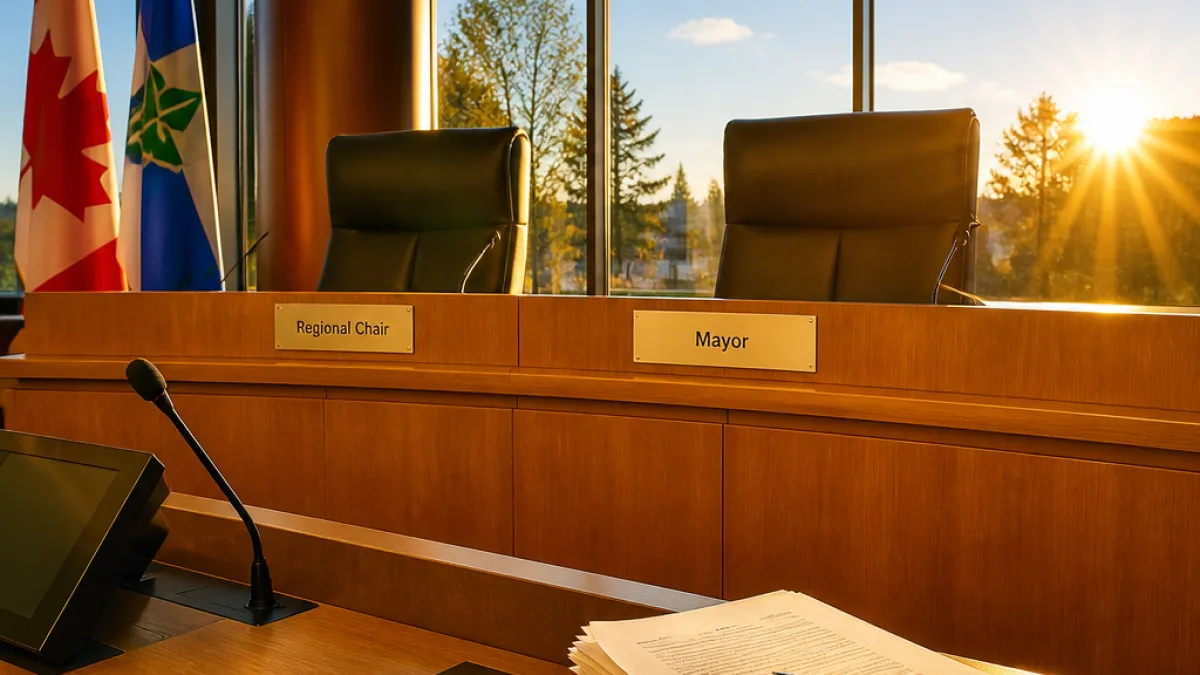
A long-standing debate about how the Region of Waterloo’s next chair should be chosen resurfaced this week as regional councillor Doug Craig prepared to table a notice of motion asking council to oppose any government model that would allow an elected mayor to also hold the position of regional chair.
Craig, the former mayor of Cambridge, told media he believes the two offices must remain separate. "It's incomprehensible," he said, arguing the demands of a mayoralty are incompatible with the duties of the regional chair.
"If you're a mayor, for example, it's a 24-7 commitment. There is absolutely no way you could possibly do the regional job and I don't know why [the province] would consider something like this."
The motion is expected at an upcoming committee meeting Tuesday and follows months of provincial movement on the future of regional chairs. In April, Ontario's Municipal Affairs and Housing Minister Rob Flack announced plans to appoint eight regional chairs, including the chair for Waterloo Region. The province provided additional details in June and set an application deadline in early July.
Where this fits in local governance
Historically, regional chairs in Ontario were chosen by voters as part of municipal elections. The province's recent announcements indicate a shift toward appointment in some regions, prompting resistance from municipal leaders who say local democratic accountability could be weakened if the process changes.
Craig has previously voiced opposition to appointments. In February, he tabled a motion calling for a letter to be sent to the province opposing the appointment of a person to the role of regional chair. His latest notice of motion seeks to broaden that stance by directing regional council to formally oppose any governance model that allows mayors to carry both roles.
Timing and next steps
The provincial actions earlier this year mean councils across affected regions may confront new choices before the municipal election this fall. The timeline presented in provincial announcements included:
- April — Minister Rob Flack announced plans to appoint eight regional chairs, including Waterloo's.
- June — The province provided more details on the appointment process.
- Early July — Application deadline for appointed chairs.
- Tuesday (upcoming) — Craig to table his notice of motion at a committee meeting.
How regional council responds to Craig's motion could shape public debate in Waterloo ahead of the municipal vote later this year. If council adopts the motion, it would formally oppose any framework that allows a sitting mayor to also be appointed or serve as regional chair.
Implications for Waterloo residents
For residents, the core questions are about representation, workload and the separation of local and regional priorities. Craig says the practical demands of a mayor's office — which he described as a 24/7 responsibility — are incompatible with fulfilling a second, region-wide leadership role.
Supporters of combining roles have argued in other contexts that alignment of municipal and regional leadership can streamline decision-making; opponents worry it concentrates power and reduces accountability to voters. The province's move to appoint chairs rather than hold direct elections has already stirred concerns among municipal officials and community advocates who favour voter choice.
| Issue | What Craig is proposing |
|---|---|
| Dual roles (mayor + regional chair) | Oppose any model allowing one person to hold both positions |
| Appointment of regional chair | Oppose appointment process that replaces election of chair by residents |
Regional council faces a decision that balances the province's procedural changes with local expectations. The debate will play out in meetings where councillors must decide whether to endorse Craig's request for formal opposition or to take a different tack on governance models proposed by Queen's Park.
As Waterloo residents prepare to go to the polls this fall for municipal elections, the outcome of this debate could affect not only who sits at the region's head but also how accountable that person is to voters across Kitchener, Waterloo, Cambridge and surrounding townships.
Council's response to Craig's motion will be closely watched by municipal leaders and civic groups monitoring shifts in regional governance.