Source matched to TTC Hillcrest cooling tower
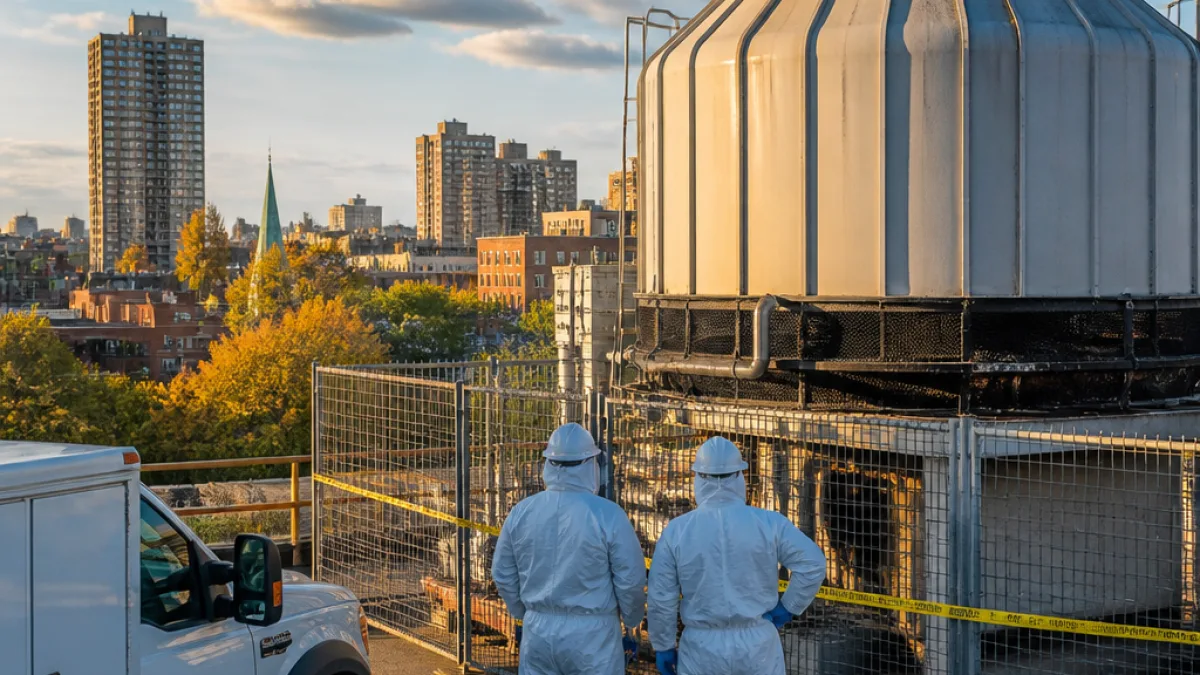
Toronto Public Health (TPH) has confirmed that a cooling tower at the Toronto Transit Commission’s Hillcrest Complex is the source of a recent legionnaires’ disease outbreak in the city, officials said Tuesday.
Environmental samples taken from the cooling tower were matched to a clinical specimen from one of the confirmed cases, the health agency said. The development follows an investigation into six cases that occurred within about a one-kilometre radius of Bathurst and Dupont streets.
The six people who developed symptoms between July 2 and July 26 live, work in or visited the area. TPH said there were no deaths among the confirmed cases.
Immediate public-health actions and TTC cooperation
TPH said it worked closely with the TTC during the investigation. The cooling equipment identified as the likely source was removed from service immediately and remediation steps have been undertaken to address the contamination.
"The affected cooling equipment was taken offline as soon as it was identified, and remediation measures are..."
The release did not provide further operational details or timelines for the remediation in its public statement. Public-health officials had initially reported last week that the six cases were clustered near Bathurst and Dupont, which prompted targeted environmental testing and clinical comparisons.
What residents should know
Legionnaires’ disease is a form of pneumonia caused by Legionella bacteria, which can spread through contaminated water systems such as cooling towers. In this outbreak, TPH’s laboratory work linked the organism found in the Hillcrest cooling tower to a confirmed human case, a key step in identifying the source.
- Number of confirmed cases: 6
- Symptom onset dates: Between July 2 and July 26
- Location of cluster: Approximately within a 1-kilometre radius of Bathurst and Dupont streets
- Deaths reported: None
Local context and implications
The Hillcrest Complex sits within a densely populated corridor of Toronto where residents, workers and visitors regularly travel through and congregate. Cooling towers can disperse contaminated water droplets across a broad area, which is why public-health investigators focus on nearby environmental sources when cases cluster geographically and temporally.
TPH’s confirmation that the TTC site was the source will likely prompt further inspections of other cooling systems across the city and renewed attention to maintenance and testing protocols for large mechanical systems. The TTC and municipal partners have a role in communicating progress on remediation and any additional steps that may affect service or local access.
| Detail | Information |
|---|---|
| Confirmed cases | 6 |
| Symptom onset | July 2–26 |
| Geographical cluster | ~1 km radius of Bathurst and Dupont |
| Deaths | 0 |
Public-health officials have been monitoring the situation and said they would continue working with the TTC to ensure the site is remediated. For residents concerned about possible exposure, TPH typically advises that people who develop symptoms consistent with pneumonia — such as cough, shortness of breath, fever, muscle aches or headache — seek medical assessment and inform clinicians of possible exposure.
As Toronto balances the daily flow of commuters with the upkeep of large-scale infrastructure, this outbreak underlines how maintenance and rapid public-health action are central to preventing and controlling environmentally associated infections across the city.