
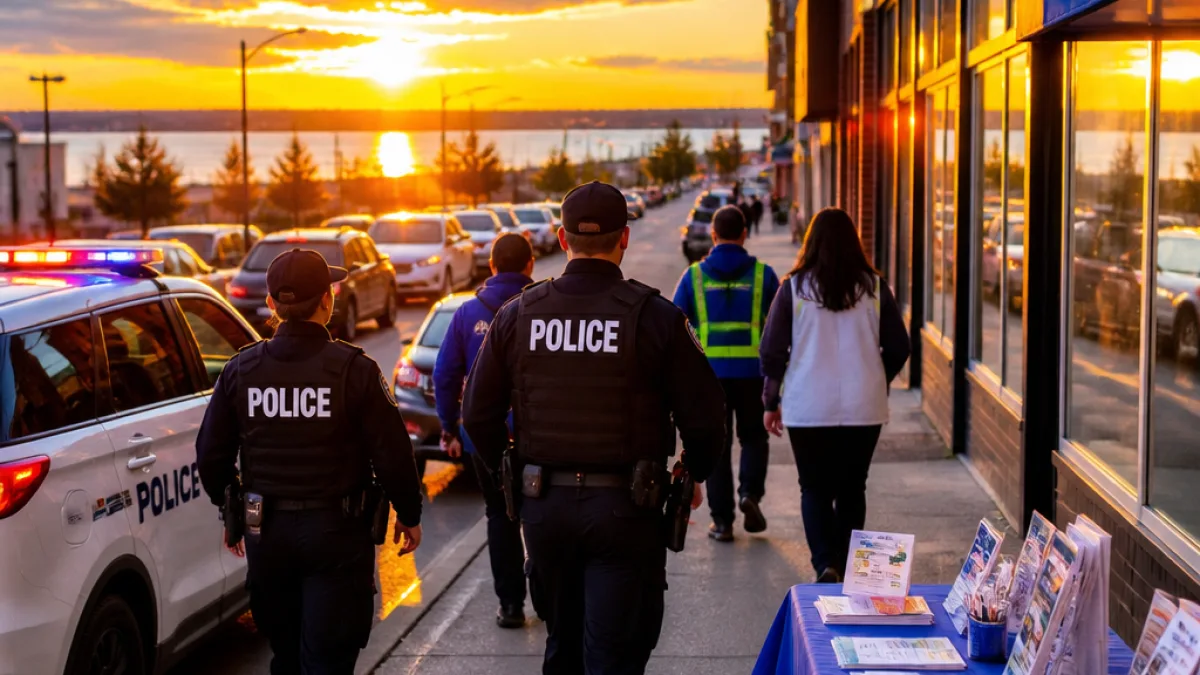
Five‑month pilot sought balance between enforcement and social support
The Thunder Bay Police Service has wrapped up Project Support, a downtown safety pilot that ran from April 20 until Sept. 1, and said lessons learned will be used to increase visible patrols in the city's north and south cores.
Launched originally as a 60‑day effort, Project Support placed uniformed officers alongside social navigators on both foot and vehicle patrols with the stated aim of connecting people with social services rather than immediately pursuing criminal charges. The program targeted public safety issues identified by residents and businesses, including drug use and disorderly conduct.
"A key component of Project Support was its balanced approach. Visible policing and law enforcement were paired with voluntary referrals, wellness checks, medical assistance, and direct engagement with community partners," said Insp. Jason Rybak, operational support inspector with the service.
Activity and outcomes: referrals, charges and contacts
The TBPS reported a mix of engagement and enforcement outcomes over the pilot. Staff recorded more than 9,100 engagements with businesses and the public during the period, and documented the pathways offered to people they encountered.
- 343 service referrals were offered
- 89 of those referrals were accepted
- 78 people were arrested
- 74 provincial offence notices were issued
| Metric | Number |
|---|---|
| Engagements with public and businesses | 9,100+ |
| Service referrals offered | 343 |
| Referrals accepted | 89 |
| Arrests | 78 |
| Provincial offence notices | 74 |
Police described the approach as a "balanced" model intended to address immediate safety concerns while also seeking to link individuals with supports aimed at longer‑term stability. Social navigation staff accompanied officers to offer voluntary referrals, wellness checks and medical assistance, and to liaise with community partners.
Local context and what comes next
Downtown merchants and residents have voiced concerns in recent years about public disorder and drug‑related activity. The pilot’s mix of outreach and enforcement reflects broader debates in Thunder Bay and other Ontario cities over how best to combine community safety and supports for people experiencing homelessness and substance use challenges.
The TBPS said it will use lessons from Project Support to adjust patrol patterns and increase visible policing in the downtown cores. Specifics on staffing, hours of coverage or how social navigation will be integrated into ongoing operations were not detailed in the summary provided at the project's conclusion.
Service providers and advocacy groups have in other jurisdictions stressed that outreach and referral options require sustained funding and coordinated follow‑up to translate brief encounters into durable outcomes. The pilot’s acceptance rate — 89 accepted referrals out of 343 offered — underscores gaps between offers of help and uptake.
Police noted the program was extended beyond its initial 60‑day mandate to continue the work through the summer months. As the service moves from a time‑limited pilot into routine practice, community stakeholders will be watching for plans to ensure continuity of supports and clearer measures of long‑term impact on safety and well‑being in Thunder Bay’s downtown neighbourhoods.















