
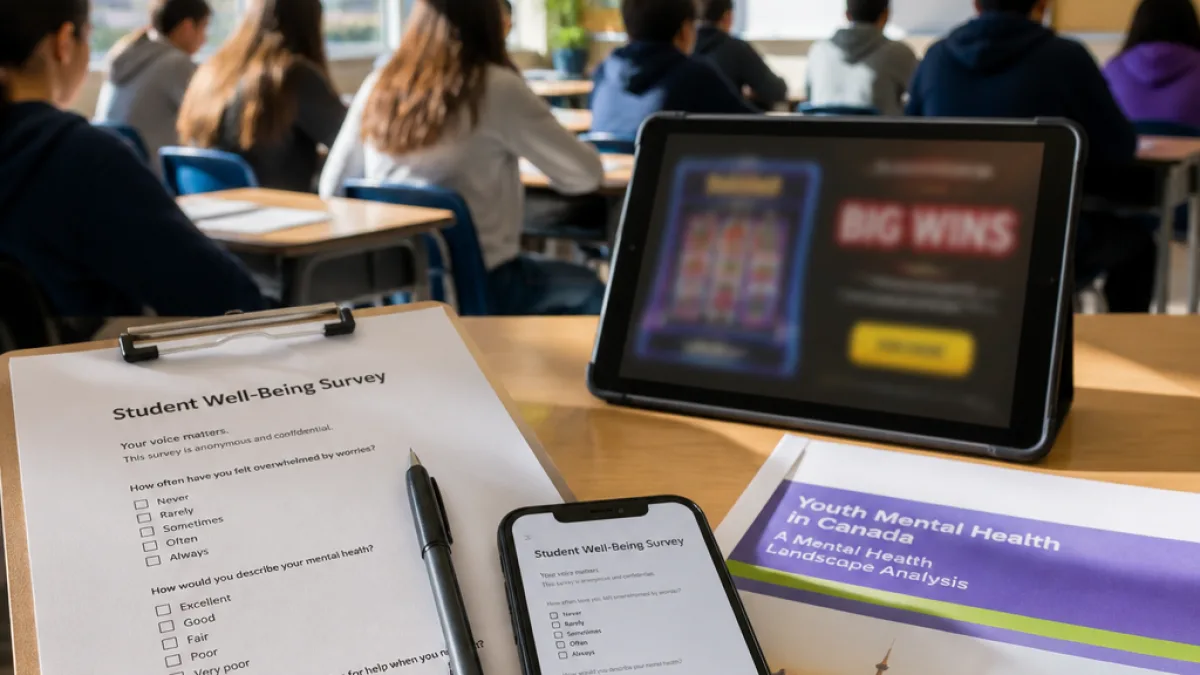
The latest Ontario Student Drug Use and Health Survey, conducted by the Centre for Addiction and Mental Health (CAMH), indicates some easing of psychological distress among young people since the pandemic but underscores a sustained, elevated burden of mental-health challenges across the province.
Distress down but still elevated
CAMH reports that 46 per cent of students in grades 7 to 12 indicated a moderate to serious level of psychological distress in 2025. That represents a decline from the 51 per cent who reported similar levels in 2023, but the centre cautions the proportion remains substantially higher than rates observed more than a decade ago.
Hayley Hamilton, lead investigator and co-director of CAMH’s Institute for Mental Health Policy Research, described the decrease as “encouraging,” while noting the overall prevalence remains concerning for parents, educators and health planners.
“The decrease is encouraging,” said Hamilton, adding that the continued high numbers reflect a longer-term upward trend in reports of psychological distress.
Shifts in substance use and gambling
The survey found that fewer students are using alcohol and drugs and that many are delaying first-time use compared with earlier cycles. However, one of the more dramatic changes documented by CAMH is the rise in online gambling among adolescents.
- Online sports betting: About one in 10 students reported placing sports bets in 2025, a sharp increase from about one in 100 in 2017.
- Advertising exposure: Nearly one-quarter of students said they see or hear gambling site advertising every day.
“The students are finding a way to gamble,” Hamilton said, pointing to changes in Ontario regulations that allowed private betting platforms to enter the market.
Methodology and scope
The biennial survey has been carried out since 1977 in school boards across Ontario. The 2025 cycle included 11,108 students in grades 7 to 12, sampled from 1,147 classes in 246 schools across 42 school boards. Students completed anonymous online questionnaires between December 2024 and June 2025.
| Measure | 2017 | 2023 | 2025 |
|---|---|---|---|
| Moderate to serious psychological distress | Data not provided in release | 51% | 46% |
| Students placing sports bets | 1 in 100 | Not specified | 1 in 10 |
| Daily exposure to gambling ads | Not specified | Not specified | ~25% |
Interpreting the trends
Investigators suggested several possible explanations for the long-term rise in reported mental-health concerns, including the influence of social media and, importantly, a reduced stigma that makes students more willing to acknowledge and report distress. The report does not attribute causation to any single factor.
On substance use, the data points toward a continued downward trend in youth alcohol and drug experimentation and use, consistent with public-health messaging and changing youth attitudes. Still, the surge in engagement with online gambling sites stands out as an emerging risk area.
Implications for policy and services
For educators and local health systems across Ontario’s diverse communities, the findings present mixed signals. The reduction in reported distress suggests some recovery from the pandemic’s most acute effects, but the sustained high numbers mean demand for school-based mental-health supports, counselling and community services is unlikely to abate.
Meanwhile, the gambling data raises questions about the effectiveness of age-restriction enforcement on private betting platforms and about targeted advertising that reaches young audiences. Municipal and provincial authorities will be watching how regulation, enforcement and public-education campaigns respond.
CAMH’s survey is one of the province’s longest-running sources of youth substance-use and mental-health data. Its wide sample and repeated measures give policymakers and service providers a longitudinal view they can use to plan resources and interventions across both urban and rural settings.
As school boards and health authorities review these findings, parents and guardians have practical reasons to remain vigilant: monitor online activity, discuss gambling and substance use openly, and seek supports from school counsellors or community mental-health services when needed.
Reporting from Ontario’s communities shows the province remains midway through a complex recovery. The latest CAMH numbers underline that while some progress has been made, much of the work to support young people’s well-being lies ahead.















