Temporary measures fall short, Bath residents say
Just over nine months after Hurricane Melissa sent water tearing through Bath and undermining the Plantain Garden River’s banks, residents say a recent, makeshift intervention does not eliminate the ongoing threat to houses and the nearby Bath Primary School.
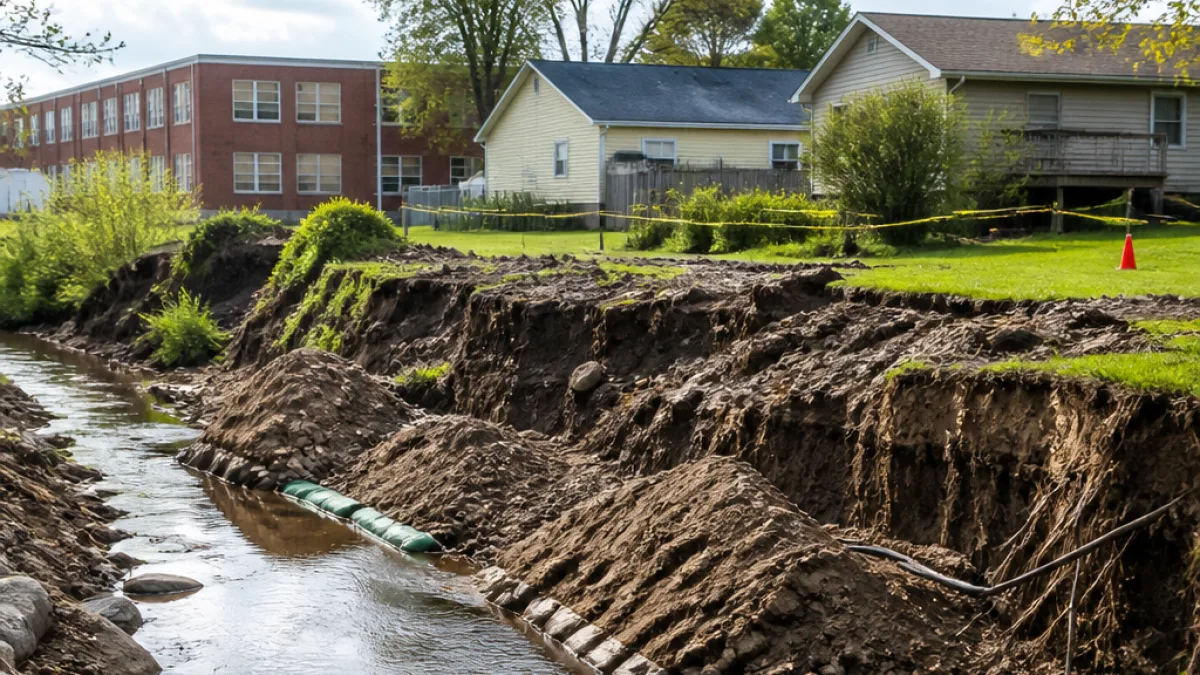
Local people point to piles of dirt placed along the river’s edge and into the channel in July as a stopgap that has reduced the immediate risk of the water pushing into the community. But homeowners who watched the river steadily eat into the landscape for years are adamant the work is a temporary fix and not a substitute for engineered protection such as a groyne or properly channelled flow.
Photographs taken in the community and observations from neighbours show the scene is markedly different from the chaos of last October, when the storm surge and heavy rain gouged the banks, washed away a parked vehicle and left some properties precariously close to collapse. Yet residents say their fear persists: another bout of heavy rain could rapidly reverse the short-lived sense of security, further eroding the bank and putting homes — and the wider community — at risk.
What has been done, and why residents remain concerned
Workers pushed dirt into the gap where the river had broken away and placed additional material in the river’s path to obstruct the flow. For some neighbours, the fill makes the immediate area feel safer; for others it is little consolation.
- Residents say the core issue is the absence of a proper channel to divert the river away from vulnerable banks.
- They argue that structural protections such as a groyne would provide a long-term solution by stabilizing the flow and protecting the bank.
- Parents and guardians remain worried about Bath Primary School, located near the river, and the potential impact on children and staff if erosion resumes during heavy rainfall.
Local context and the wider consequence
The community’s concerns reflect a broader challenge facing coastal and riverine settlements: making short-term repairs after a storm is often cheaper and faster than building resilient infrastructure, but such stopgap measures rarely address the root causes of erosion and flood risk. Residents here have watched the river lop away at land for years; the trauma of last October — when Hurricane Melissa ravaged sections of the island — remains fresh.
Without a durable engineering response, including proper channeling and bank stabilisation, families worry that another major weather event could cause homes to collapse into the river’s path. The potential for repeated damage raises questions about property values, the cost of repeated emergency responses and the long-term habitability of the most exposed houses.
Timeline of key events
| Event | Date |
|---|---|
| Hurricane Melissa impacts area | 28 October 2025 |
| Temporary dirt placed along riverbank and in channel | July 2026 |
What residents want next
Those living at the river’s edge have called for a more permanent solution — specifically, construction that would channel the Plantain Garden River away from the community and protect the bank with engineered works. They say appropriate measures would go beyond emergency fills and instead seek to stabilise the riverbed and adjacent land to prevent further erosion.
Until such work is completed, neighbours say they will be watching weather reports and the river’s levels closely. The short-term intervention may have bought some breathing room, but for many in Bath the risk feels unresolved: the question now is who will fund and execute long-term works to keep houses and the nearby school safe from the next heavy rainfall event.
Reporting note: Accounts and images were provided by community residents in Bath, St. Thomas. Local names and descriptions reflect conditions observed following Hurricane Melissa and the July interventions.