
What changed and why
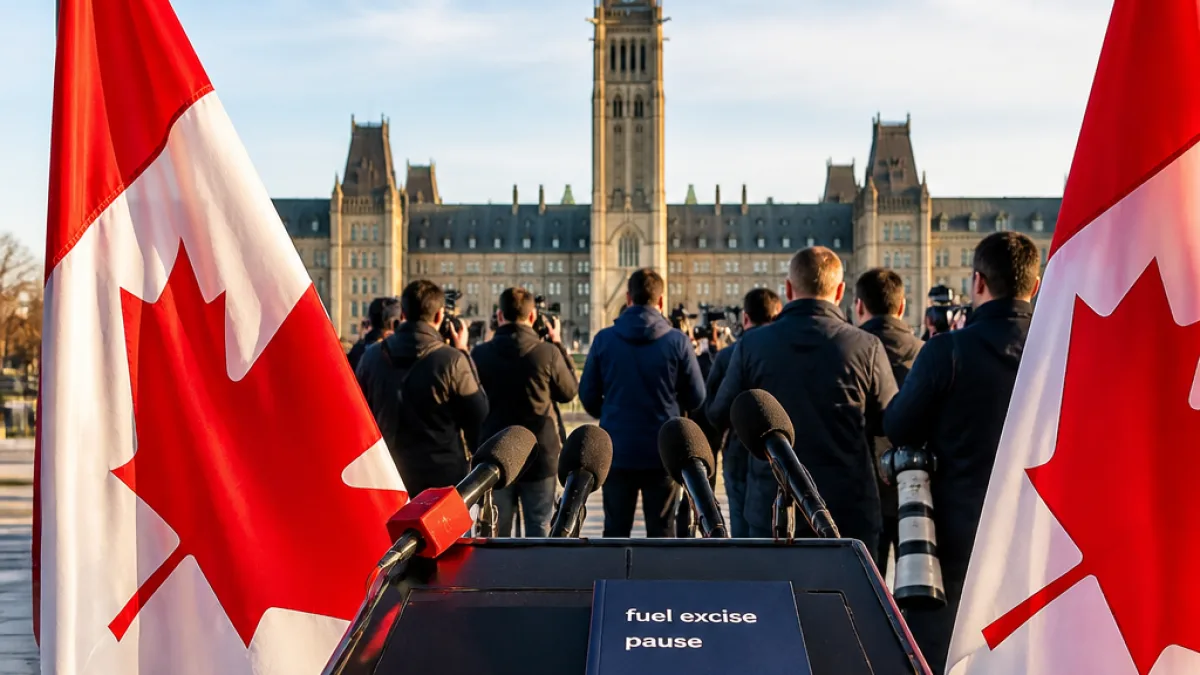
The federal government announced in Ottawa that it will extend the suspension of the federal fuel excise tax through January 2027 and then phase the charge back in over three months beginning in February. Finance Minister François-Philippe Champagne said the measure is intended to provide "practical relief at a time when Canadians need it most" as global instability has pushed fuel prices higher.
The temporary pause first took effect on April 14 after an escalation in the U.S.–Iran conflict sent global oil prices upward. It had been due to end Labour Day but the recent increase in volatility — particularly threats to shipping through the Strait of Hormuz — prompted the government to keep the exemption in place for several more months.
How the phase-in will work
| Period | Excise tax level |
|---|---|
| Now through January 2027 | 0% (suspended) |
| February–March 2027 | 50% of the regular rate |
| April 2027 | 100% (return to normal) |
What it means at the pump
Statistics Canada reported the national average price of a litre of gas in April was about $1.79. The Canadian Automobile Association (CAA) placed the national average at $1.729 per litre on Sept. 2. According to government figures, reinstating the excise tax would raise that national average to $1.829 per litre — roughly a $5 increase to fill a standard 50-litre tank.
- Current national average (April): $1.79/L (Statistics Canada)
- CAA average (Sept. 2): $1.729/L
- Projected with excise tax: $1.829/L (adds about $5 on 50 L)
"For Canada, it means practical relief at a time when Canadians need it most,"
The decision is presented as a response to ongoing market volatility. Champagne said that the government expects oil-market turbulence to continue "for the foreseeable future" and that the excise tax relief is a direct response to that reality.
Cost and fiscal trade-offs
When the pause was first announced in April, then-Prime Minister-designate discussions estimated a roughly $2.4-billion cost for the initial four-month break. On Wednesday, Finance Minister Champagne said the extended measure will cost the federal government around $5.3 billion in lost revenue.
Champagne told reporters the government can cover the cost through a combination of additional revenues from higher oil prices and broader government savings introduced in last year’s budget. The government’s rationale is that increased revenue from energy-sector receipts and other budget measures will offset the temporary shortfall.
Analysts and political context
Robert Glasgow, a trade and customs lawyer at KPMG, said the extension is politically sensible but not sustainable indefinitely. He suggested the planned gradual reintroduction of the excise tax between February and April should help consumers adjust.
Economists and business advocates have differing views on the best use of limited public dollars. Some argue that direct business supports would be a more targeted way to shield firms from global shocks, while others say immediate relief at the pump helps households and businesses alike in the short term.
For Ottawa residents and the surrounding region, the extension offers near-term relief on commuting and delivery costs, but it also shifts the debate toward how Ottawa should balance short-term consumer relief with longer-term fiscal priorities as global energy markets remain unstable.















