
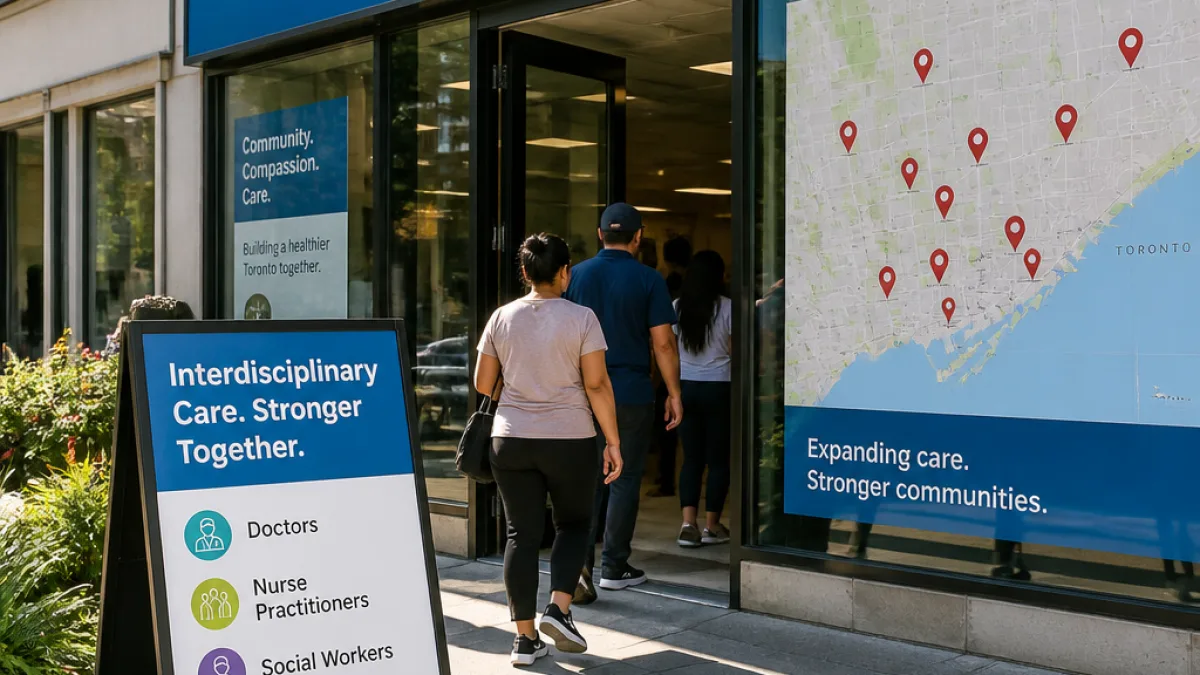
TORONTO — Ontario plans to issue a call for proposals to create or expand 78 primary care teams as part of a renewed push to attach an additional 600,000 people to primary care, Health Minister Sylvia Jones announced Tuesday.
Government outlines next phase of attachment strategy
The new round follows an initial phase launched early last year that the province says has connected 437,000 people with a primary care provider. The program is part of a broader government goal to ensure that every Ontarian has access to a family doctor or team‑based primary care by 2029.
Jones told reporters the focus for the next stage will be on expanding interdisciplinary teams that can include physicians, nurses, physiotherapists, social workers and other allied health professionals. Those teams are intended to provide a broader mix of services in neighbourhood settings, particularly in areas that have historically struggled to recruit and retain clinicians.
"The government is on track to reach its target,"
The minister said the upcoming call for proposals will target communities across the province where gaps remain, although the announcement did not break down where the 78 teams will be located. The government has said previously that it wants to attach two million people under its plan, a figure the Ontario Medical Association (OMA) has contrasted with its own estimate that some 2.5 million residents lack a family doctor.
How the model works and what it means locally
Under the approach being expanded, primary care is delivered by interdisciplinary teams operating out of community clinics, family health organisations or other local sites. The intent is to share responsibilities across a broader range of clinicians so patients can receive timely access to routine care, chronic disease management and referrals for allied services.
For Ontarians in both urban and rural communities, the model aims to reduce pressure on emergency departments and walk‑in clinics by providing ongoing relationships with care providers. Rural communities, however, face unique workforce challenges and may require different supports to stand up team‑based care compared with larger cities.
- New teams proposed: 78 (create or expand)
- People to be attached in next round: 600,000
- People attached so far: 437,000
- Provincial target: Attach all Ontarians by 2029
Numbers and tensions in the health sector
The announcement underscores an ongoing tension between provincial targets and assessments from professional organisations. The OMA has indicated a higher figure for people currently without a family physician, suggesting the province's stated target may understate the scale of the challenge.
Bringing interdisciplinary teams online requires recruiting a mix of professionals, securing clinic space and arranging funding and operational supports. The government has emphasised that its strategy is built around team‑based care, while critics say immediate action is needed to address shortages of physicians and nurses in many communities.
Practical implications for patients
For patients who are attached to a primary care team, the benefits can include continuity of care, improved chronic disease management and better navigation of specialist services. For those still unattached, the next round of team expansions may present new options for long‑term care relationships rather than episodic or urgent care only.
Anyone seeking more information about the attachment process or whether new teams will be established in their area should monitor the provincial health ministry's announcements and local public health units, which typically share details about community‑level initiatives.
What comes next
The province says the call for proposals will be issued shortly; details on application timelines, eligibility and funding arrangements are expected to follow. The success of the initiative will hinge on convincing clinicians to join new teams and ensuring sufficient supports are in place to operate them, especially outside major urban centres.
As the province moves forward, the contrast between urban areas with denser health networks and rural or smaller communities with persistent recruitment challenges will be central to whether the government can meet its attachment targets before 2029.
| Metric | Figure |
|---|---|
| Already attached | 437,000 people |
| Next round target | 600,000 people |
| Planned teams (create/expand) | 78 |
| Provincial deadline | 2029 |
Reporting from Toronto, this coverage will follow how the call for proposals is structured and where the new or expanded teams are placed across the province, with particular attention to how rural communities are supported to implement team‑based primary care.















