
State tests find heavy metals and organics; family stays in home
State environmental officials have identified a range of potentially hazardous substances after industrial materials were uncovered last month in the backyard of a Niagara Falls home near the historic Love Canal containment area.
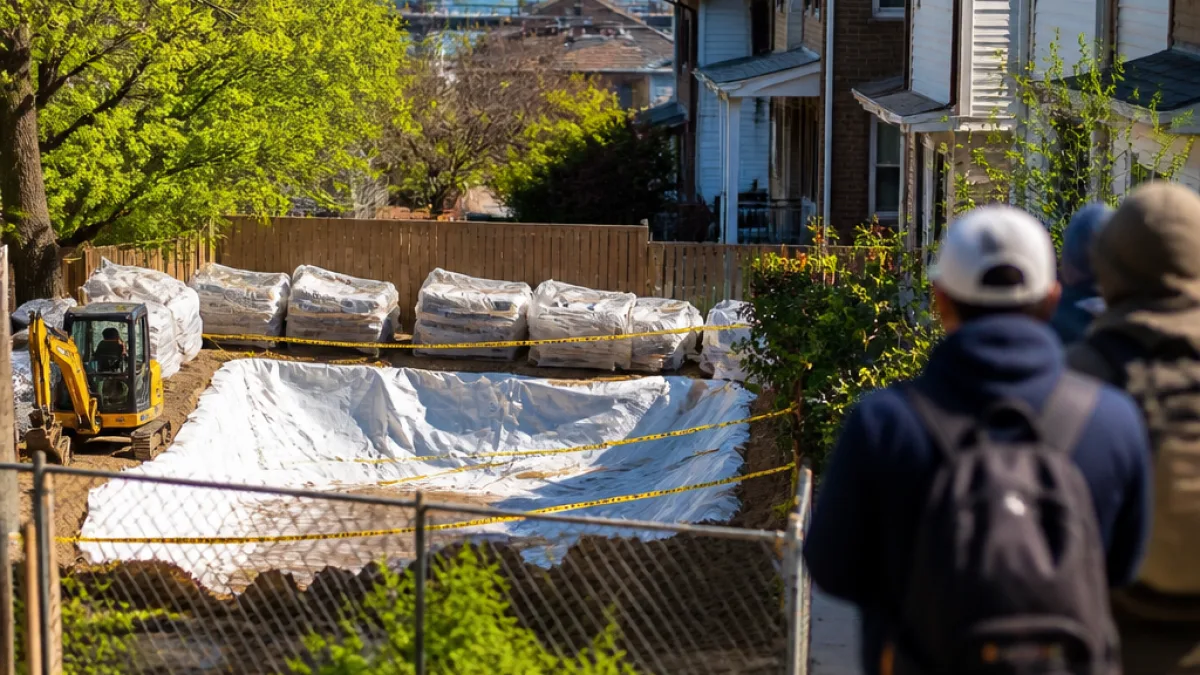
A private contractor excavating soil for a pool installation on the McKiernan family property on 99th Street exposed the waste, prompting follow-up sampling by the New York State Department of Environmental Conservation (DEC). According to the family and local reporting, the DEC removed excavated soil, lined the affected areas with vinyl and replaced topsoil.
The DEC’s tests found heavy metals including lead, copper, nickel and hexavalent chromium. Additional sampling of outdoor soil showed semi-volatile chemicals that the family says are consistent with materials historically associated with the nearby Love Canal containment site. Sump pump testing also identified a range of heavy metals and organic chemicals.
“I am shocked at their lack of regard or care for our family or the public,”
— Jocelyn McKiernan, expressing the family’s frustration with state officials’ decision to allow them to remain in the house during testing and remediation.
Concerns from health providers and neighbours
The discovery has had immediate consequences for the family’s access to services: three of the McKiernans’ son’s medical care providers have reportedly declined to make in-home visits because of concern about potentially hazardous materials on-site. The family says they do not want to be relocated while work proceeds, and they are angry about how state officials have communicated about the risks.
The community’s anxieties are heightened by the property’s proximity to Love Canal, the area associated with decades of industrial dumping and a landmark environmental-health crisis. The presence of chemicals consistent with Love Canal wastes has deep symbolic weight for residents and can amplify concern even before a full risk assessment is complete.
Contaminants recorded by state and private sampling
Public and family disclosures list the following substances identified in environmental tests:
- Heavy metals: lead, copper, nickel, hexavalent chromium
- Semi-volatile organics: di-n-butyl phthalate, bis(2-ethylhexyl) phthalate, fluoranthene
- Other organics and pesticides: acetone, chloroform, 4,4’-DDE, 4,4’,-DDD, alpha-BHC, delta-BHC, Dieldrin, gamma-BHC (Lindane)
| Sample type | Noted findings |
|---|---|
| Outdoor soil | Semi-volatile chemicals consistent with Love Canal wastes (e.g., phthalates, chloroform, fluoranthene, 4,4’-DDE) |
| Sump pump water | Heavy metals and organochlorine compounds including DDD, Dieldrin and Lindane |
State response and the family’s objections
According to reporting from the Niagara Gazette, the DEC has said it will test and excavate industrial waste materials from the property. The family says the DEC has not recommended relocation while that work proceeds, a decision they find distressing. The McKiernans participated in a conference call with a DEC attorney and agency representatives to discuss results and next steps.
For neighbours, the episode rekindles long-standing worries about residual pollution in and around Love Canal. For the McKiernans, the discovery has disrupted daily life and access to medical care, while the family continues to press officials for clearer communication and what they describe as greater empathy.
At this stage, the publicly reported information describes initial sampling and immediate remediation work to remove visibly contaminated soil and cap affected areas. Further testing and targeted removal work are expected to follow as the DEC assesses the full extent of contamination and any public-health implications.
Local residents with concerns about possible exposures or those who may have been affected should watch for official updates from the DEC and local public-health authorities. The McKiernan case underscores the lingering environmental-health challenges that continue to affect neighbourhoods adjacent to historic industrial disposal sites.















