
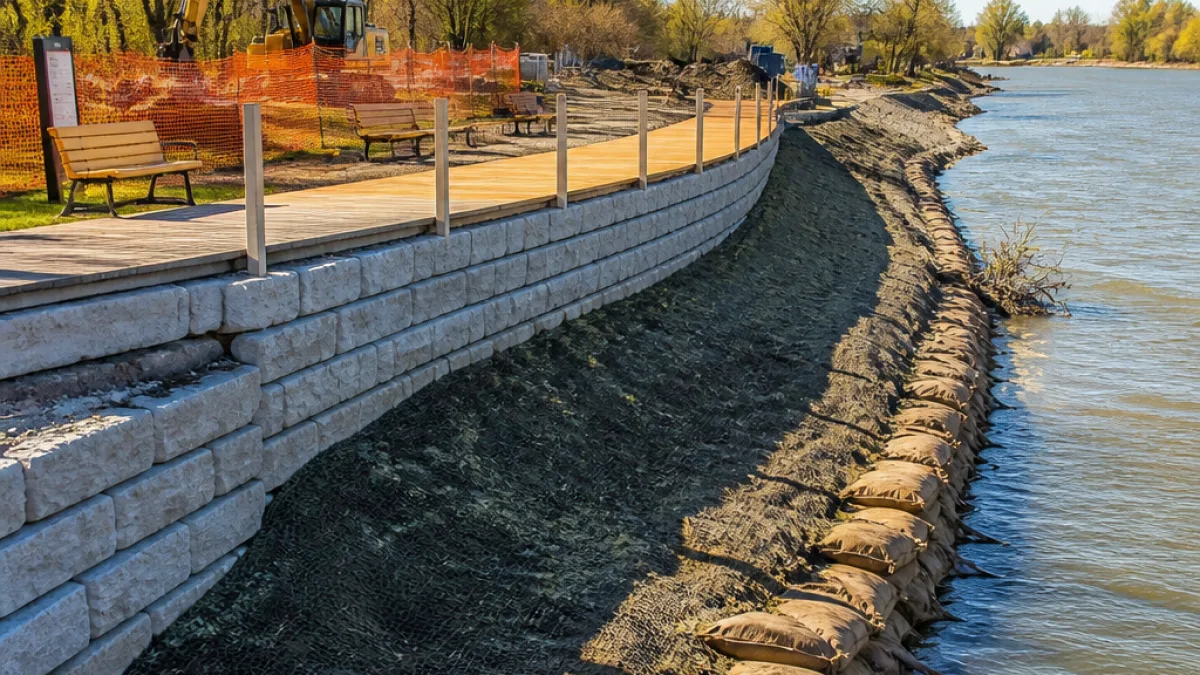
Federal funding targets flood damage that closed popular trail
Mississauga’s Culham Trail — a multi‑use path that threads through Riverwood Conservancy, Erindale Park and the University of Toronto Mississauga campus — will undergo a major reconstruction after persistent flood damage left sections closed since 2024. On Aug. 22, federal officials announced a $5.2‑million investment to rebuild nearly four kilometres of the trail, part of a broader $8.8‑million initiative to improve active transportation infrastructure in Mississauga.
The project responds to years of seasonal washouts that have repeatedly undermined the path and exposed underground utilities, forcing closures and detours that have affected commuters, recreational users and the many students who use the corridor to travel to and from campus. The trail draws more than 500,000 users annually, municipal officials say, making it one of the city’s busiest off‑road active transportation routes.
Design changes aim to make the corridor more resilient
Planners say the reconstruction will focus on lifting the trail surface to the five‑year flood level, strengthening riverbanks and shoring up boardwalks to better withstand high water events. The design also includes enhancements intended to improve user experience: upgraded signage, new benches and enhanced landscaping are all part of the scope.
- Length to be reconstructed: nearly 4 km
- Federal contribution for Culham Trail: $5.2M
- City‑wide active‑transportation initiative: $8.8M in federal funding
- Annual users of the trail: more than 500,000
“This investment will make the trail more resilient and accessible for the community,” said Joe Horneck, Mississauga Ward 6 councillor.
Members of Parliament and city councillors framed the work as both practical repair and a pilot for how municipalities can retrofit ageing infrastructure for a changing climate. Fares Al Soud, MP for Mississauga Centre, underlined the role of the Culham Trail as a community asset linking neighbourhoods and institutions.
Local consequences: accessibility, safety and long‑term costs
For residents who use the trail daily, the project promises to restore a reliable connection that has been intermittently severed by erosion and flood damage. For city managers, it is an immediate intervention to reduce recurring maintenance costs and emergency repairs that follow each significant spring thaw or heavy rainfall.
Raising the trail to the five‑year flood level is a design choice that acknowledges predictable seasonal floods rather than simply rebuilding to the status quo. That decision will influence construction techniques, materials and the placement of boardwalks in low‑lying sections. Reinforcing the riverbanks is intended to slow the rate at which floodwaters undermine the path’s substructure — an approach that technical teams say can extend the life of the corridor and reduce the frequency of closures.
Officials have also flagged the project as a potential model for other municipalities confronting similar challenges. In Mississauga and elsewhere in southern Ontario, older trails and waterfront infrastructure were not designed for the intensity or frequency of recent storm events. Integrating resilience into everyday public works, proponents argue, reduces disruption to users and long‑term repair bills.
What comes next
City staff will need to finalise design details, obtain necessary permits and plan construction to limit disruption. The announcement does not include a specific start date for construction; project timing will depend on design work, procurement and seasonal constraints tied to riverbank work. The federal contribution is one piece of project financing under the larger $8.8‑million program aimed at improving active transportation across Mississauga.
Until reconstruction is complete, users should continue to expect closures and detours in affected sections of the Culham Trail. For many, the project will be judged not only on engineering outcomes but on how quickly and safely it restores uninterrupted access to a corridor that links homes, parks and the university.
| Item | Figure |
|---|---|
| Federal contribution (Culham Trail) | $5.2M |
| Length to be rebuilt | Nearly 4 km |
| Annual trail users | 500,000+ |
| City‑wide active‑transportation funding | $8.8M |
The Culham Trail project underscores a broader challenge facing Mississauga and municipalities across Ontario: adapting ageing public infrastructure to a climate that is producing more frequent and severe flood events. How quickly the city moves from funding announcement to finished, resilient trail will determine whether this corridor becomes a national example of adaptation in practice or another repeated repair on the municipal ledger.















