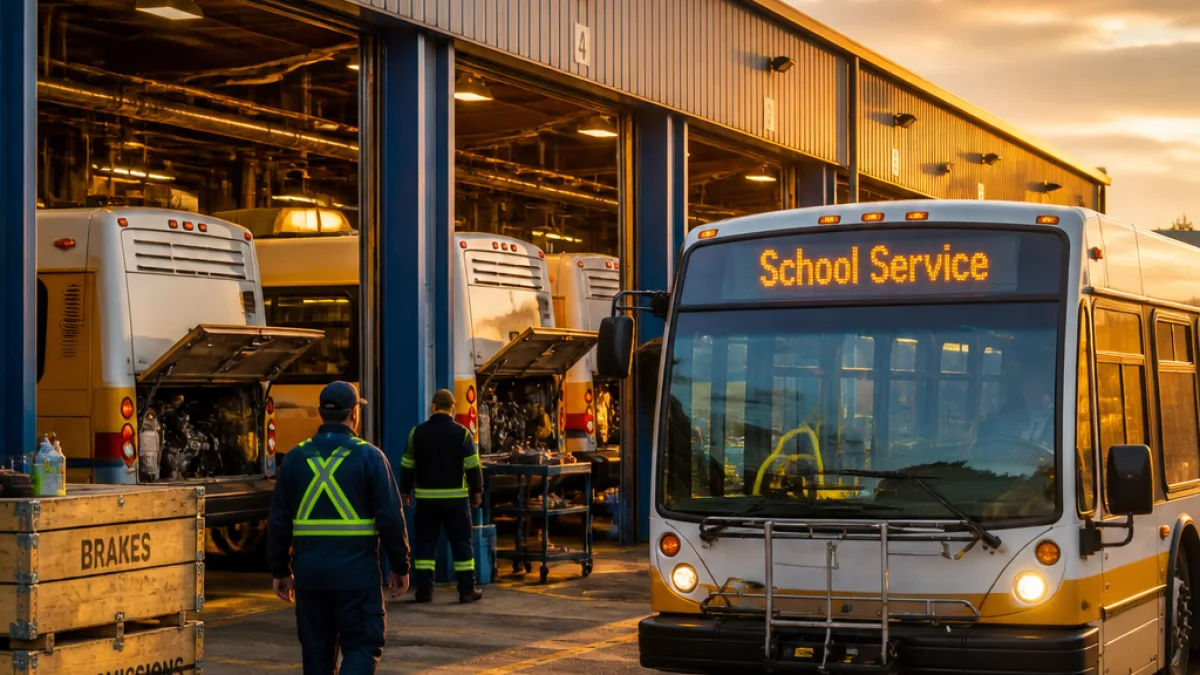
HSR prioritizes school routes amid parts shortage and garage transition
The Hamilton Street Railway is contending with a parts shortage that has slowed routine maintenance and put more buses out of service than usual just as the system increases frequency for the fall. The fleet maintenance manager says the agency has a targeted plan to limit disruption, with a particular emphasis on routes serving schools.
Jeff Poljanski, HSR's fleet maintenance manager, told CBC Hamilton that the number of buses undergoing repairs is roughly 10 to 15 per cent higher than normal. The increase, he said, comes as certain components — including brakes and transmissions — are taking longer to source.
"Our goal is to have minimal impact on customers and not to impact school service,"
Poljanski linked the delays to broader operational and supply challenges. While he did not point to a single cause for the supply delays, he said HSR normally keeps a minimum inventory of critical parts but currently faces longer lead times for a range of items.
New garage adds complexity during adjustments
The transit commission also opened a second garage on the Hamilton mountain in late June, a move intended to improve safety and reduce overcrowding at the main facility. However, Poljanski said the transition to operating out of two locations has introduced workflow difficulties as staff adjust to moving parts and vehicles between sites.
That combination — supply chain delays and the logistics of a two-garage operation — has forced HSR to take steps aimed at protecting service for the most vulnerable and time-sensitive trips.
- Prioritizing repairs for buses that serve routes near elementary and high schools, as well as post-secondary institutions.
- Maintaining minimum impact to customers by adjusting schedules and vehicle assignments where possible.
- Managing inventory of critical components while awaiting longer lead-time orders.
Service implications as fall schedules resume
Fall service is set to increase next week, when routes typically regain higher frequency to match ridership returning after summer. HSR officials say the priority is to ensure that those frequency increases do not reduce service to schools.
Local families and commuters who depend on bus connections to reach schools, colleges and workplaces could see the effects of stretched fleet capacity in several ways, including altered vehicle assignments or short-notice cancellations if additional buses become unavailable for service. HSR is aiming to limit such outcomes through targeted maintenance priorities.
| Issue | Effect |
|---|---|
| Parts shortage | Longer repair lead times; more buses sidelined |
| Two-garage operation | Workflow adjustments; logistical delays moving parts and vehicles |
| Prioritization | Focus on school-area routes to minimise customer impact |
Poljanski did not provide a timeline for when parts supply or workflow issues will return to normal, but said the focus remains on minimising disruption for riders — particularly those travelling to and from schools and post-secondary campuses.
As HSR works through the transition, transit users are advised to check HSR communications for updates on specific route changes or service alerts. With fall schedules and school terms resuming, the next few weeks will be a test of the system's ability to balance increased service demands with constrained maintenance capacity.
The situation in Hamilton mirrors larger trends reported elsewhere in public transit, where global supply chain pressures and fleet-management changes have complicated day-to-day operations. For now, HSR's public priority is clear: keep buses running where they are most needed.