
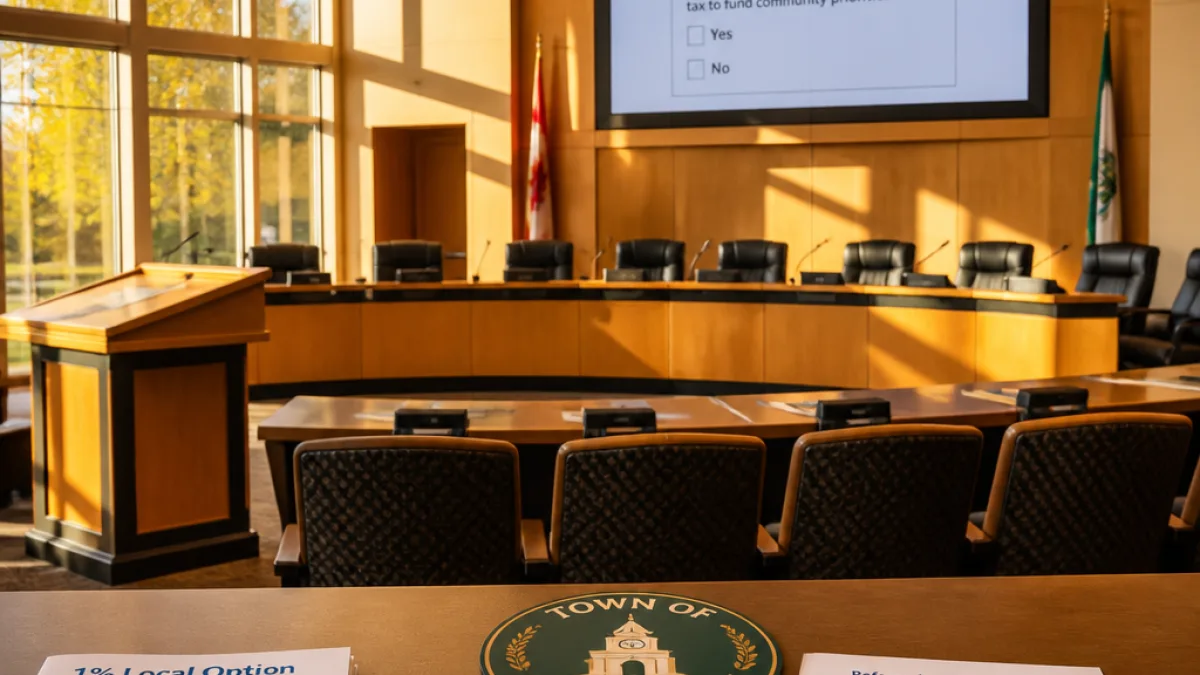
Referendum approved for November ballot
Residents of Georgetown County, South Carolina, will decide on Nov. 3 whether to add a 1 per cent local option sales tax, following a third and final reading of an ordinance by county council. If approved, the measure would add one cent to each dollar spent on items already subject to the state’s 6 per cent sales tax.
The county ordinance passed council in a 6-1 vote, with Council Member Raymond Newton recorded as the lone dissent. County staff plan to provide voters with more information in the weeks ahead to explain how the proposed tax would operate and what its adoption could mean for shoppers and property owners.
How the revenue would be split
Under South Carolina law, the distribution of proceeds from a local-option sales tax is set by statute. County documents and staff have highlighted that:
- Up to 71 per cent of the revenue would be dedicated directly to property tax rollbacks — reductions on primary and secondary residences, vehicles, boats and other taxable property.
- The remaining 29 per cent could be used for government operations, services and community projects at the county and municipal levels, including additional forms of tax relief.
| Revenue use | Share |
|---|---|
| Property tax rollbacks | 71% |
| Operations, services, projects | 29% |
“This is an opportunity to make living in Georgetown County more affordable and provide meaningful relief to property owners,” County Administrator Angela Christian said.
What would change for shoppers
If voters approve the measure, the practical effect for consumers would be an additional penny on the dollar for purchases that are taxable under state law. Items already exempt from South Carolina’s state sales tax — such as certain unprepared foods and prescription medications — would remain exempt from the additional 1 per cent levy.
The county has suggested one rationale for the proposal is to allow visitors and non-resident consumers who use local services and infrastructure to help share the cost through the sales tax, rather than placing the burden solely on property owners.
Context and next steps
Thirty-two of South Carolina’s 46 counties already have a local-option sales tax in place. The county’s public information materials and website have been signposted as sources where voters can find further details about the referendum and how the allocation of revenue would be implemented should the measure pass.
County staff will distribute additional information this month ahead of the Nov. 3 vote to help residents understand the mechanics and potential impacts. The referendum will appear on the general election ballot.
While this decision concerns a U.S. county government, the mechanics underscore a recurring municipal funding question familiar to Ontario readers: whether to broaden who pays for local services by using consumption-based levies or to rely more heavily on property taxes. The Georgetown County proposal offers a concrete example of one approach currently being considered and debated in a local context.















