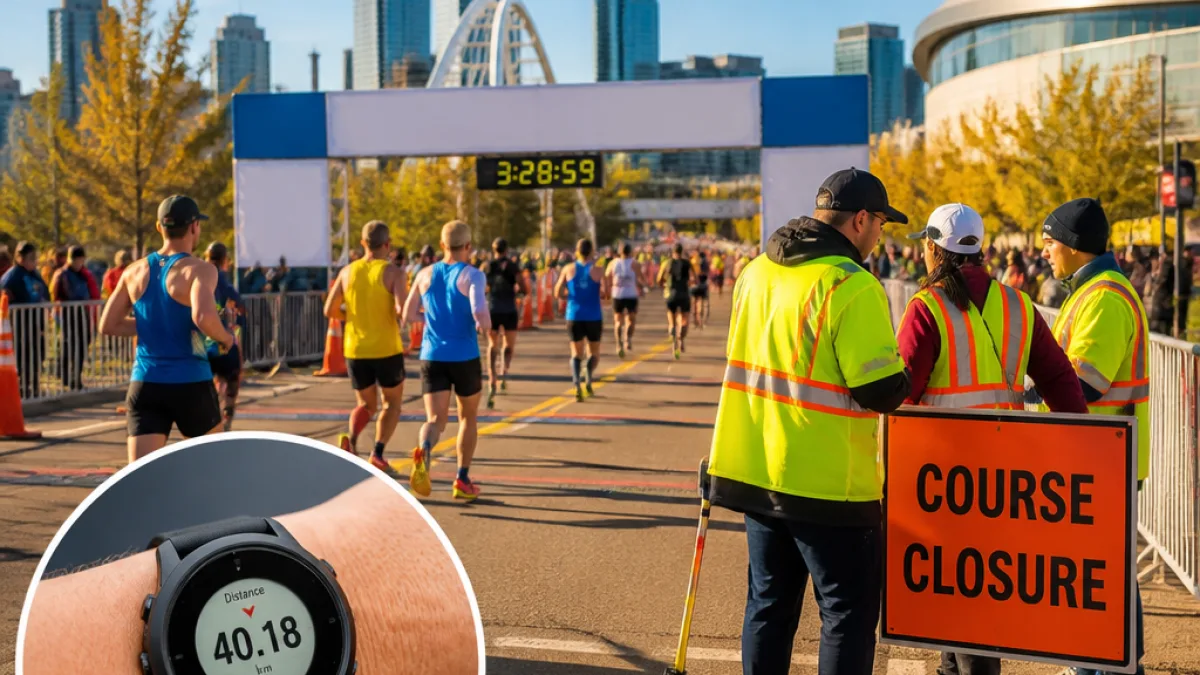
The organisers of the Edmonton Marathon are standing by the official measurements of this year's course after some runners raised concerns that the route was shorter than advertised.
Organisers defend certification
In a statement released following the event, race officials said they were "confident in the accuracy of the certified course distances and the validity of the race results." The comment echoed the event's position that the route met the standards required for certification.
Runners report GPS discrepancies
Despite the organisers' assurance, a number of participants in the event reported that their wrist devices and phone GPS units recorded distances shorter than the advertised marathon and half-marathon lengths. The complaints circulated on social media and among local running groups in the days after the race, prompting questions about pacing, finish times and qualification for other events that rely on certified courses.
GPS devices can vary in reported distance because of satellite reception, device settings and local signal interference, but those technical caveats did not temper the concerns voiced by some finishers, who said the discrepancy was substantial enough to affect official finish times and personal records.
- Organisers: Emphasise certified measurement and validity of results.
- Runners: Report shorter distances on GPS units and question course accuracy.
- Community impact: Concerns centre on records, qualifying standards and trust in future events.
Local consequences and scrutiny
For Edmonton's running community, the dispute is more than a technicality. Many runners train months to chase personal bests or qualifying times, and the integrity of official measurements is central to those goals. Race organisers typically rely on certified measurement procedures to ensure fairness and uniformity across events; contesting those measurements can have reputational and logistical consequences.
Race certification is also important for the broader local economy. Marathons and large road races bring visitors to Edmonton, fill hotel rooms and support restaurants and retailers. Questions about the race's conduct can ripple beyond the finish line, affecting volunteers, sponsors and local partners who support the event.
How measurement disagreements arise
Distance discrepancies often prompt two lines of explanation. Organisers usually point to standard, certified measurement practices used to lay out the course. Runners frequently cite personal GPS devices that indicate a different distance. Both sides have plausible reasons for their positions:
| Claim | Possible explanation |
|---|---|
| Course shorter than advertised | Detours, shortened segments or errors in setup (organisers would investigate) |
| GPS shows shorter distance | Signal loss, device calibration, urban canyons or settings affecting satellite tracking |
Race directors elsewhere have at times reviewed course logs, GPS traces and volunteer reports to reconcile differences. It is standard practice to examine setup notes and measurement certificates when disputes arise.
"We are confident in the accuracy of the certified course distances and the validity of the race results."
What comes next
Organisers have not announced any immediate changes to official results. Local running clubs and individuals have indicated they will continue to press for clarity. For many participants, the key issues are transparency about how the course was measured and documented, and whether there are remedial steps such as a formal review or third-party re-measurement.
Edmonton readers who rely on accurate course measurement — whether to qualify for other races or to assess personal performance — will be watching how organisers respond. The outcome will matter not only for this cohort of athletes but for the credibility of future events staged in the city.
Questions about timing, refunds or adjusted results will likely surface if runners and organisers cannot reconcile the differing accounts. For now, the race authority's statement defending certification is the standing position, and the dispute underscores the tensions that can arise between technical measurement standards and the data many athletes use to validate their own efforts.