
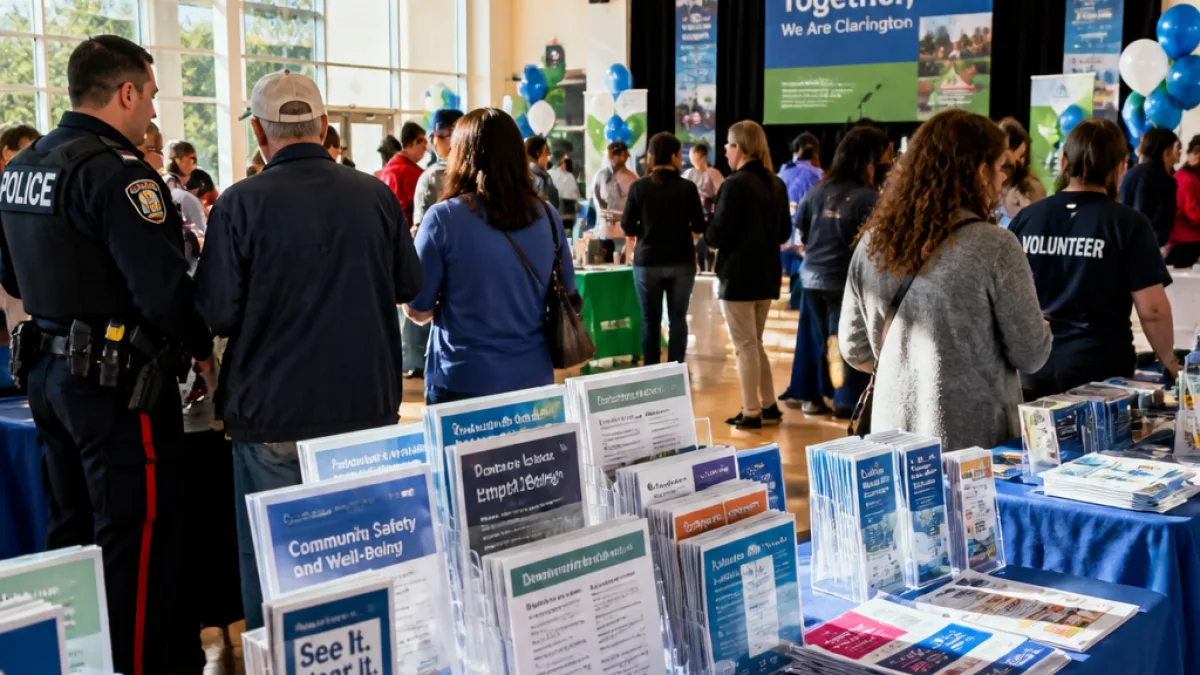
Community dialogue in Bowmanville focuses on safety, inclusion and truthful information
Dozens of residents, municipal staff, Durham Regional Police and representatives from local faith and community organisations filled the Garnet B. Rickard Recreation Complex in Bowmanville on Wednesday evening for a conversation framed around hate, disinformation and diversity.
The event, titled “Together, We Are Clarington: A Community Conversation,” was organised by the Municipality of Clarington in partnership with the Region of Durham, Clarington Library, Museums and Archives and Victim Services of Durham Region. It combined panel discussion elements with a resource fair meant to connect residents to services and faith and cultural groups operating in the community.
- Key topics included the distinction between hate incidents and hate crimes, reporting processes, spotting disinformation and strategies for respectful dialogue.
- Organisers emphasised local supports and practical steps residents can take to keep neighbourhoods safe and inclusive.
- A resource village provided information tables from faith groups, cultural organisations and social-service providers.
Officials and participants said the gathering was intended to both inform and build relationships among neighbours who might not otherwise meet.
“We are continuously growing. Canada is made up of a huge group of folks from different cultures, faith backgrounds, races, religions, and I think it’s really important that we continue to understand how can we live together in peace and harmony, and how do we support one another in our community.”
The quote above was attributed in reporting to Nirosha Balakumar, supervisor of equity, diversity and inclusion for the Municipality of Clarington and one of the event organisers. Balakumar told attendees the need for these conversations has existed for many years and remains important as communities change.
Clarington Mayor Adrian Foster, in remarks republished by the municipality, framed the event as part of a civic effort to sustain respectful public life as the municipality grows.
“As Clarington grows, we need to come together for important conversations about how we can make our community stronger and more inclusive. Our backgrounds may differ, but as I looked around that room, I saw people who reflected the very best of Clarington, with the courage and determination to stand together in the face of hate,”
The format combined information and practical guidance. Attendees could learn how to distinguish between hate incidents — which can be harmful but may not meet the threshold of criminal conduct — and hate crimes, which involve criminal offences motivated by bias. Police and victim services representatives explained reporting routes and supports available to those affected.
| Organisers / Partners | Role |
|---|---|
| Municipality of Clarington | Host, local coordination |
| Region of Durham | Partner, regional supports |
| Clarington Library, Museums and Archives | Community outreach, resources |
| Victim Services of Durham Region | Information on reporting and supports |
Organisers also set aside time to address the growing problem of online misinformation and disinformation. Presenters discussed common warning signs — such as emotionally charged language, lack of credible sourcing, and rapid sharing without verification — and urged residents to check multiple reputable sources before accepting or forwarding information.
For many attendees the event was as much about making local connections as it was about policy. Community tables allowed residents to meet leaders from faith communities and cultural organisations, and to access information about programs and services available in Clarington.
Organisers said the evening also marked the launch of the second phase of the municipality’s Together, We Are Clarington campaign, intended to continue outreach and conversation beyond a single event. Details about the phase were not fully detailed in media releases associated with the event.
Residents at the gathering described a mix of motivations: some came to learn how to recognise hate and navigate online misinformation; others came to share their personal experiences and to simply meet people they might not otherwise encounter in this municipality that continues to grow and diversify.
Local officials emphasised that maintaining social cohesion would require ongoing effort from municipal leaders, community organisations and residents themselves — a steady series of conversations, practical supports and opportunities to build relationships across differences.
The municipality is expected to continue community engagement work under the campaign in the coming months; attendees were encouraged to follow municipal and partner channels for announcements about further sessions and resources.














