
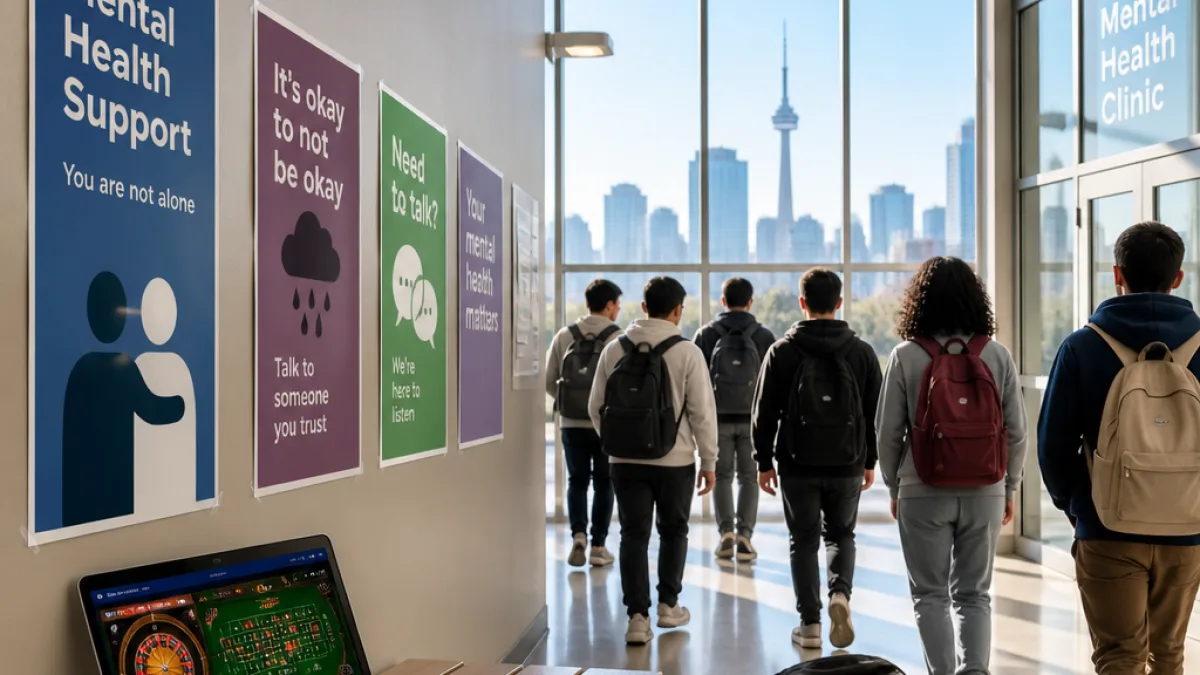
TORONTO — A major provincial survey released Monday by the Centre for Addiction and Mental Health (CAMH) suggests psychological distress among Ontario students has eased from pandemic-era highs but remains substantially higher than it was a decade ago.
Distress rates fall but stay elevated
The latest Ontario Student Drug Use and Health Survey found that 46 per cent of students in grades 7 to 12 reported a moderate to serious level of psychological distress in 2025, down from 51 per cent in 2023. While the decline was described as encouraging by researchers, they cautioned the figure still reflects a level of distress well above pre-2019 years.
About one in five students reported experiencing symptoms of depression during the two weeks before completing the survey, and roughly one in three said they had symptoms of anxiety. Approximately 30 per cent of students rated their overall mental health as "fair" or "poor," a figure researchers say is similar to 2019 levels.
Experts urge continued investment
Hayley Hamilton, lead investigator and co-director of CAMH's Institute for Mental Health Policy Research, said the drop from 2023 is welcome but not sufficient.
"I think the message is that we have seen some improvements in student mental health, which is encouraging,"
She added the improvement essentially returns youth mental health to where it stood in 2019 — a year in which reported distress was already considerably higher than a decade earlier. Hamilton noted that the rise seen between 2013 and 2019 was dramatic and that those earlier levels in 2013 were much lower than what was measured in 2019 and after.
Behavioural risks shift, gambling rises
The survey also documented changes in risk behaviours among students. CAMH reported a noticeable increase in participation in online gambling, though the release did not provide a detailed breakdown of types of gambling or platforms used. The finding adds to concern among clinicians and educators that digital access may be exposing youth to new harms.
Researchers pointed to multiple possible explanations for the rise in reported mental health problems observed over the past decade. These include broader societal shifts such as increased social media use, and the possibility that declining stigma has made young people more willing to report symptoms.
What the numbers show
| Measure | Reported figure |
|---|---|
| Moderate to serious psychological distress (2025) | 46% |
| Moderate to serious psychological distress (2023) | 51% |
| Students rating mental health as "fair" or "poor" (approx.) | 30% |
| Symptoms of depression (two weeks prior) | 1 in 5 |
| Symptoms of anxiety | 1 in 3 |
Local impact and service demand
Across Ontario, school boards and community mental health providers have reported high demand for services since the pandemic. The survey’s findings underscore pressure on school counsellors, youth mental-health programs and provincial health services as families seek supports for depression, anxiety and other forms of psychological distress.
Health-care providers say persistent elevated need can strain wait lists for assessment and treatment, and complicate efforts to deliver timely care to students who are at risk of self-harm or academic decline. The CAMH investigators and other child and youth mental-health experts have repeatedly called for sustained investment in prevention, early intervention and school-based supports.
What families and schools can do
- Recognize symptoms: changes in sleep, appetite, school performance or social withdrawal can indicate distress.
- Access local supports: school counsellors, primary care providers and community mental-health centres are first points of contact.
- Limit harmful exposures: monitor online gambling and screen time, and seek guidance from professionals when concerned.
CAMH’s survey provides a provincial snapshot; it does not replace clinical assessment for individual students. But the data make clear that, even as the worst of the pandemic’s immediate mental-health effects recede, Ontario’s children and teens continue to face significant psychological challenges that require coordinated responses from families, schools and health systems.
— Reporting from Toronto.















