Municipal payouts and racial disparities raise questions about policing in Burlington
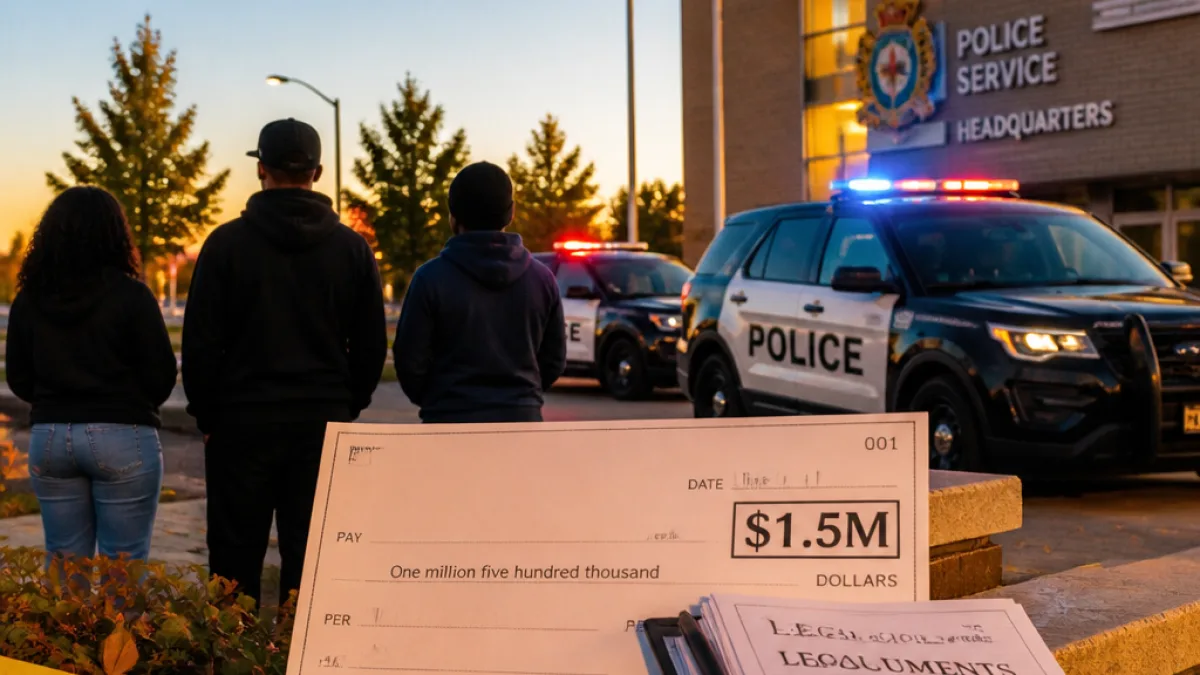
Documents obtained by reporters show the City of Burlington has paid out nearly $1.5 million in settlements stemming from police use-of-force incidents since 2019, a sum accompanied by roughly $747,500 in legal fees. The settlements, and the circumstances behind them, have drawn renewed scrutiny from civil-rights advocates, community leaders and residents concerned about how officers engage with people who are Black or living with mental-health challenges.
One high-profile settlement settled this summer involved a mother, Cathy Austrian, whose son — described in court records as Black and living with emotional and intellectual disabilities — was restrained by officers and given ketamine by paramedics after a confrontation triggered by a theft complaint. The Police Commission found the episode to be “a troubling violation” of department policy, but then-chief Jon Murad defended the officers’ actions as within policy at the time. Austrian later sued the city in 2024; that case was resolved this year for $150,000.
“The case is over, but the family’s hope is that the consequences from this case actually continue to drive change forward.” — Hillary Rich, attorney for the ACLU of Vermont
The Austrian settlement is one of five cases involving use-of-force resolved since 2019. According to the department’s own data — recorded back to 2012 — the number of documented use-of-force incidents involving Black people reached 99 in 2025, an all-time high. Analysed alongside demographic figures, Black residents were found to be subjected to use-of-force at roughly six times the rate of their share of the city’s population.
Local consequences: finance, trust and reform
For city taxpayers, settlements and legal costs are tangible consequences. For Black residents and those with mental-health conditions, the repeated incidents are a source of eroded trust. The records demonstrate two overlapping problems: rising financial liabilities for the municipality and a persistent racial gap in how force is used.
- Financial impact: nearly $1.5 million in settlements plus about $747,500 in legal fees since 2019.
- Disproportionate impact: Black residents experience use-of-force incidents at about six times their population share.
- Accountability gap: divergence between Police Commission findings and the department’s initial defence of officers involved.
Advocates say the pattern points to systemic issues that training alone may not remedy. The ACLU lawyer representing the Austrian family characterised the settlement as a step toward change but urged continued accountability so the incidents do not recur.
What the numbers show
| Metric | Figure |
|---|---|
| Settlements tied to use-of-force since 2019 | ~$1.5 million |
| Legal fees related to those cases | $747,500 |
| Use-of-force incidents involving Black people (2025) | 99 |
| Relative rate vs population share | 6x |
City officials and police leaders have previously taken steps intended to reduce the use of force and increase oversight. But the data detailed in recent public records and the settlements suggest those measures have not fully closed the racial gap in force used against community members. The Police Commission’s finding that officers violated policy in the Austrian case, followed by department leadership’s contrary position, highlights tension between civilian oversight bodies and police command.
For residents across the urban core and outlying neighbourhoods, the debate touches on broader questions: how to protect officers who face dangerous situations while ensuring the civil and human rights of those they encounter; how to allocate municipal dollars between policing, mental-health supports and community programming; and how to rebuild trust where it has frayed. The settlements and the data behind them make those policy choices more urgent for Burlington’s elected officials.
As this story develops, community groups and legal advocates say they will continue to press for transparent reporting, independent review of use-of-force incidents and investments in alternatives to police responses for people in crisis.