Community ride in Burlington to remember teen and press safety concerns
Organisers in Burlington have scheduled a “critical mass” bike ride to honour a 16-year-old student who was killed after a collision with a motor vehicle last month and to call attention to safety for people who bike and walk in the city.
The ride is set to begin at 5:30 p.m. on Wednesday at the memorial located at the intersection of Locust and Pine streets, the site of the July 16 collision that claimed the life of a Burlington High School student, 16-year-old Shiloh Skalka. The driver involved, Douglas Knapp, was cited on a charge of negligent operation with death resulting, and police said he remained at the scene.
Local bike-advocacy group Local Motion is coordinating the event. Organisers say the ride is intended both to honour Skalka’s memory and to express solidarity with people who feel unsafe while walking and cycling through the city.
“Holding a critical mass ride really lets a community that feels especially unsafe right now ... be able to come together and feel safe with each other,” a Local Motion representative said.
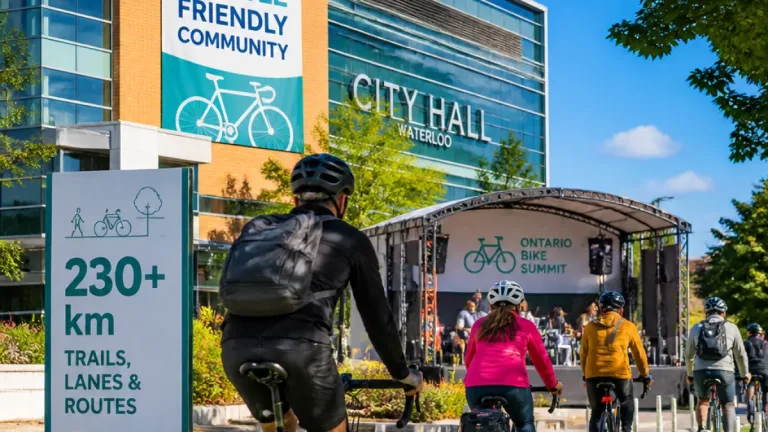
Advocates described the ride as a visible demonstration of grief and a call for safer streets. The event is expected to attract residents who use bicycles for commuting, recreation and local errands, as well as families and supporters of improved active-transportation infrastructure.
Why organisers say the ride matters
- Remembrance: to honour the teenager killed in the July collision and provide a focal point for community mourning.
- Visibility: to highlight the vulnerability of people who walk and pedal in urban settings.
- Solidarity: to bring together residents who feel unsafe and to promote shared concern for street safety.
Police records indicate the driver involved in the July crash was cited for negligent operation with death resulting; beyond that, authorities said the driver remained on scene. The incident has prompted renewed public conversation in Burlington — from families of young people who bike to advocacy groups pushing for safer infrastructure.
Critics of the current street environment point to intersections and stretches of road where cyclists and pedestrians are especially exposed to turning vehicles, limited sightlines and inconsistent bike-lane protection. Supporters of the ride say community-led demonstrations help keep pressure on municipal officials and road planners to prioritise design measures that reduce conflict between motor vehicles and active modes of travel.
What participants can expect
Organisers have said the ride will begin at the memorial and move through local streets. Participants plan to assemble at the designated time and route from the memorial site, with an emphasis on collective visibility rather than confrontation. Riders are encouraged to wear helmets and follow the direction of marshals.
| Event | Details |
|---|---|
| Start time | 5:30 p.m., Wednesday |
| Start location | Memorial at Locust and Pine streets |
| Purpose | Honour victim; promote safety and community solidarity |
Municipal officials and traffic engineers often point to a combination of enforcement, education and engineering when addressing road-safety concerns. Demonstrations such as this one can also spur public meetings and policy debates over cycling infrastructure such as protected lanes, intersection treatments and traffic-calming measures.
For residents who regularly bike or walk, the ride provides an opportunity to show that street-usage is a shared public concern. For family and friends of the victim, it offers a way to mark loss and call for attention to prevent future tragedies. Local Motion said its aim is to foster both remembrance and a constructive conversation about how streets can be safer for everyone.
Organisers have encouraged participants to arrive early and to follow any guidance from event marshals. As with any public gathering on city streets, riders should be mindful of traffic signals and co‑ordinate with local authorities if directed to do so.
The planned ride is one of several community responses in the weeks since the July collision, reflecting heightened concern about the safety of young people who bike and the broader question of how cities balance motor-vehicle traffic with modes of active transportation.