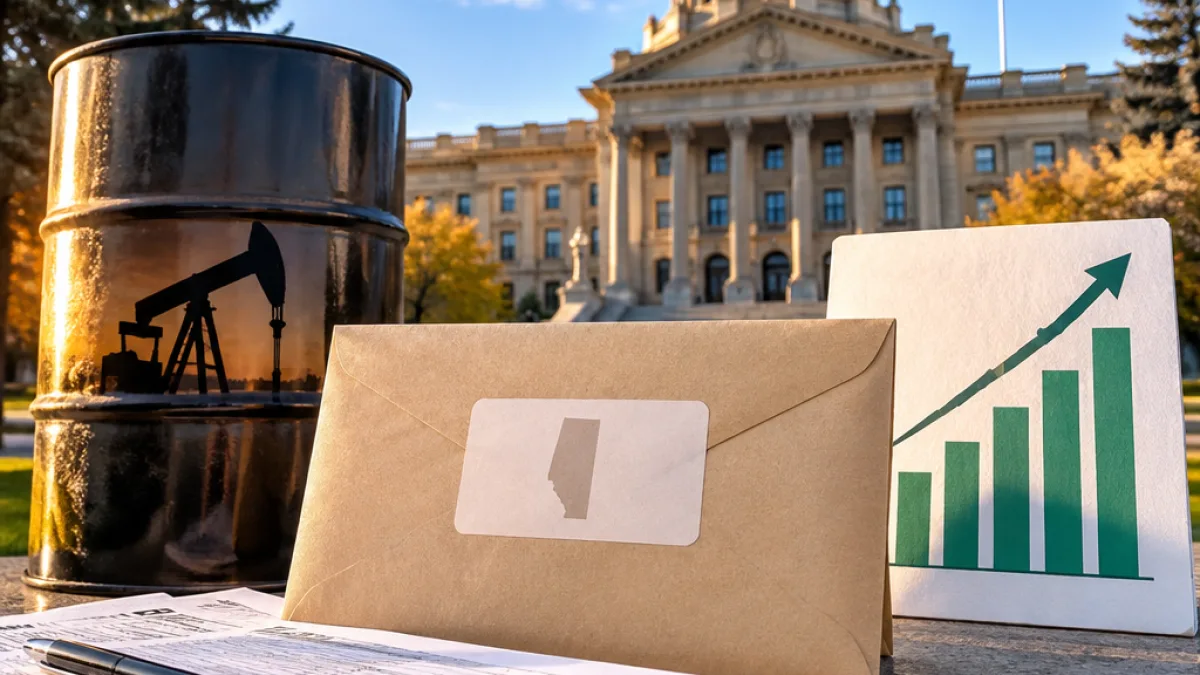
The Alberta government is taking steps to ensure that any direct payments to residents it may introduce in the future are not subject to taxation, Finance Minister Jason Nixon says.
Nixon described the proposal as a way to preserve the government’s ability to issue money to Albertans without those payments becoming taxable. The province has not announced a specific new payment program as part of the move. Instead, the stated objective is to establish a framework that could apply if such payments are made later.
The initiative follows the government’s announcement of a provincial surplus on June 17, 2026. That surplus was attributed to higher oil prices, underscoring how closely Alberta’s fiscal position remains tied to energy markets and the revenue they generate.
No payment program announced
At this stage, the available details point to a tax-policy measure rather than an immediate distribution of money. The province is seeking to make sure potential future payments are protected from tax, but the source material does not identify an amount, delivery date, eligibility test or confirmed payment for Albertans.
That distinction matters for residents trying to determine whether they should expect a cheque or deposit. The government’s announcement, as described by Nixon, is about what could happen in the future. It does not confirm that a payment is currently being issued.
“This could be used for affordability payments. It could be used for any other payment that the government so chose to do in the future,” Nixon said.
The minister’s comments leave the possible uses broad. He identified affordability payments as one example, while also saying the same approach could support other forms of direct assistance. No further categories or programs were specified.
What Albertans know so far
| Issue | Information available |
|---|---|
| Purpose | To ensure possible future direct payments are tax-free |
| Confirmed payment | None identified in the announcement |
| Possible use | Affordability support or another future payment |
| Fiscal context | A provincial surplus linked to increased oil prices |
The proposed treatment could give the province more room to design future affordability measures without reducing the value of a payment through taxation. However, the source information does not set out how the policy would work in practice or whether any future program would require additional legislation, regulations or other government decisions.
For now, the announcement is best understood as preparation for a possible policy option. The government would still have to decide whether to issue money, determine who would qualify and establish how much would be provided. None of those decisions is included in the information released about the tax measure.
Oil prices remain central to Alberta’s finances
The timing also places the proposal against a familiar Alberta economic backdrop. The province announced its surplus after oil prices rose, a reminder that government finances can improve quickly when energy revenues strengthen. Those revenues can create room for spending choices, including possible payments to residents, but they also reflect conditions that can change.
The source material does not provide the size of the surplus or identify the oil-price increase behind it. It does, however, link the province’s improved fiscal position to higher oil prices. That connection is significant because it frames the potential payment policy as part of a broader debate over how Alberta should use stronger revenues.
Any future affordability payment would therefore have to be considered alongside the province’s broader fiscal planning. A tax-free structure could affect the amount recipients ultimately keep, but the government has not released enough information to assess the cost of a program or how long it could be maintained.
What comes next
The immediate next step is for the province to advance its effort to ensure possible payments receive tax-free treatment. Until the government provides further details, Albertans should not assume that a payment is approved or scheduled.
The clearest message from Nixon is that the government wants the option available. Whether that option becomes an affordability payment, another form of direct assistance or no payment at all remains undecided in the information released so far. For Alberta households watching the province’s finances, the key facts are the proposed tax protection, the absence of a confirmed payment and the surplus created amid stronger oil prices.