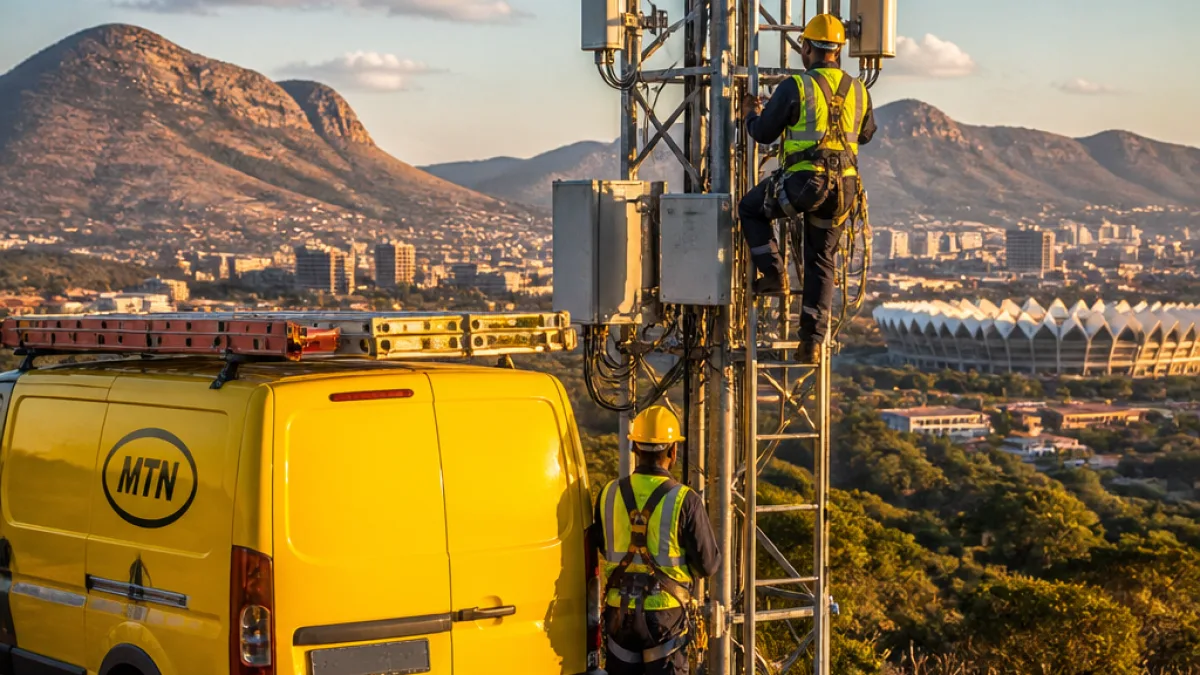
Vodacom Mpumalanga has announced plans to invest more than R600 million in network infrastructure and technology in the 2026/27 financial year, aiming to expand broadband access, boost capacity and improve resilience across the province.
Scope of the investment
In a statement released on Monday, the operator said the funding will be directed at expanding coverage, enhancing connectivity in underserved areas and increasing the proportion of fibre-connected sites. The company said the rollout will prioritise townships, deep rural communities and other areas that have faced limited access to fast data services.
Vodacom noted this investment builds on R620 million it spent on network infrastructure in the previous financial year. As part of its modernisation programme the telco expanded its Mpumalanga mobile infrastructure footprint from just over 1,300 sites to 1,408 sites.
Technology and coverage targets
The rollout will cover all 17 local municipalities across the province, spanning the three district municipalities: Ehlanzeni, Gert Sibande and Nkangala. Vodacom said it is accelerating the rollout of both 4G and 5G services, with particular emphasis on remote and underserved communities.
| Metric | 2025/26 | 2026/27 |
|---|---|---|
| Fibre-connected sites | 41% | 45% |
| Data traffic on 4G | 90% | 78% |
| Data traffic on 5G | – | 20% |
Improving resilience against power and theft
Vodacom said a portion of the investment will go towards transmission upgrades, enhancement solutions and backup power infrastructure. The company flagged localised power disruptions, vandalism and theft as ongoing threats to telecoms infrastructure in South Africa, and said these measures aim to mitigate their impact on services.
- Accelerate 4G and 5G availability across all municipal areas in Mpumalanga.
- Increase fibre backhaul to improve site performance and reliability.
- Upgrade transmission and install backup power to reduce outage time from load-shedding and equipment theft.
Why this matters locally
For a province where tourism, small business activity and remote work are increasingly reliant on stable internet access, upgraded mobile networks can deliver tangible benefits. Improved connectivity supports online bookings and payments for tourism operators, gives small enterprises better access to digital markets and helps learners and jobseekers reach online resources and opportunities.
Energy security remains a cross-cutting issue. Backup power and more fibre-connected sites can reduce the impact of load-shedding on mobile services, but they do not remove dependence on the wider electricity grid. The investment is therefore a resilience measure as much as it is a capacity upgrade.
Spectrum and technical detail
Vodacom said it will continue to leverage licensed spectrum bands including 700 MHz, 1800 MHz and 2100 MHz to extend coverage and increase capacity. The company also reported a shift in traffic distribution: while roughly 90% of data traffic was carried on 4G in 2025/26, that share moved to about 78% on 4G and 20% on 5G in 2026/27, reflecting growing demand for next-generation connectivity.
What residents can expect
Vodacom did not provide a site-by-site timetable in its statement. Residents and local businesses can expect incremental improvements as fibre backhaul is extended and new radio sites come online. The company has said its rollout will target each municipality; practical effects may include faster mobile internet, reduced latency for applications and services, and more reliable data connections during some power interruptions.
While the funding announcement is a positive sign for provincial connectivity, sustained service improvements will depend on the pace of site delivery, protection of equipment from theft and vandalism, and continued coordination with local authorities on planning and wayleave approvals.
The investment highlights how telecom infrastructure upgrades can intersect with Mpumalanga's development priorities — from bolstering tourism and small business to supporting education and remote work — while also illustrating the ongoing vulnerability of services to electricity and security challenges.