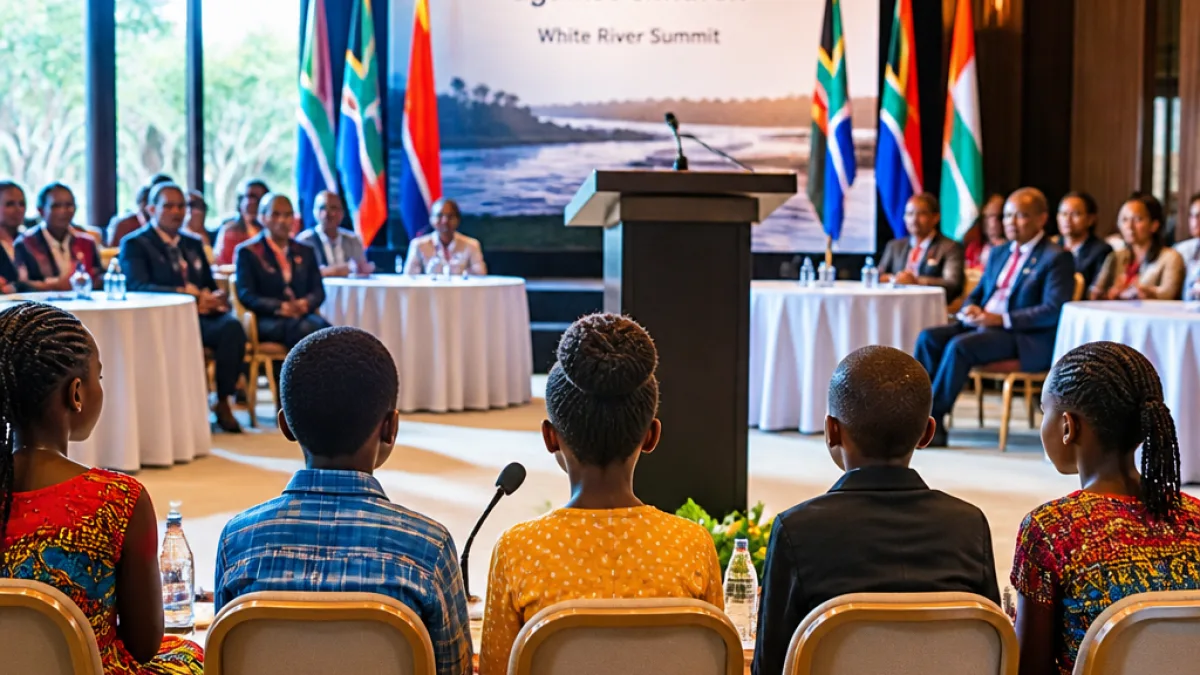
The provincial resort town of White River hosted a national two-day summit on 1 and 2 October that sought to refocus attention on ending violence against children and to give young people a direct role in shaping the policies and programmes that affect their lives.
National leadership meets child ambassadors
Minister of Social Development Dina Pule attended the event at the ANEW Resort, together with Mpumalanga’s MEC for social development, Nompumelelo Hlophe. The summit was held under the theme “Working together in ending violence against children” and brought together child ambassadors from all nine provinces. Delegates included beneficiaries of the Risiha Family Programme, parenting programmes, foster-care initiatives and child and youth care centres.
The summit offered a platform for government, civil society and children to reflect on progress since the first Global Ministerial Conference on Ending Violence Against Children in Bogotá in November 2024, and to agree priorities for the coming months and years.
Commitments and priorities
Minister Pule emphasised that the department will support initiatives to end violence against children during Social Development Month and beyond. She highlighted the National Strategy on Accelerated Action for Children, which focuses on preventing abuse, neglect and exploitation while ensuring children help shape policy and legislation.
"Children must have a meaningful say in the decisions that affect their lives," said Minister Dina Pule.
Delegates recommitted to implementing seven breakthrough areas across all 52 districts. Pule called for improved co-ordination between government, civil society, communities and traditional and religious leaders to accelerate prevention efforts and strengthen support for children affected by violence.
- Elevating child participation in policy and programme design.
- Strengthening prevention and early-intervention services for abuse and neglect.
- Improving coordination among government, civil society, traditional and religious leaders.
- Scaling up support mechanisms for children affected by violence.
Provincial response and local relevance
At the summit’s close, MEC Nompumelelo Hlophe thanked departmental staff, stakeholders and parents who contributed to the event. She acknowledged parents’ appreciation of services provided by the department and pledged action on the summit’s recommendations.
For Mpumalanga, hosting the summit in White River underscores the province’s role in national efforts to protect children and promotes local visibility for programmes such as the Risiha Family Programme and child-care services. The provincial department’s participation indicates an intent to translate national commitments into district-level action plans.
What this means for communities
The summit’s outcomes aim to influence how services are delivered at municipal and district level. Residents can expect a renewed focus on:
- Community-based prevention and awareness activities during Social Development Month and afterwards.
- Greater opportunities for children and adolescents to participate in decision-making structures and consultations.
- Stronger linkages between social services, schools and community organisations to identify and support at-risk children.
Data summary
| Item | Detail |
|---|---|
| Event | Two-day summit on ending violence against children |
| Dates | 1–2 October |
| Location | ANEW Resort, White River, Mpumalanga |
| Attendees | Child ambassadors from all nine provinces; Minister Dina Pule; MEC Nompumelelo Hlophe |
| National focus | Implementing seven breakthrough areas across 52 districts |
Next steps and accountability
The summit highlighted the need for coordinated monitoring to ensure commitments are translated into action at district level. The National Strategy on Accelerated Action for Children provides the strategic framework; implementation will rely on provincial and municipal partnerships with civil-society organisations and community leaders.
Parents and community members wanting to get involved should consult their local social development offices, child-and-youth care centres or recognised parenting programmes to learn about local initiatives linked to the national strategy.
By placing children’s voices at the centre of the agenda, the summit aimed to shift the balance from adult-led policy design to meaningful child participation — an approach that, if implemented across districts, could reshape how prevention and support services are delivered in Mpumalanga and nationwide.