
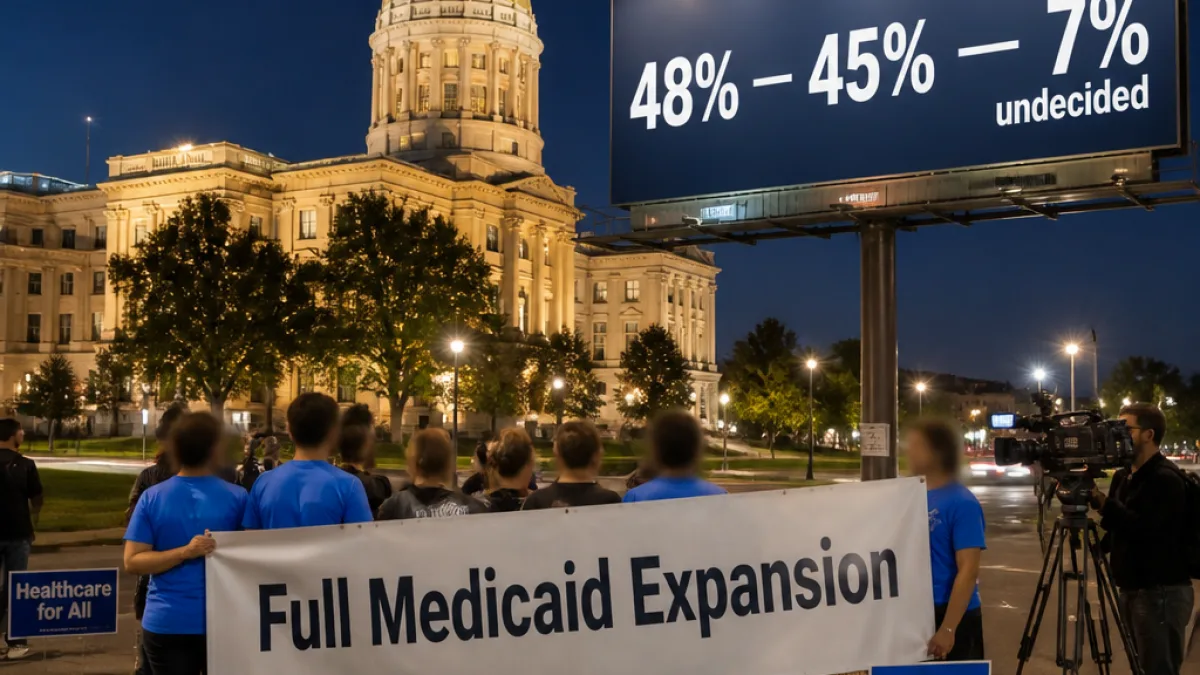
ATLANTA — With less than three months until Election Day, the Georgia governor's race tightened Monday as Democrat Keisha Lance Bottoms spotlighted a pledge to fully expand Medicaid while a new poll shows her trailing Republican Rick Jackson by three points.
Poll shows a close contest and a pool of undecided voters
The Rasmussen Reports survey, cited by FOX 5 Atlanta, found Jackson at 48% and Bottoms at 45% among likely Georgia voters. The poll sampled 1,019 likely voters through telephone and online interviews and lists a margin of sampling error of ±3 percentage points. About 7% of respondents remained undecided.
| Candidate | Share |
|---|---|
| Rick Jackson (R) | 48% |
| Keisha Lance Bottoms (D) | 45% |
| Undecided | 7% |
The numbers underscore how pivotal undecided voters could be in November as both campaigns ramp up outreach.
Bottoms centers health care — calls for full expansion
On a weekend stop in Cobb County, Bottoms made Medicaid expansion the focal point of her pitch to voters, criticizing the state's current Pathways to Coverage program and promising to pursue complete expansion if elected.
"We have not taken advantage of any openings that we have to expand Medicaid in the state," Bottoms said. "So whatever the rules are, we'll work within those rules."
Bottoms told supporters her administration would begin with the goal of fully expanding Medicaid and then determine how to implement the policy under applicable federal requirements. She framed the move as part of a broader affordability agenda, saying expansion would strengthen Georgia's health care system.
The Pathways to Coverage program, now in place, provides Medicaid-like coverage to certain low-income adults who meet work or qualifying-activity requirements. Bottoms criticized what she described as missed opportunities under current state policy and positioned full expansion as a way to reach more residents.
Demographic divides and campaign messaging
The Rasmussen data show clear demographic splits that both campaigns are likely to target in the closing months. According to the survey, Jackson holds advantages among men and older voters, while Bottoms leads among women and voters under age 30. Bottoms also holds a commanding edge among Black voters, with the poll showing a 77% to 18% advantage.
- Men and older voters: tilt toward Jackson.
- Women and voters under 30: lean toward Bottoms.
- Black voters: strong support for Bottoms, per the survey.
Both campaigns have made affordability a central theme. Bottoms emphasizes health coverage and broader access; Jackson has advocated for a more limited approach to expansion, according to campaign statements and the poll coverage.
Why undecided voters matter
With just a three-point spread and a margin of error that could encompass that difference, the roughly 7% of likely voters who remain undecided represent a crucial bloc. Campaigns typically spend heavily in the final weeks to persuade undecided voters and mobilize supporters.
Political strategists note that undecided voters often break based on the dominant issues in late-stage campaigns — in this case, health care and affordability. How each campaign frames Medicaid and related costs could influence turnout and last-minute decisions at the polls.
Next steps for campaigns and voters
As both sides prepare for an aggressive fall campaign, voters will face competing messages about coverage, costs and implementation details for any expansion. Voters seeking more information should review official campaign materials, legislative proposals, and federal guidelines governing Medicaid expansion to understand how changes would affect eligibility and services.
The Rasmussen poll provides a snapshot in time of a closely contested race in Georgia. With months of campaigning still ahead, the evolving policy debate over Medicaid expansion and the decisions of undecided voters will shape the outcome.
Reporting from Atlanta. — Tamara Ellison

















