
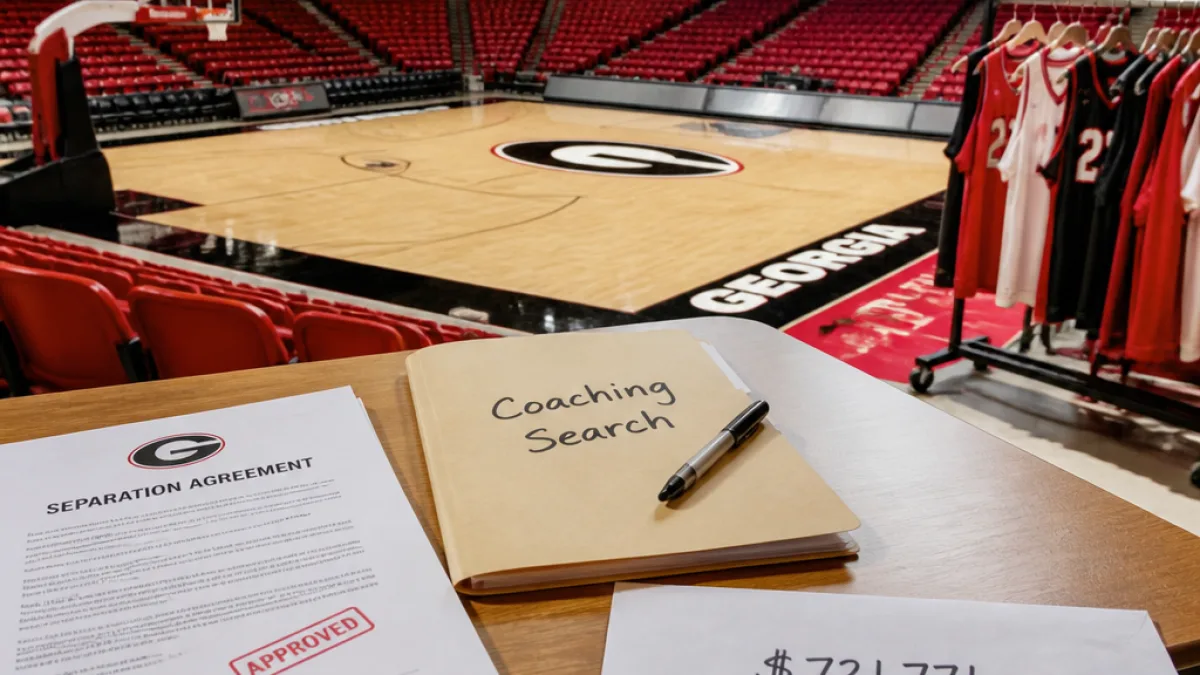
The University of Georgia will pay former women’s basketball coach Katie Abrahamson-Henderson a total of $721,771 in monthly installments through April 30, 2027, according to a separation agreement obtained by the Athens Banner-Herald via an open records request.
The agreement — signed the night before the school publicly announced the split on April 4 — defines the move as a resignation and covers the final two years of a contract that paid Abrahamson-Henderson $1.03 million per year.
Timing and context
Georgia announced on April 4 that it had “mutually parted ways” with Abrahamson-Henderson after the Bulldogs finished the season 22-10 and made an NCAA Tournament appearance. The season was followed, however, by the departures of several top players to the transfer portal.
The separation agreement’s timing — executed the evening before the public announcement — raises questions for some about the process and the use of university funds to cover remaining contract obligations. The agreement was produced through a public records request by the Banner-Herald.
New coach’s compensation and buyout
Georgia hired McNeese State coach Ayla Guzzardo to replace Abrahamson-Henderson. Guzzardo signed a five-year deal that pays $600,000 annually, and Georgia paid a $75,000 buyout to McNeese State to secure her release.
Guzzardo’s contract also includes performance-based incentives that could substantially increase her pay. According to a memorandum of understanding obtained by the Banner-Herald, she can earn up to $450,000 per year in bonuses tied to postseason success and conference accomplishments.
- Bonus incentive highlights: NCAA Tournament appearance, Sweet 16, Final Four, national championship
- Conference incentives: SEC regular-season and SEC Tournament championships
- Individual honors: SEC Coach of the Year and AP national coach of the year bonuses
“While I am excited about pursuing new opportunities, I am grateful for the opportunities that I have received at the University of Georgia,” Abrahamson-Henderson wrote in her resignation letter to athletic director Josh Brooks. “I wish you the best of luck in the future.”
Records and performance
Abrahamson-Henderson compiled a 69-59 record over four seasons at Georgia. Her final campaign included an NCAA Tournament berth, but the offseason departures of key players and roster turnover contributed to the university’s decision to seek new leadership.
Guzzardo arrived at Athens with a recent record of success at McNeese State: she went 29-6 in one season and won the Southland regular-season title after eight years at Southeastern Louisiana.
Compensation overview
Below is a summary of the contractual figures disclosed in the university records:
| Person | Base annual pay | Severance / buyout | Performance bonuses |
|---|---|---|---|
| Katie Abrahamson-Henderson | $1.03 million | $721,771 (paid through Apr. 30, 2027) | N/A (separation agreement) |
| Ayla Guzzardo | $600,000 | $75,000 paid to McNeese State | Up to $450,000 per year (various postseason and honors bonuses) |
What’s next for the program
The separation agreement and the financial terms of the new hire mark a period of transition for Georgia women’s basketball. Athletic department leaders have framed the hire as a step toward stabilizing a roster that experienced notable turnover this offseason. The financial commitments by the university — both in severance and in incentives for a new coach — will be watched closely by fans and stakeholders as the Bulldogs prepare for the upcoming season.
Documents released under the state’s open records laws provided the detailed numbers for both the severance paid to Abrahamson-Henderson and the compensation structure for Guzzardo. Additional terms in the buyout provisions for Guzzardo if she were to be fired without cause were also included in the memorandum, though full payout schedules were not detailed in the Banner-Herald summary.
As the season approaches, questions about roster rebuilding, recruiting and how the new coaching staff will pursue postseason success are likely to shape fan and booster expectations in Athens. The disclosed financial terms underscore the university’s willingness to invest in women’s basketball while managing the costs tied to leadership changes.

















