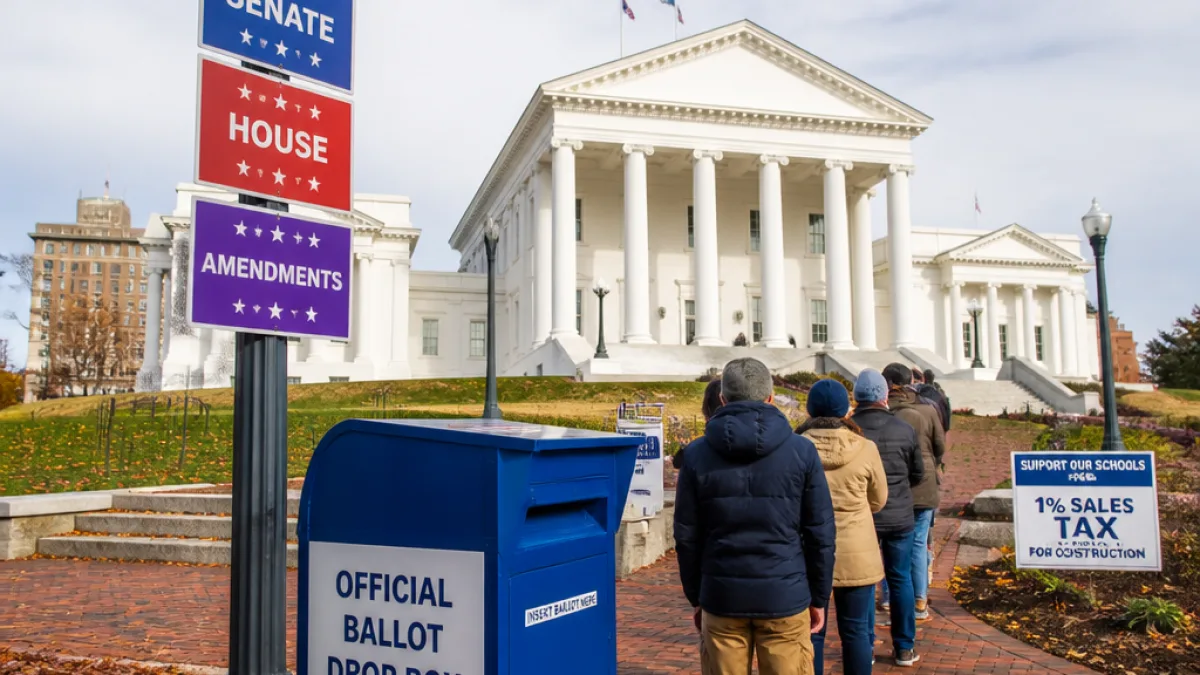
Virginia voters will cast ballots Nov. 3 on a slate of high-profile races and policy questions that could reshape federal representation, state constitutional protections and local financing for schools.
Top of the ticket: a pivotal Senate race
On the federal side, incumbent Democratic Sen. Mark Warner is running for re-election against Republican challenger Bert Mizusawa. The contest for one of Virginia’s U.S. Senate seats comes amid a broader national climate in which the standing of President Donald Trump continues to influence campaign messaging and strategy.
All 11 of Virginia’s U.S. House seats are also on the ballot, giving voters the chance to reshape the state’s congressional delegation. Campaign fights over post-redistricting control and map-making have been a notable theme this election cycle, after recent efforts in Richmond to change the process for drawing congressional lines.
Three constitutional amendments, significant consequences
Voters will consider three proposed amendments to the Virginia Constitution:
- A measure regarding same-sex marriage.
- An amendment addressing voting rights for people with felony convictions.
- A proposal on reproductive rights.
Conservative candidates have declared opposition to the amendments, while supporters argue the measures would enshrine legal protections in the state’s founding document. Passage of any of these amendments would carry long-term legal implications for Virginians and could alter how courts and officials apply state law.
Local questions: school construction and sales tax referendums
Beyond statewide and federal contests, more than half of Virginia’s localities have placed referendums on the ballot asking voters whether to add a 1% sales tax dedicated to funding school construction and capital projects. If passed in a locality, the tax would be used solely for school facilities and related expenditures, potentially unlocking substantial local funding for renovations and new school buildings.
| Item on ballot | Potential impact |
|---|---|
| U.S. Senate | Determines one of VA’s two seats in the U.S. Senate |
| 11 U.S. House seats | Controls VA representation in the House |
| Three constitutional amendments | Could change state constitutional protections on marriage, voting and reproductive rights |
| Local 1% sales tax referendums | Funds school construction in participating localities |
Redistricting fight and legal questions
Earlier this year, state lawmakers sought voter approval for a constitutional change to allow the legislature to redraw congressional maps. Voters approved that proposal, but the Supreme Court of Virginia later nullified the effort on technical grounds. The episode underscored ongoing tensions over how districts are drawn and who holds that authority, an issue that can influence which party controls seats in the U.S. House.
National politics and local elections
Campaign messaging in Virginia remains intertwined with national politics. Candidates across the spectrum continue to position themselves in relation to President Donald Trump, either emphasizing their support for his agenda or distancing themselves as part of broader strategy. Voter attitudes toward the president are expected to factor into turnout and preferences in tightly contested districts.
What voters should know
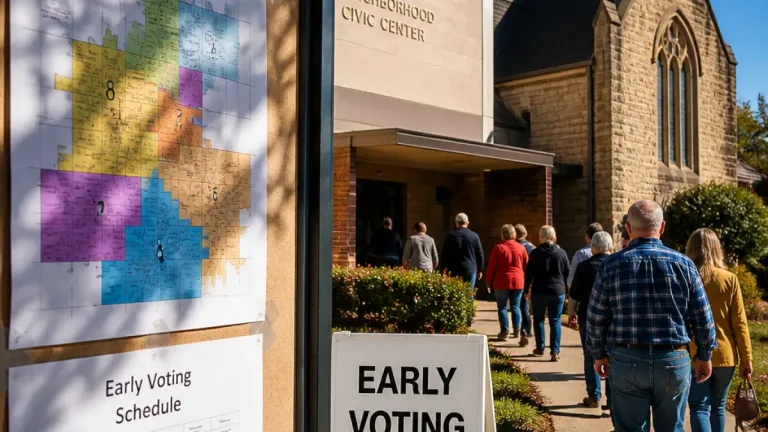
Voters planning to cast ballots should be aware that they will face a mix of candidate races and constitutional questions, plus potential local referendums that affect taxes and school funding. Because the ballot includes constitutional amendments, a majority vote will be required for approval under state rules governing changes to the constitution.
Details on polling locations, registration deadlines and sample ballots are administered locally; Virginians should consult their local electoral offices or the state Board of Elections for official information ahead of Nov. 3.
The outcome of this election will determine who represents Virginia in Washington, whether key rights are written into the state constitution and how communities will finance school construction for years to come.
— Nathaniel Okafor, State Correspondent