As Virginia approaches the November U.S. Senate election, the rapid expansion of data centers across the commonwealth has moved from a planning and economic development matter into a central campaign issue. Incumbent Sen. Mark Warner and Republican challenger Bert Mizusawa agree growth must be addressed, but they diverge sharply on how much control localities should have and what role the federal government should play.
Different prescriptions for the same problem
Virginia has emerged as a national hub for data centers, drawing billions in private investment and producing jobs, while also prompting local concerns about electricity demand, water use and the size and siting of massive facilities. Warner, who holds the Senate seat, is calling for federal standards that would govern resource use and workforce impacts. Mizusawa, a Republican challenger, emphasizes local decision-making and warns against state or federal mandates that would prevent communities from blocking projects.
Mizusawa said data centers are essential to U.S. competitiveness in artificial intelligence, while also arguing that communities should have veto power over where facilities are built. In his words:
"Data centers should not be shoved down the throats in any locality by Washington or Richmond. So if they don’t want them, they should have a veto right over them. But I think it’s incumbent upon us to find a place to put them."
Warner has urged federal action to set standards for how data centers use power and water, and to ensure companies help retrain workers displaced by technology. He forecasted growth in AI-related jobs but warned of disruption that will require coordinated retraining efforts.
"I think there’s going to be long-term AI job growth over the next two to five years," Warner said. "I think there’s going to be some real job disruption, and these AI companies need to help us retrain into jobs that will exist."
Local impacts and public concerns
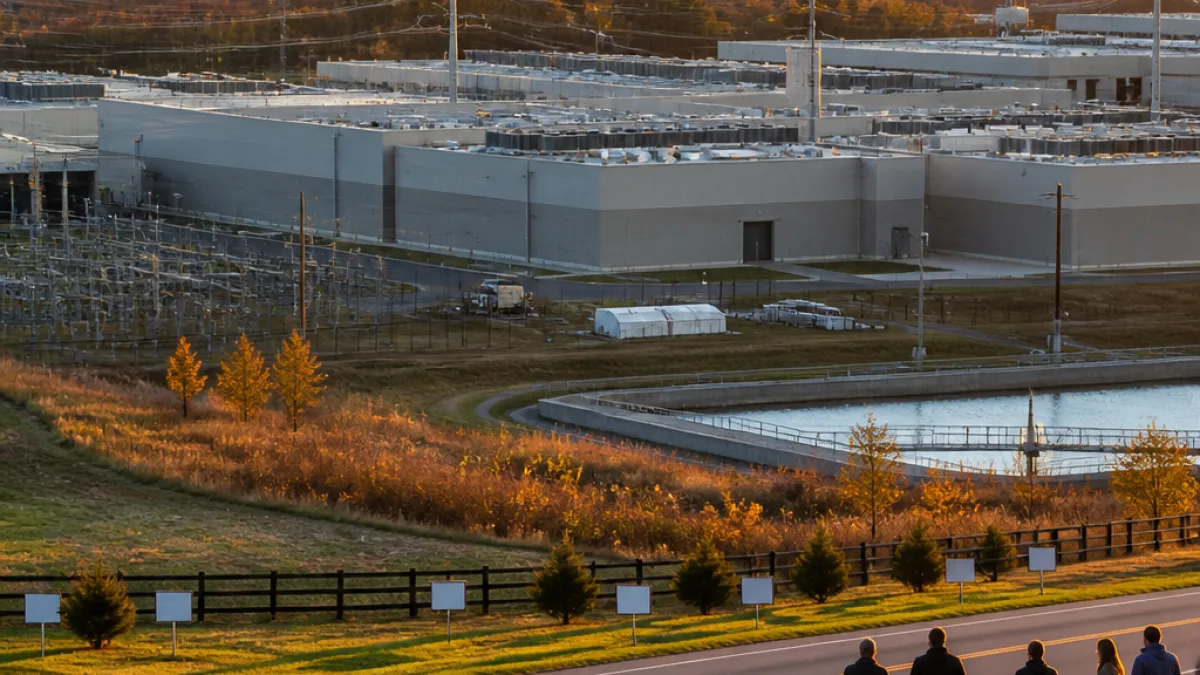
Residents in parts of Northern Virginia and other regions have raised concerns about the footprint of data centers, including large-scale energy consumption that can strain local grids, and substantial water use for cooling systems. Counties and towns are also confronting land-use questions as companies seek sites that can support heavy electrical loads and fiber connectivity.
Local officials have pushed for zoning rules and ordinances to manage siting, aesthetics and community impact, while state leaders and utilities have explored infrastructure upgrades to meet rising demand. The public debate has illuminated a tension between economic opportunity—through investment and jobs—and environmental and service concerns for affected communities.
Where the candidates differ: a quick comparison
| Topic | Mark Warner (D) | Bert Mizusawa (R) |
|---|---|---|
| Federal role | Advocates for federal standards on resource use and workforce impacts | Opposes federal or state imposition; supports local veto power |
| Workforce | Calls for company-led retraining for disrupted workers | Emphasizes national competitiveness in AI; local control on siting |
| Community control | Focus on regulation and standards | Support for giving localities a decisive say |
What’s at stake for Virginia
The stakes extend beyond politics. Virginia’s attraction of data centers has created thousands of construction and operations jobs and substantial tax revenue in some jurisdictions. But critics say the benefits are unevenly distributed and that localities often bear the infrastructure burdens while seeing limited community investment back from operators.
Energy providers and state planners have to balance grid reliability with incoming demand, which can require costly upgrades. Water utilities face similar pressures where cooling systems depend on significant volumes. These challenges are increasingly part of the conversation in Richmond and in county boardrooms across the state.
Outlook toward November
Both campaigns are likely to continue highlighting data centers as the race intensifies. For Warner, proposing federal standards lets him frame the issue as one of coordinated policy to protect workers and resources. For Mizusawa, promising local veto power lets him appeal to voters worried about unwelcome development and state or federal overreach.
Voters will weigh whether the economic benefits of data center investment justify additional regulation, or whether communities should retain near-exclusive control over siting decisions. As the November election approaches, the debate over how to manage the industry’s footprint should remain a focal point for voters across urban and rural parts of Virginia.
Nathaniel Okafor is a state correspondent covering Virginia politics and public policy.
- Key dates: Warner and Mizusawa will debate and campaign through November’s election.
- Primary issues: federal standards, local veto power, workforce retraining, resource use.
- Local impact: grid strain, water demand, land-use conflicts.