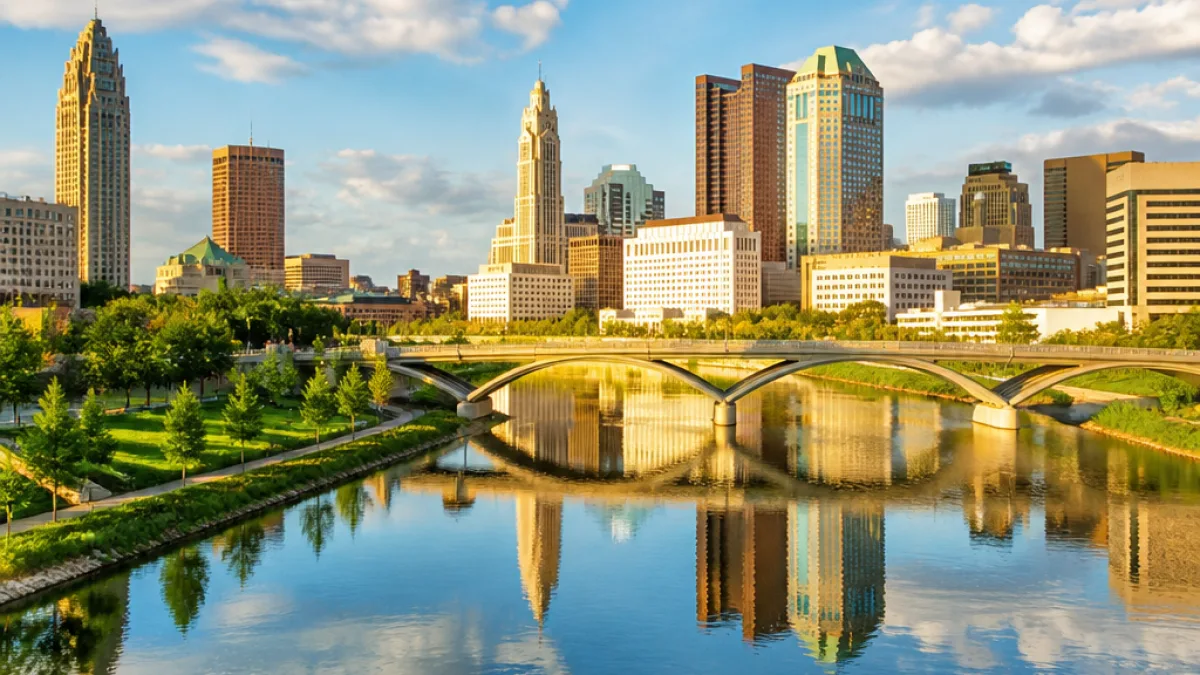
COLUMBUS, Ohio — As Ohio voters await the results of the governor’s race, election-night returns from Wood, Delaware and Mahoning counties could provide some of the earliest indications of how the statewide contest is unfolding.
The three counties matter for different reasons. Wood has a long record of closely reflecting statewide outcomes, making it a traditional political benchmark. Delaware, a rapidly growing county north of Columbus, could show whether changing suburban voting patterns are affecting the Republican advantage there. Mahoning, meanwhile, could help reveal whether Democratic strength is expanding beyond its traditional base and how broadly that shift reaches across Ohio.
Those signals could be especially important in the contest between Democrat Amy Acton and Republican Vivek Ramaswamy. The same county results may also offer an early read on the U.S. Senate race between Republican incumbent Jon Husted and Democrat Sherrod Brown.
Why Wood County is the benchmark
Wood County, located south of Toledo, has earned its reputation as one of Ohio’s most dependable political bellwethers. It has supported the eventual statewide winner in every U.S. Senate election since 1982 and in every governor’s race since 2010, according to the analysis.
Its recent record is not merely a matter of matching the winner. In the last three Senate and governor contests, Wood County’s results averaged just 1.14 percentage points from the statewide winner’s share of the vote, based on an analysis of state election data by The Plain Dealer and cleveland.com.
That makes Wood a useful early test of whether the statewide race is following Ohio’s recent pattern. A result there that closely tracks the eventual statewide margin would reinforce the county’s bellwether status. A noticeably different performance, by contrast, could suggest that this election is breaking from the political trends seen in recent statewide contests.
Wood’s value also comes from the mix of communities within its borders. The county includes Bowling Green, a college town that leans Democratic; Toledo suburbs such as Rossford and Perrysburg, where competition is stronger; and rural areas that are heavily Republican. That combination gives its returns a broader political range than a county dominated by a single type of community.
Delaware and the suburban question
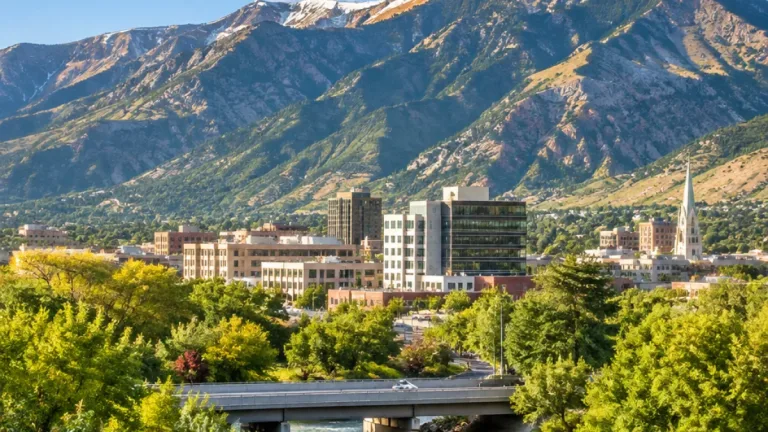
Delaware County presents a different kind of test. North of Columbus, it has not supported a Democratic presidential candidate since 1916. Yet the county has experienced rapid population growth and political changes among suburban voters, making it a place to watch for evidence that Ohio’s suburban electorate is shifting.
The county’s importance is not based on a long history of selecting statewide winners in the way Wood’s is. Instead, its returns could help answer a more targeted question: whether Democratic candidates are improving enough in a traditionally Republican suburban area to change the statewide balance.
That distinction is central to reading the results. A Democratic gain in Delaware would not, by itself, determine the governor’s race. But it could indicate that political movement among suburban voters is playing a larger role than it has in earlier elections. Analysts are therefore urging observers to examine Delaware alongside the other two counties rather than treating any one result as conclusive.
Mahoning as a measure of Democratic reach
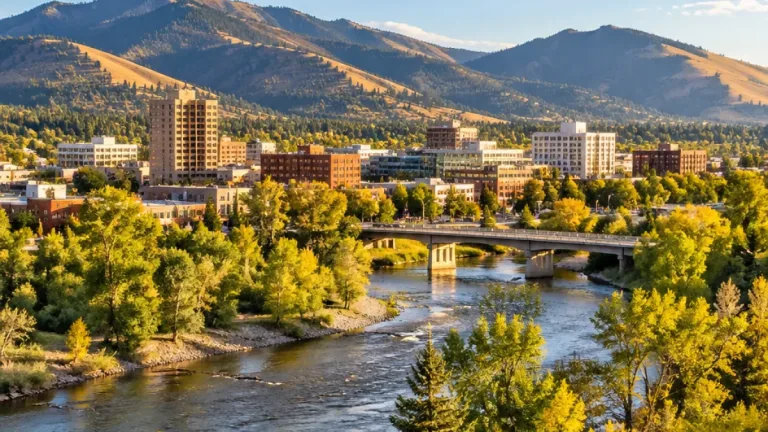
Mahoning County offers a third perspective. Experts say Democratic performance there could help show whether a broader blue wave is developing and how far that movement extends. In that sense, the county is less a traditional statewide barometer than a test of the breadth and intensity of Democratic support.
Political analyst Kyle Kondik, an Ohio native and managing editor of Sabato’s Crystal Ball at the University of Virginia’s Center for Politics, described the three-county approach as a combination of familiar and emerging indicators.
“I’ve been describing it as sort of the old wedding cliche: something old, something new, something borrowed,” Kondik said. “I guess it adds up to something blue” if Democrats win all three counties.
| County | What to watch |
|---|---|
| Wood | Whether the longtime bellwether again tracks the statewide result |
| Delaware | Whether suburban political shifts are producing stronger Democratic performance |
| Mahoning | Whether Democratic gains point to a wider statewide wave |
How to read the returns
The counties should be viewed together. Wood can provide a familiar baseline, Delaware can illuminate the suburban vote, and Mahoning can help measure the reach of Democratic support. Taken as a group, their results could offer clues about the direction of the governor’s contest before the statewide picture is complete.
They may also help voters and analysts interpret the Senate race. Because the same candidates and parties are competing across Ohio, county-level performance could reveal whether the contests are moving in parallel or whether voters are separating their choices between the governor’s office and the Senate.
Still, the returns are indicators rather than final answers. The three counties represent different political environments, and their importance comes from the distinct questions each one raises. The clearest reading will come from comparing their margins, turnout patterns and partisan performance with the statewide totals as the count progresses.