
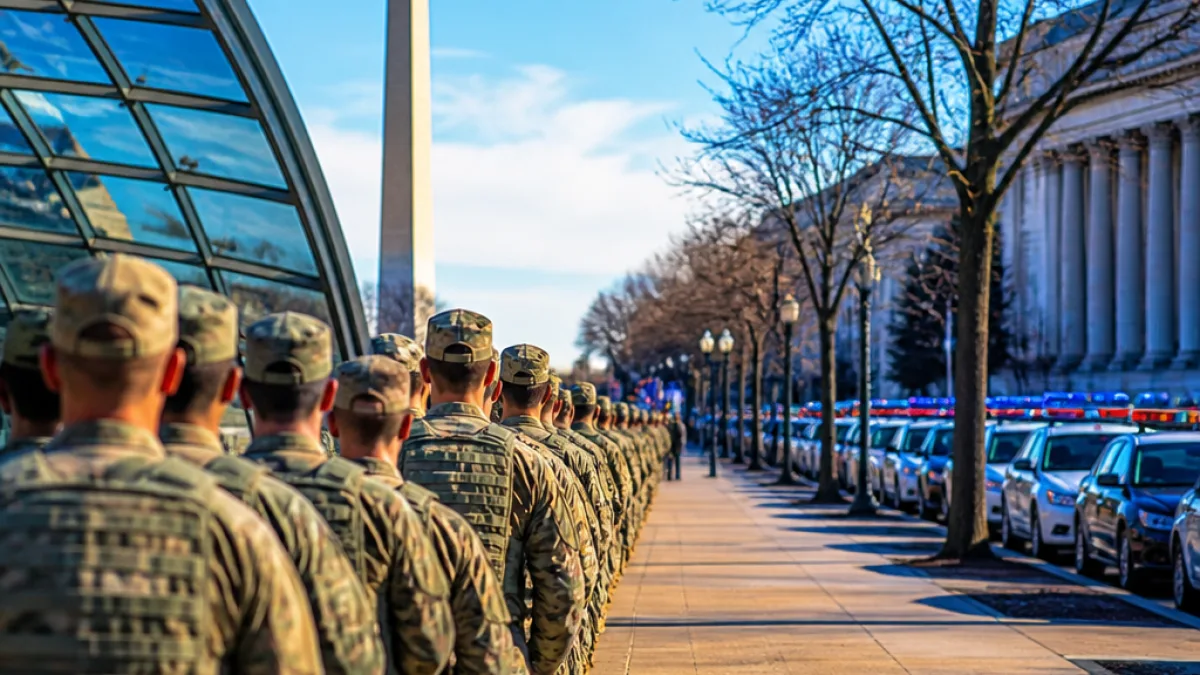
Thousands of National Guard troops sent to Washington at the direction of President Donald Trump have become a visible presence around monuments, subway stations and other tourist areas, but court records indicate they rarely play a direct role in local criminal prosecutions.
Deployment outnumbers local police and carries a steep price
The administration has maintained a standing force in the capital since last summer, sending roughly 4,500 soldiers — a number that exceeds the city’s approximately 3,200 police officers. Officials told Congress the operation cost about $1.65 million per day when first disclosed last year, and later increased the number of troops. The White House has said it intends to continue sending soldiers to Washington through the end of the presidential term, with an estimated program cost of $1.4 billion.
To assess the effect of the deployment on public safety, Reuters examined every publicly available charging document in the Superior Court of the District of Columbia, which handles the bulk of the city’s criminal cases. The review found that the National Guard was mentioned in only a small share of prosecutions — roughly 1.3% — and that many of the references showed troops as victims rather than as actors making arrests.
Troops visible, but not usually prosecuting suspects
Soldiers in camouflage and body armor are a familiar sight in parts of Washington frequented by visitors, including near the baseball stadium and national monuments. Local police and residents say the guard presence has been noticeable, but court filings rarely attribute arrests or criminal enforcement to the military personnel.
“There was approximately 15 national guard members in the area on routine patrol who did not take any action.”
The sentence above, written by a police officer in a case report, illustrates one of the patterns uncovered. In dozens of cases where guardsmen are mentioned, the documents portray them as having been assaulted, threatened or otherwise victimized while performing patrol duties.
Questions about mission and metrics
The administration has presented the deployment as a centerpiece of its plan to curb crime in major cities, but the limited presence of the National Guard in formal prosecutions has prompted scrutiny from legal observers and civil liberties advocates. The disconnect between a visible, heavily resourced deployment and its modest footprint in charging documents raises questions about roles, rules of engagement and coordination with local law enforcement.
Public records show the city’s most recent reported police budget was approximately the same as the initial daily cost of the guard deployment — about $1.5 million a day for the police department versus $1.65 million a day for the guardsmen when first sent — underscoring the fiscal scale of the federal operation compared with local resources.
What the records show
Key findings from the court-document review:
- The National Guard appears in roughly 1.3% of criminal filings in D.C. Superior Court since the deployment began.
- In many instances, guardsmen are described as victims of crimes rather than as arresting officers.
- The deployment's operating costs, as disclosed to Congress, have been large in relation to the city's police budget.
| Figure | Amount |
|---|---|
| National Guard troops in D.C. | 4,500 |
| Metropolitan Police Department officers | 3,200 |
| Initial reported daily cost of deployment | $1.65 million |
| Planned total estimated cost through 2029 | $1.4 billion |
Local impact and oversight
Residents and local officials have described the troops as a deterrent visible in the public square, but the court review suggests the deployment’s direct involvement in law enforcement actions has been limited. That distinction matters because the authority, training and legal constraints that govern the National Guard differ from those that apply to municipal police.
Lawmakers and oversight bodies will likely press for greater clarity about the mission’s objectives and how success is measured. With billions in federal spending at stake and a prolonged presence in the capital, the deployment is likely to remain a topic of debate among elected officials, legal experts and civil rights groups.
As the administration continues to justify the presence of troops in Washington as part of a broader anti-crime campaign, court records provide one empirical measure that complicates the narrative: large numbers of soldiers on patrol do not necessarily translate into direct participation in criminal prosecutions.
Grace Yun is WE NEWS’ state correspondent.
















