A statewide policy gap
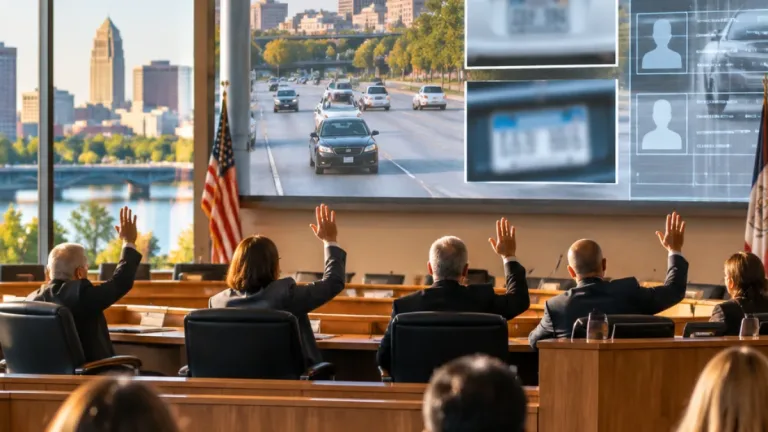
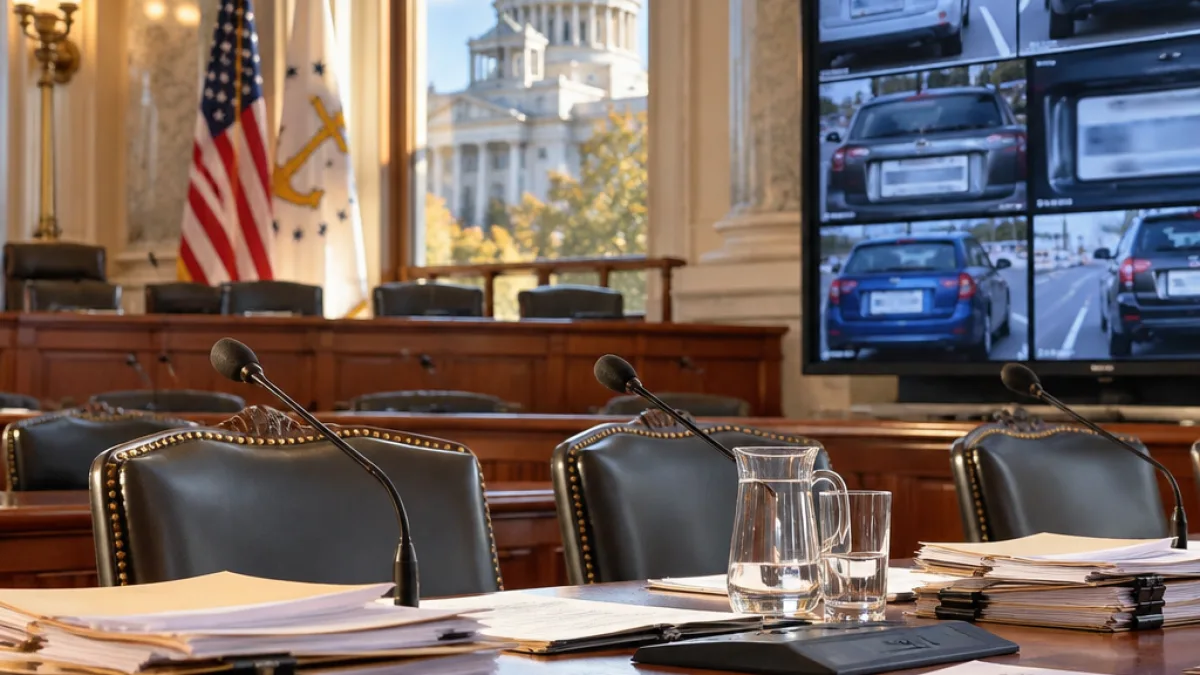
Rhode Island’s incoming attorney general, Kim Ahern, will assume responsibility for a criminal justice system that has no statewide statute governing the use of license plate cameras. Legislation introduced in 2026 to establish rules for the technology failed to advance out of committee, leaving the state without a uniform legal framework as Ahern prepares to take office.
Ahern, a Democrat, has said she wants to work on a policy for license plate cameras. The issue will give her administration an early opportunity to address how the technology is used, what information it can collect and how that information is handled. The source material does not identify a final proposal from Ahern or specify when a new policy might be presented.
The cameras are part of a broader national debate over surveillance and public safety. License plate readers can be used by law enforcement to identify vehicles and investigate movements, but the absence of a Rhode Island law leaves the state without legislation specifically setting out standards for the technology. The 2026 bill’s failure means the question remains open for the new attorney general and lawmakers.
An unusually powerful statewide office
The policy question carries particular weight in Rhode Island because the attorney general’s office has broad prosecutorial duties. Rhode Island has no county district attorneys, and the attorney general’s office prosecutes every felony in the state. It also handles misdemeanor appeals and misdemeanor cases brought by state law enforcement agencies.
“With no district attorneys, our Office prosecutes all felonies in the state, as well as a significant number of misdemeanors.”
That structure gives the attorney general an unusually direct role in statewide criminal justice policy. Ahern will succeed term-limited Attorney General Peter Neronha and will lead the only prosecuting office of its kind in the state. Decisions about surveillance technology therefore will not be limited to one county or one local police department.
Voters chose a person, not a policy
Ahern won the attorney general’s race on Nov. 3, defeating Republican Alan Gordon. The election transferred the office from one Democrat to another rather than changing party control. Ahern will be the first Democratic woman to serve as Rhode Island attorney general.
| Candidate | Unofficial votes | Share |
|---|---|---|
| Kim Ahern | 234,190 | 66.35% |
| Alan Gordon | 117,859 | 33.39% |
The unofficial results show Ahern with 234,190 votes, or 66.35%, compared with Gordon’s 117,859 votes, or 33.39%. The Rhode Island Board of Elections is expected to certify the results before Thanksgiving.
Unlike voters in some other states and municipalities, Rhode Islanders were not asked to decide a criminal justice question directly. Their ballots included five bond questions but no proposal concerning bail, sentencing or surveillance. The attorney general’s contest consequently served as the principal statewide choice involving the office that will help shape criminal justice policy, even though voters were selecting a person rather than approving a specific camera law.
National debate, local decision ahead
The Rhode Island vote came amid a wider national discussion over bail restrictions, gunshot-detection systems and automated license plate readers. Voters in Indiana, Louisiana and Tennessee approved limits on bail, according to Stateline. In Chicago, voters supported bringing back gunshot-detection technology in a nonbinding referendum, while voters in League City, Texas, rejected Flock license plate cameras.
Those outcomes illustrate the range of questions surrounding public safety technology: whether it should be expanded, restricted or rejected, and whether decisions should be made by elected officials, police agencies or voters. Rhode Island’s unresolved issue now moves into the attorney general’s office and the state Legislature, where any comprehensive rules would have to be considered after the 2026 bills stalled.
What remains unsettled
The source material does not identify a Rhode Island law setting retention limits, access rules or other operating requirements for license plate cameras. It also does not describe how individual agencies currently use the technology. Those details are among the practical questions that a future policy could address, along with the balance between investigative tools and privacy protections.
- No statewide statute currently governs Rhode Island’s license plate cameras.
- The 2026 regulation bill died in committee.
- Ahern has indicated she wants to develop a policy for the technology.
- The attorney general’s office prosecutes all felony cases statewide.
For now, the policy gap remains in place. Ahern will enter an office with statewide authority over serious criminal prosecutions, a fresh electoral mandate and no ballot-approved direction on surveillance. Whether Rhode Island moves toward formal rules for license plate cameras will depend on the priorities of the incoming attorney general and the Legislature’s willingness to revisit legislation that failed to advance this year.