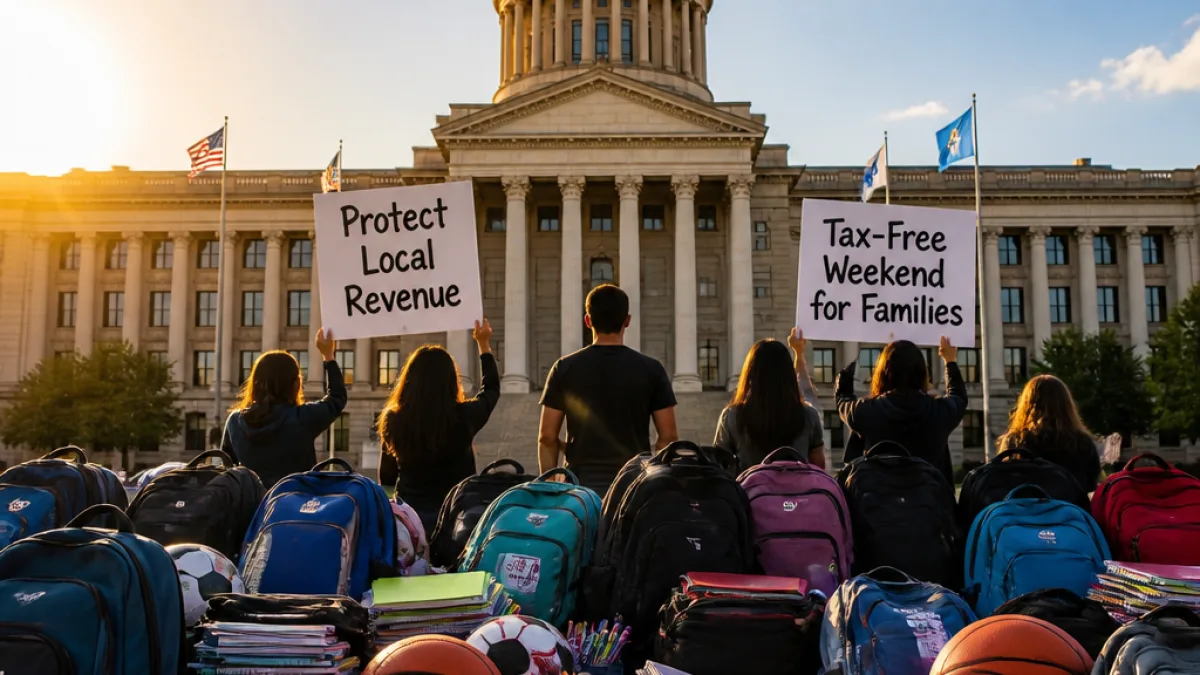
Oklahoma lawmakers from both parties are preparing a renewed push to expand the state’s annual tax-free weekend to include school supplies and athletic gear, a move proponents say would ease back-to-school costs for families but that faces resistance from city officials worried about reduced local revenue.
Lawmakers cite affordability and participation in school activities
Sen. Kristen Thompson, R-Edmond, who filed a similar measure in the last session, said she intends to press the proposal again this year. Thompson framed the expansion as a commonsense, family-oriented change that supports both classroom needs and extracurricular participation.
"We need supplies. We need pencils. We need books, backpacks, things of that nature," Thompson said. "It gives them a place of belonging. It helps them learn stress management, teamwork, problem-solving. So, sports are so incredibly important. I want to make sure, as a mom, that our kids can be successful in the classroom, out of the classroom, and expanding the tax-free weekend to include these products I think is just a commonsense way to do that."
State Rep. Jacob Rosecrants, D-Norman, expressed support as well and said he is willing to collaborate across the aisle to make the proposal law. "It's an absolute no-brainer to have school supplies on here," Rosecrants said, acknowledging that prior efforts have faced hurdles.
Municipal concerns and reimbursement explain opposition
The Oklahoma Municipal League, which represents city governments, has publicly opposed expanding tax exemptions. The group argues that exemptions reduce local tax revenue that funds city services and infrastructure.
State law currently includes a mechanism by which the state reimburses cities for revenue lost to certain sales tax exemptions. Advocates of the expansion note that reimbursement exists, but municipal leaders caution that the details and timing of reimbursements can leave cities scrambling to cover shortfalls.
Where other states stand
Supporters point to neighboring states that already include school supplies in tax-free periods. Texas, Arkansas and Missouri are among states with broader exemptions, a fact proponents use to bolster the argument that Oklahoma can follow suit without sizable disruption.
| State | Includes school supplies |
|---|---|
| Texas | Yes |
| Arkansas | Yes |
| Missouri | Yes |
What proponents say families would gain
- Lower out-of-pocket costs for essential school supplies such as pencils, notebooks and backpacks.
- Reduced financial barriers for youth participation in sports through tax-free athletic equipment.
- Potentially streamlined back-to-school shopping if exemptions align with peak purchasing windows.
Backers emphasize the tangible benefit for parents juggling household budgets and the symbolic value of encouraging student involvement in school activities.
Practical and political hurdles ahead
Despite bipartisan sponsorship, the proposal faces practical and political challenges. Municipal opposition could translate into lobbying pressure against the bill, and lawmakers will need to reconcile reimbursement procedures to ensure cities do not face unexpected revenue gaps.
Legislators have until the next legislative session to refine language, define what qualifies as school supplies and athletic gear, and settle reimbursement details. Those specifics will shape both the political viability of the measure and its fiscal impact on local governments.
For now, the plan remains in its early stages. Thompson said she will refile the bill she introduced previously and work with colleagues to address concerns. Rosecrants signaled readiness to collaborate but acknowledged the work remaining to make the change law.
Families in Oklahoma City and elsewhere in the state continue to use the existing tax-free weekend for clothing and certain items. Expanding the exemption would shift the focus of the holiday to include more explicit back-to-school needs should the bill ultimately pass.
As the proposal moves toward the legislature, the debate will center on balancing immediate relief for families against the budgetary needs of city governments that rely on sales tax revenue to provide local services.