The race for the open U.S. Senate seat in North Carolina remains competitive, with former Gov. Roy Cooper maintaining an edge over former Republican National Committee Chair Michael Whatley, according to a High Point University poll released Friday.
Poll finds Cooper up by five points
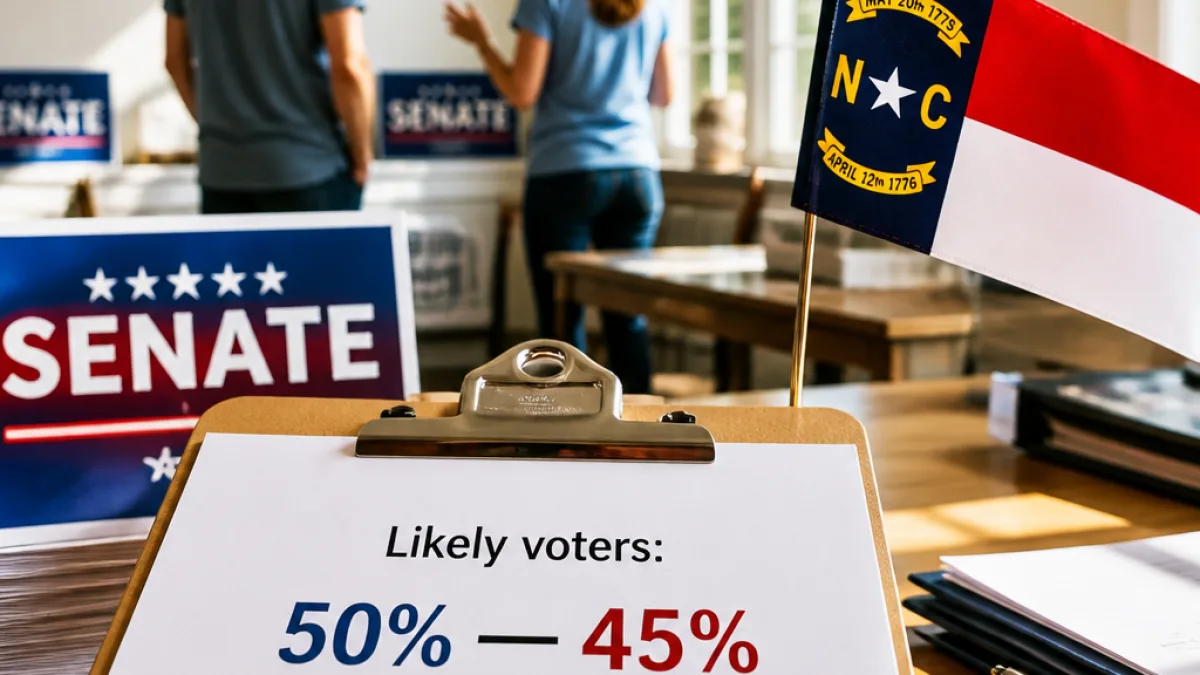
The survey of likely North Carolina voters showed 50% backing Cooper and 45% supporting Whatley. The poll sampled 660 likely voters between Aug. 3 and Aug. 12 and reported a margin of error of about 5.2 percentage points.
The contest is to fill the seat of retiring Republican Sen. Thom Tillis. Democrats have identified the North Carolina race as one of several they need to win to move toward a majority in the Senate; the party currently trails 53-47 and would need to flip at least four seats to assume control of the chamber.
How this poll fits with other recent surveys
The High Point University numbers show Cooper leading, but by a smaller margin than some recent polls. Earlier this month, a Carolina Forward survey put Cooper ahead by 7 points. A Carolina Journal poll released last week showed a wider gap, with Cooper at 52% and Whatley at 39%, a near 13-point advantage for the Democrat.
Political analysts have taken note of a trend toward the Democratic candidate: in April, The Cook Political Report moved its rating for the North Carolina race from a "toss-up" to "leans Democratic," citing successive polls that favored the former governor.
| Poll | Cooper | Whatley | Margin |
|---|---|---|---|
| High Point University (Aug. 3–12) | 50% | 45% | 5 points |
| Carolina Forward (early Aug.) | 7-point lead (Cooper) | ||
| Carolina Journal (last week) | 52% | 39% | 13 points |
Partisan divides and turnout implications
The High Point University poll reflected deep partisan loyalty among respondents, a pattern echoed in other surveys. According to the reporting on the various polls, nearly all Democratic respondents said they supported Cooper, while a similar percentage of Republicans backed Whatley. Those partisan baselines mean the ultimate outcome could hinge on turnout levels among unaffiliated voters and which campaign most effectively persuades undecided voters in the final weeks of the campaign.
- Partisan support: Polls show Democrats and Republicans largely consolidated behind their respective nominees.
- Undecided voters: With margins within single digits, persuading independents will be crucial.
- Turnout: North Carolina's recent history of close statewide contests underscores the importance of voter mobilization.
Statewide context and national stakes
North Carolina has been a battleground state in recent national elections, narrowly favoring former President Donald Trump in the last three presidential contests. That competitive environment makes the Senate race a key target for both parties: Republicans aiming to hold the seat and Democrats seeking to flip it as part of a broader strategy to win control of the U.S. Senate.
National observers and campaign strategists will be watching whether Cooper's lead holds as campaigning intensifies in the weeks ahead, and whether Whatley can close the gap by appealing to independent voters or increasing Republican turnout.
For North Carolinians, the contest will determine who fills a high-profile Senate seat and could play a role in shaping the balance of power in Washington, influencing policy priorities and committee control for the next Congress.
As the race moves toward November, further public polling and campaign developments will provide a clearer picture of the trajectory in one of the nation’s closely watched contests.