
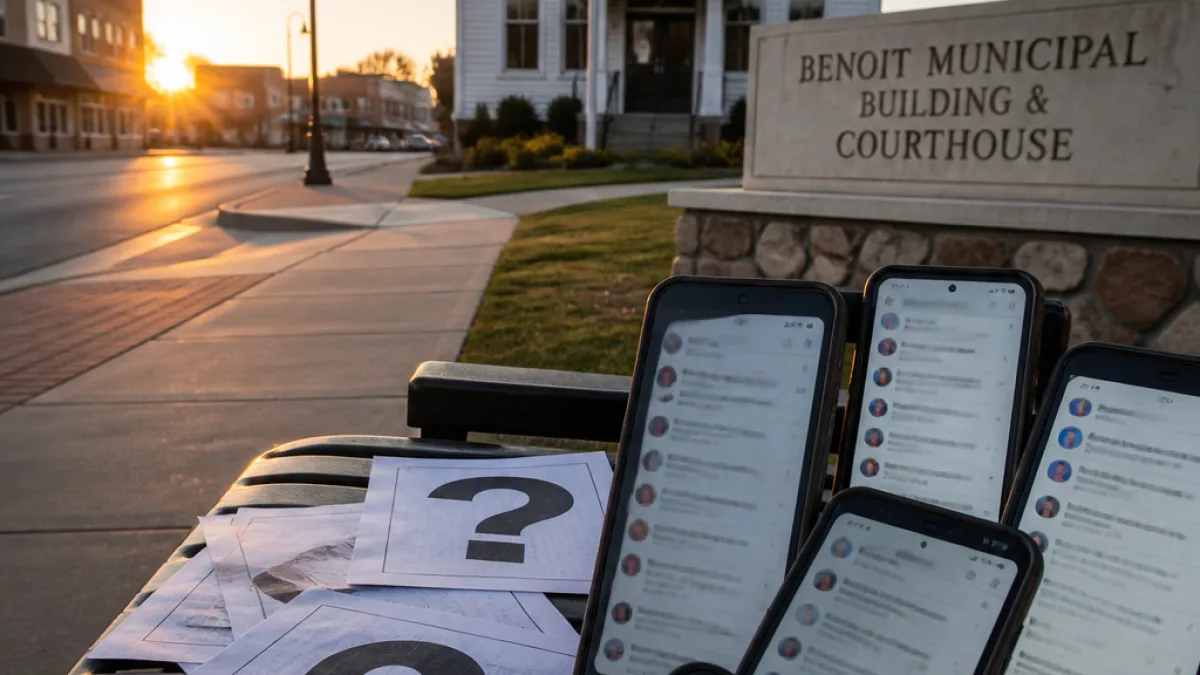
BEENOIT, Miss. — The recent appointment of Assma Ali as municipal judge for Benoit, a Delta town of fewer than 400 residents in Bolivar County, has prompted a wave of online criticism and unfounded claims centered on her faith and background.
Local appointment, national attention
Ali, an American citizen of Yemeni descent who practices immigration law and operates a private firm in Ridgeland, was named municipal judge last week. She earned her law degree from Mississippi College School of Law — now Mississippi Christian University — in 2017 and was admitted to the Mississippi Bar that same year.
Within days, posts on social media began questioning the legitimacy of the appointment and making broader assertions about Ali’s beliefs and intentions as a judge. Some posts incorrectly stated she had been appointed in other Mississippi towns, including Ridgeland and Lumberton. Other accounts suggested, without evidence, that she would install Islamic law if allowed to preside.
Friends and colleagues push back
Those who know Ali professionally say the attacks are rooted in religious bias rather than fact. Frank Rosenblatt, an attorney and professor at Mississippi Christian University School of Law who has known Ali for years, described the criticism as targeting her because of her appearance.
“We have people from out of state who just see a woman in a hijab and they say action must be taken. These attacks against Ms. Ali are about her religion,”
Rosenblatt also praised Ali’s record as a mentor to young lawyers and her standing in Mississippi’s legal community.
False claims and amplification
The online reaction included messages from outside Mississippi. Amy Mekelburg, founder and editor-in-chief of the Rise Align Ignite Reclaim Foundation, wrote on X that the appointment represented the state’s “first Yemeni Sharia Hijabi judge” and questioned whether the appointment was authentic or part of a purported scam. Those characterizations have not been substantiated.
Ali responded on social media with a succinct reaffirmation of her obligations as a jurist. She emphasized her commitment to the U.S. Constitution and state law and noted her birth in the United States.
“I was born in the United States, and as both an attorney and a judge, I am committed to upholding the United States Constitution and the laws of the State of Mississippi,”
Her statement, posted publicly, expressed gratitude for the opportunity to serve Benoit’s residents.
What a municipal judge does in small towns
Municipal judges in towns like Benoit typically preside over local ordinance violations, traffic matters and preliminary hearings for misdemeanor offenses. They often serve part time and are expected to apply state statutes and constitutional protections in their decisions. In small municipalities, the role can be administrative as well as judicial.
- Jurisdiction: local ordinances, traffic violations, minor criminal matters
- Appointment context: municipal judges are often appointed by town boards or mayors
- Expectation: adherence to state law and the U.S. Constitution
Those functional details underscore why legal training and bar admission — both of which Ali has — are relevant to evaluating her qualifications.
Broader implications: religion, misinformation and local governance
Advocates for civil liberties say the episode highlights how quickly misinformation and prejudice can shape public perception of a local public servant. The spread of inaccurate location claims and assertions about Ali’s intentions illustrate how social platforms can amplify unverified narratives that have real effects on individuals and communities.
For Benoit, a community of only a few hundred, the controversy has drawn attention that local officials did not seek. The municipal court’s daily operations are likely to continue under state law, but the episode has become a focal point for discussions about religious tolerance and the role of social media in local affairs.
Facts at a glance
| Fact | Detail |
|---|---|
| New municipal judge | Assma Ali |
| Town | Benoit, Bolivar County (population <400) |
| Profession | Immigration lawyer; private practice in Ridgeland |
| Law school | Mississippi College School of Law (now Mississippi Christian University), J.D. 2017 |
| Bar admission | Mississippi, 2017 |
As the online debate continues, Ali’s brief public statement and the endorsements from colleagues frame the matter as one of professional qualification and civil rights. Whether criticism subsides may depend on how local officials, residents and social platforms address the spread of misinformation and discriminatory rhetoric.
Mississippi’s legal community and civil-rights observers will likely watch how the situation develops in Benoit and whether the national attention affects the town’s administration or the broader discourse about who serves in local government.


















