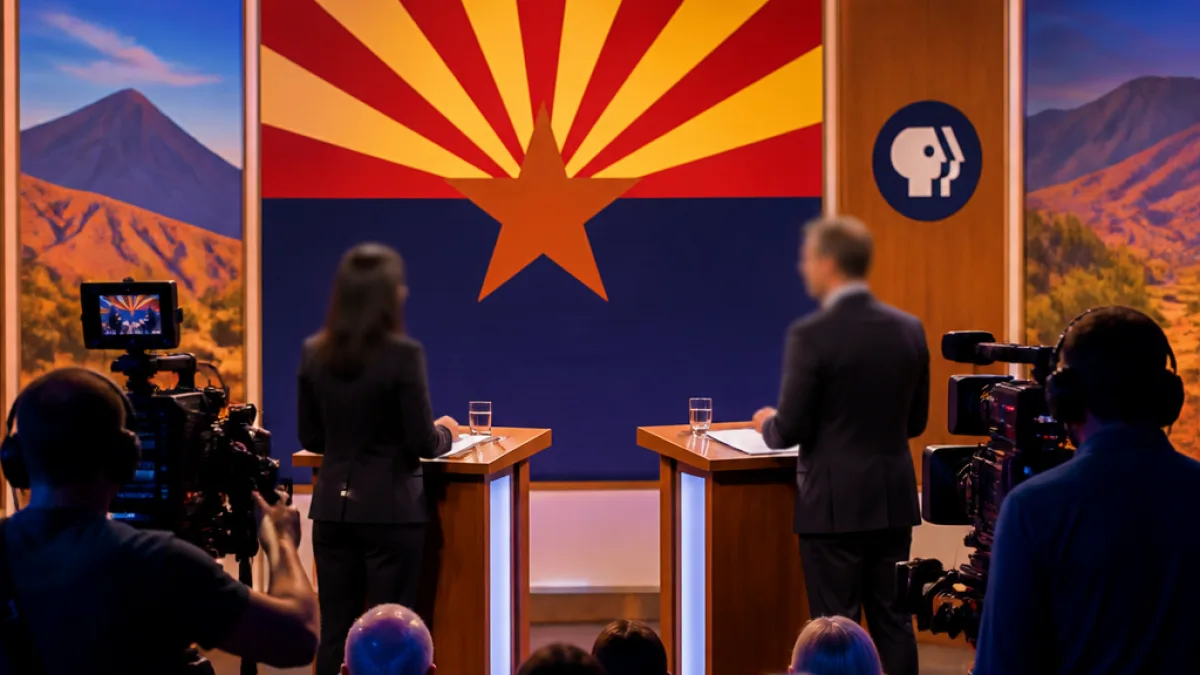
Incumbent Secretary of State Adrian Fontes and Republican challenger Alexander Kolodin traded sharp attacks Monday during a televised debate on Arizona PBS, clashing over the security of state elections, mail-in voting and a Kolodin-backed ballot measure that would require government-issued ID for all voters.
Opening questions set a combative tone
The forum moderated by Ted Simons opened with a direct question: “Are Arizona elections safe and secure?” Fontes answered without hesitation, praising the people who run elections across the state.
“Absolutely. They’ve been safe and secure for a long time,”
Fontes credited county officials, retired teachers and veterans who administer elections statewide. Kolodin declined to provide a direct answer when asked the same question three times, saying instead that voter confidence is at an "all-time low" and blaming the incumbent for that erosion.
Personal accusations and past litigation
The exchange grew more acrimonious as the candidates moved into personal territory. Fontes accused Kolodin of fueling the very problems he claims he would fix, calling him “the arsonist who causes the fire and says you’re going to come in and cure things.”
Kolodin has a history as the local attorney in the unsuccessful post-2020 election lawsuits known colloquially as the “kraken” cases. He was disciplined by the State Bar for his role in those challenges, a point Fontes repeatedly invoked during the debate.
Simons pressed Kolodin three times on whether he is an election denier; Kolodin ultimately answered “no.” The exchange underscored the candidates’ sharply different narratives: Fontes defending the integrity of the existing system and Kolodin arguing it requires fundamental reform to restore voter confidence.
Dispute over Proposition 144 and mail-in voting
The candidates also sparred over Proposition 144, a ballot measure backed by Kolodin that would require government-issued identification for all voters. Fontes criticized the measure as containing what he called "sneaky lawyer tricks" that would effectively undermine mail-in voting, a staple of Arizona's election process.
Kolodin rejected that characterization and called Fontes’ description a lie, framing the measure as part of necessary reforms to bolster trust in elections. The debate did not produce a clear consensus for viewers on how the proposal would operate in practice; both men stuck to their broader themes—security versus accessibility.
What’s at stake and upcoming dates
The winner of the November contest will be responsible for certifying Arizona’s results in the 2028 presidential election. The race has drawn attention because of the office’s crucial role in election administration and the heightened scrutiny of election procedures nationwide.
Voters will have additional opportunities to evaluate the candidates in the weeks ahead. A Clean Elections Commission–sponsored debate is scheduled for Sept. 30, and early voting in Arizona begins on Oct. 7.
- Candidate stances: Fontes defends current election administration; Kolodin calls for reforms and backed Proposition 144.
- Debate tone: Contentious and personal, with repeated questioning over whether Kolodin is an election denier.
- Upcoming events: Clean Elections Commission debate on Sept. 30; early voting starts Oct. 7.
| Topic | Adrian Fontes | Alexander Kolodin |
|---|---|---|
| Election security | Affirmed elections are safe and secure | Refused direct answer; says voter confidence is low |
| Proposition 144 (ID requirement) | Says it contains provisions that would gut mail-in voting | Backs the measure; disputes Fontes’ characterization |
| Past post-2020 litigation | Has criticized Kolodin’s role in failed cases | Was local attorney in the failed “kraken” lawsuits; disciplined by the State Bar |
Monday’s debate made clear the central themes of the campaign: confidence in Arizona’s elections versus calls for structural change. With the office poised to certify the state’s 2028 presidential results, the contest for secretary of state remains a focal point for voters concerned about both access and security.
Further public forums are scheduled, and the candidates’ positions will continue to be scrutinized as ballots go out and early voting begins in October.