New equipment, trained crews aim to reduce recurring pothole repairs
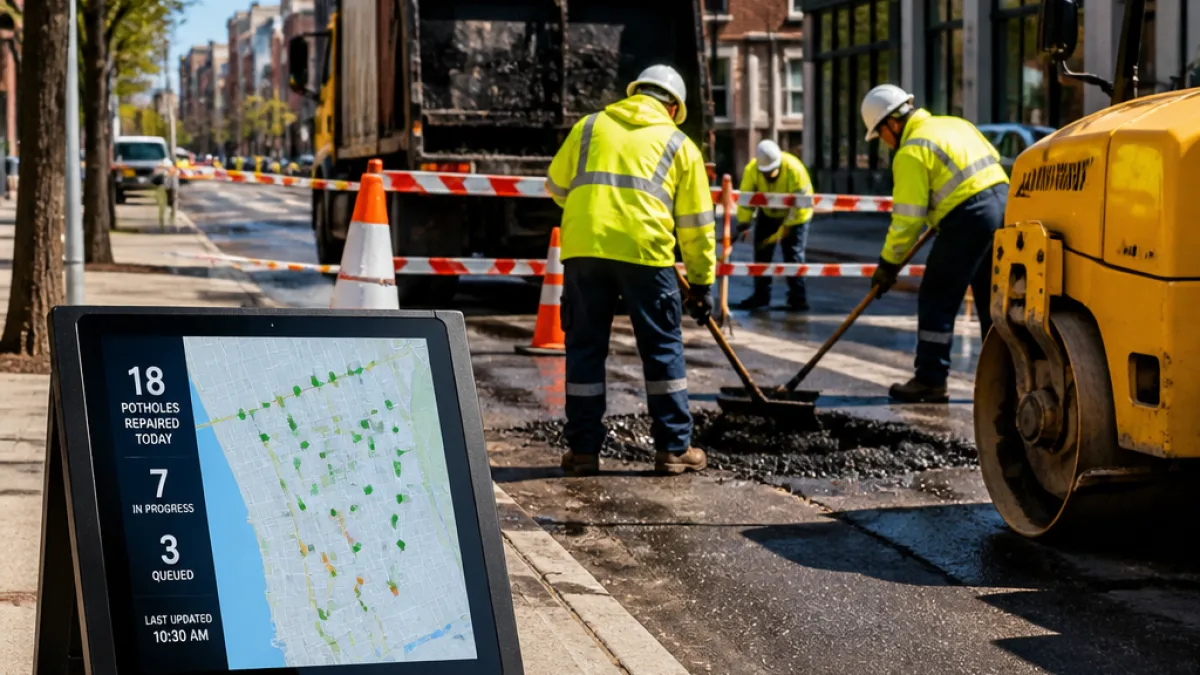
Buffalo officials on Thursday opened a new chapter in the city’s road maintenance strategy by putting in place a dedicated hot patching operation and an online Pothole Repair Counter designed to increase transparency and extend the lifespan of repairs.
The move, announced on Clinton Street on the city’s East Side, is tied to investments made in the Ryan administration’s 2026-27 budget and follows months of collaboration with Erie County crews, who shared equipment and expertise while Buffalo prepared its own operation.
“This is the kind of investment in basic services that will have an immediate, noticeable impact on the City of Buffalo,” said Mayor Sean Ryan. “We promised residents we would fix our streets by giving our crews the right equipment to do the job properly.”
City officials said the new equipment includes a hot box able to carry approximately three tons of hot asphalt and a roller for compaction. Together, those tools allow Department of Public Works crews to place and compact hot asphalt — a repair method officials say is more durable than the cold patches Buffalo has relied on in the past.
- Hot patching operation: new hot box (≈3 tons) and accompanying roller
- Operational schedule: dedicated crew will hot patch Monday through Friday from April through November
- Public tracking: newly launched online Pothole Repair Counter to show progress and workload
From temporary fixes to longer-lasting repairs
The city framed the program as a response to recurring repairs that required crews to revisit the same locations. Officials said the hot patching approach should reduce repeat visits to the same potholes, freeing crews to move on to other streets in need.
Mayor Ryan noted Erie County’s prior role in helping Buffalo start the operation. According to the city, county crews spent months sharing equipment and training with the City of Buffalo’s Engineering Division, building the skill set necessary for the city to operate independently.
With the new crew in place, Buffalo will be able to carry out hot patching while asphalt plants are open — roughly April through November each year — which officials said will improve durability compared with cold patching during warmer months.
Accountability and public visibility
The Pothole Repair Counter is intended to make the city’s pothole work more transparent and show residents how many repairs crews complete. Officials framed the counter as a tool for accountability that pairs with better equipment to deliver visible results.
City leaders said the program was a direct response to resident complaints about streets and a fulfillment of campaign and governing promises to improve basic services. They emphasized that improved equipment combined with a trained, dedicated crew will produce longer-lasting outcomes and reduce the cycle of temporary fixes.
| Item | Details |
|---|---|
| Hot box capacity | Approximately 3 tons of hot asphalt |
| Rolling/compaction | Accompanying roller included |
| Season of operation | Monday–Friday, April through November |
City officials did not release a detailed deployment schedule for neighborhoods or a projection of how many potholes the new crew expects to repair in the first season. They also did not provide a cost breakdown for the equipment beyond saying the purchases were part of the 2026-27 budget.
For residents, the practical effects will be observed on the street: officials said fewer repeat visits to the same locations, improved longevity of patches made during the operational season and public access to repair data through the Pothole Repair Counter.
The partnership with Erie County — which provided equipment and training — served as a pilot model that Buffalo officials said validated the move to create a city-run operation. With the new resources and trained staff, Buffalo’s Department of Public Works will now manage hot patching directly.
Officials encouraged residents to continue reporting potholes through the city’s existing channels so crews can prioritize work. They also said the city will evaluate the operation’s performance over time to determine whether further investments or adjustments will be needed.
As the program begins, Buffalo’s approach emphasizes both a change in material practice and an increase in public accountability, signaling a shift from stopgap repairs toward a more durable, trackable system of street maintenance.