Durham’s water supply faces mounting pressure
After months of persistent drought, Durham has 78 days of easily accessible water remaining, according to figures released by the city. The estimate reflects a scenario in which no additional water reaches the watershed, including rainfall or river inflows, but it underscores the pressure facing Durham as dry conditions continue across North Carolina.
When less accessible sources and emergency storage are included, the city’s total supply is estimated at 147 days. James Lim, Durham’s water efficiency manager, said the figures are not a prediction that the city will run out of water on a specific date. Instead, they describe how long current supplies could last if there were no new water entering the system during the coming months.
Reservoirs remain near one-third full
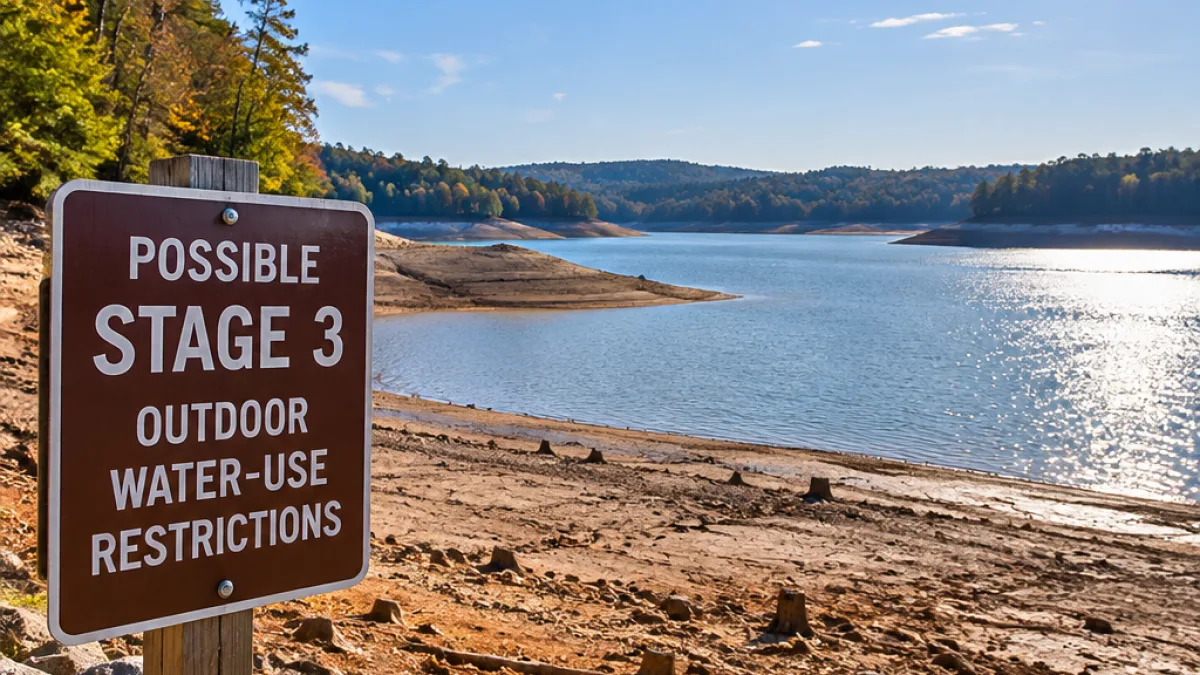
Durham’s two primary reservoirs, Lake Michie and Little River, are holding roughly one-third of their combined capacity. The reservoirs received just 0.16 inches of rain during the past month, according to the city. Most of the Triangle is experiencing severe or extreme drought conditions, while an estimated 5.9 million people across North Carolina live in areas affected by drought.
| Supply measure | Current estimate |
|---|---|
| Easily accessible water | 78 days |
| Total supply, including emergency sources | 147 days |
| Water received from OWASA each day | 2 million gallons |
| Jordan Lake allocation collected through Cary each day | About 9 million gallons |
Durham entered stage 2 water restrictions in June. If supplies continue to decline, the city could advance to stage 3, which would pause outdoor water use. Stage 4 would represent an emergency rationing level. Lim said Durham has not reached the trigger for stage 3, but acknowledged that the possibility remains as officials monitor reservoir levels and demand.
“We have not hit the trigger for stage three yet, but it’s definitely a possibility,” Lim said.
Officials seek water beyond Durham’s reservoirs
The city is supplementing its local supply through agreements and connected systems elsewhere in the Triangle. Durham is receiving 2 million gallons of water per day from the Orange Water and Sewer Authority, commonly known as OWASA. It is also collecting about 9 million gallons per day from its allocation of Jordan Lake through the Town of Cary.
Jamie Revels, Cary’s utilities director, said Cary is assisting Durham through interconnected water systems built after the 2007-08 drought. Durham is also drawing between 3 million and 4 million gallons daily from Teer Quarry, which serves as an emergency storage source. Those measures are part of the city’s effort to manage demand and extend available supplies while drought conditions persist.
What the estimates mean for residents
For Durham households, the immediate focus is conserving water under the restrictions already in effect and preparing for the possibility of tighter rules. The city’s current supply calculations depend on several factors, including rainfall, river flows, reservoir conditions, demand and access to outside sources. A change in any of those conditions could alter the number of days officials estimate remain available.
- Stage 2 restrictions are currently in effect.
- Stage 3 would pause outdoor water use.
- Stage 4 would establish an emergency rationing point.
- Durham is using water purchased or accessed through OWASA, Cary and Teer Quarry.
Lim said the 80-day figure is concerning but also leaves time for the city to pursue additional measures, including possible restrictions and other water sources. For now, officials are balancing conservation, outside purchases and emergency storage as Durham and the broader Triangle wait for meaningful rainfall.