
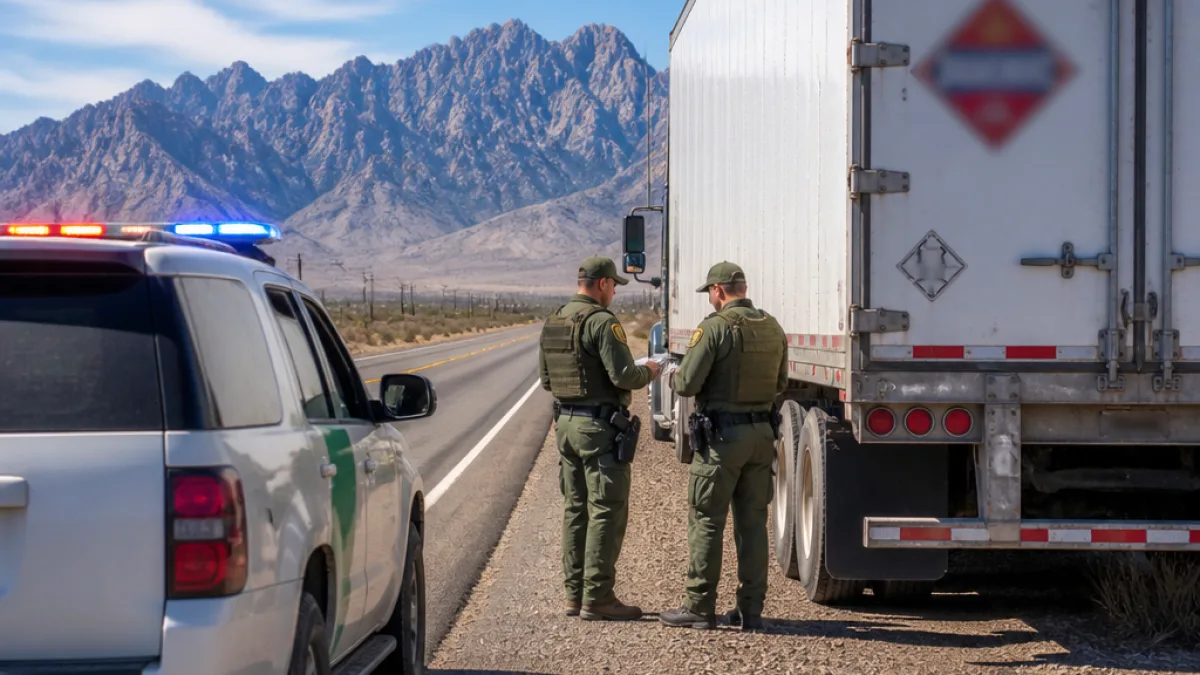
Federal agents in southern New Mexico arrested a Canadian commercial driver after concluding he had carried cargo between two domestic points in violation of U.S. cabotage restrictions, U.S. Border Patrol officials said.
Alleged domestic haul triggered enforcement action
Border Patrol announced the detention Sunday in Las Cruces, saying agents determined the driver had transported freight from Deming to Los Lunas, both within New Mexico. Authorities said the movement ran afoul of the conditions tied to the driver's nonimmigrant travel authorization.
“Admitted. Not authorized to haul,” Border Patrol said in a Facebook post.
Officials did not release the driver's name, the trucking company involved, the shipper or the nature of the cargo. Nor did the agency provide details on the exact location where agents stopped the vehicle or the specific criminal charges that may be filed.
Why cabotage rules matter
Cabotage governs whether foreign carriers and drivers can pick up and deliver freight between two points inside the United States. While Canadian and Mexican drivers are permitted to conduct legitimate cross-border shipments into and out of the country, federal rules generally bar them from performing purely domestic transport between U.S. locations.
Border Patrol said the alleged incident violated the terms of the driver's nonimmigrant status, a determination that opens the door to prosecution and subsequent deportation. The agency has publicly announced several similar enforcement actions over the past year, mostly involving Mexican drivers near the southern border.
Recent enforcement actions
Border Patrol and other federal agencies have intensified scrutiny of foreign commercial operators amid broader regulatory and industry debates over cross-border trucking. Publicly disclosed cases in 2026 include:
- April — A Mexican driver processed after agents said he transported produce from Yuma, Arizona, to Grandview, Washington; authorities said his B-1/B-2 visa was revoked.
- May — A Mexican driver who allegedly moved commodities from Nogales, Arizona, to Laredo, Texas; Border Patrol reported the driver's visa was revoked and the trailer was towed.
The Las Cruces case is notable because it involves a Canadian national rather than a Mexican driver and because it occurred well inside New Mexico.
| Month | Origin | Destination | Reported outcome |
|---|---|---|---|
| April | Yuma, Ariz. | Grandview, Wash. | Visa revoked; processed for deportation |
| May | Nogales, Ariz. | Laredo, Texas | Visa revoked; trailer towed |
| Aug. | Deming, N.M. | Los Lunas, N.M. | Arrest reported; prosecution and deportation possible |
Local and industry implications
For New Mexico communities and businesses that rely on trucking, the case underscores regulatory limits on who may perform point-to-point domestic freight movements. Industry groups have warned that recent enforcement could affect non-domiciled commercial drivers and the operations of carriers that use foreign drivers under cross-border arrangements.
Border Patrol did not say whether the Las Cruces matter resulted from routine inspection, a traffic stop or a targeted cabotage compliance operation. The agency also did not specify what criminal statutes the driver may face, leaving the timeline for possible prosecution and deportation unclear.
Local shippers and carriers normally must rely on motor carrier regulations administered by the Federal Motor Carrier Safety Administration (FMCSA) and customs and immigration rules enforced by U.S. Customs and Border Protection and other federal partners. When enforcement actions occur, they can have ripple effects on scheduling, costs and driver availability for routes that cross the border.
What’s next
Border Patrol said the driver is now facing prosecution and potential deportation. Because officials did not disclose the driver's identity, trucking company or freight details, additional information will likely emerge through court filings or further statements from federal authorities.
WE NEWS will update this report as new details become available from Border Patrol, the U.S. Attorney's Office or other federal agencies involved in cabotage enforcement.
















