The Atlanta Dream came within one victory of the WNBA championship, but their 68-63 defeat to the Golden State Valkyries in San Francisco may ultimately be remembered as a turning point for women’s basketball in Atlanta. The loss ended a championship series that reached a milestone as the first Game 7 in WNBA history. It also closed a season in which the Dream’s profile expanded on the court and its place in the city’s sports market grew off it.
Atlanta held a six-point advantage at halftime in the decisive game before Golden State guard Gabby Williams delivered 28 points after the break, a Finals record, according to the team’s account of the game. The Valkyries’ second-half surge turned a promising finish for the Dream into a narrow loss, leaving Atlanta short of its first title in the series.
A close finish with a larger meaning
Even without the championship, the Finals appearance gave the Dream a national stage and highlighted the momentum surrounding the franchise. The team said its season-ticket membership has increased by more than 400% over the past five seasons, a growth rate that has helped drive the organization’s move into a larger downtown venue.
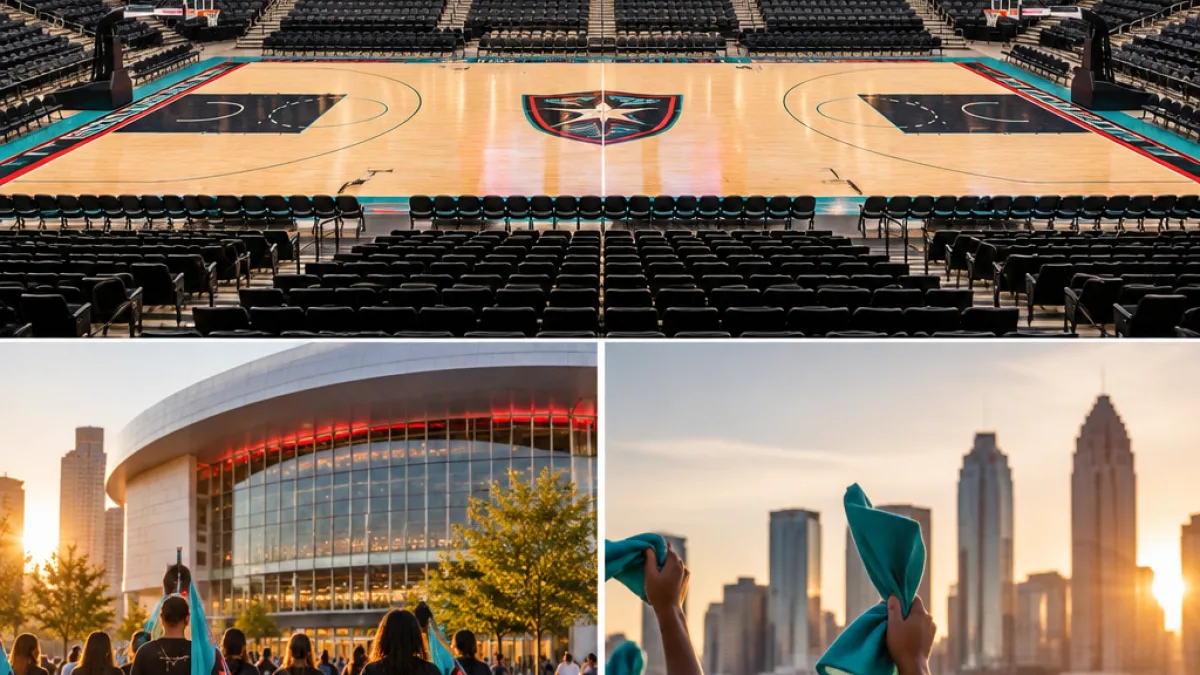
Beginning next season, the Dream will use State Farm Arena as its home base. The move will end the team’s run at the 3,500-seat Gateway Center Arena in College Park, where Atlanta has played since 2021. The change is intended to accommodate a fan base that has grown rapidly, according to the team.
| Development | What it means for Atlanta |
|---|---|
| Historic Finals appearance | The Dream reached the first Game 7 in WNBA history. |
| Season-ticket growth | Membership has risen more than 400% in five seasons. |
| New home next season | The team will move from Gateway Center Arena to State Farm Arena. |
Fans and the challenge of growth
The response inside the arena has been a visible part of the team’s rise. After Atlanta’s home victory in Game 3 on Oct. 21, forward Angel Reese credited the crowd for its energy and presence throughout the contest.
“Man, our fans showed up. Like they showed up in every single possession. I thought Ballhalla was loud.”
That atmosphere reflects how quickly the Dream’s audience has expanded, while the move downtown could make games more accessible to a larger number of fans. It also places the team in a building shared with the Atlanta Hawks, creating a more prominent home for the franchise but adding another scheduling consideration.
Scheduling remains a pressure point
The Finals also exposed the logistical challenges facing women’s sports as teams and leagues try to match rising interest with available facilities. Game 6 had to be played at lunchtime on a Thursday because of the Hawks’ schedule at State Farm Arena. Georgia Tech sports scholar Mary McDonald told CBS Atlanta that the situation illustrated the scheduling difficulties often encountered by women’s sports.
Emory University business professor Mike Lewis likewise told the outlet that the episode showed how difficult it can be for organizations to keep pace with a sport that is becoming more popular. For the Dream, that tension arrives as the club prepares to leave its smaller College Park venue and enter one of Atlanta’s most prominent sports buildings.
The defeat in Game 7 therefore marks both an ending and a beginning. Atlanta will not return from the Finals with a championship, but the team enters its next season with a historic series behind it, a sharply expanded following and a new downtown stage ahead. The move to State Farm Arena will provide the next test of whether the Dream’s recent momentum can continue to translate into sustained attention for women’s basketball across the city.