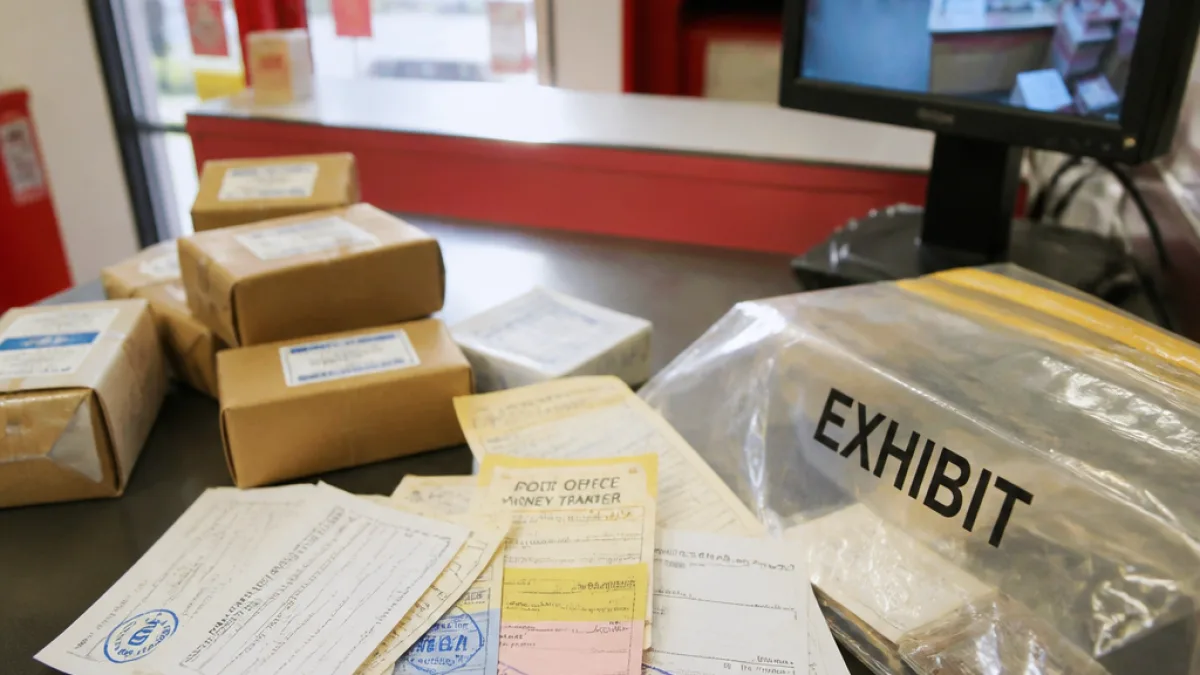
A multi‑national investigation involving French, Belgian and UK authorities used money transfer receipts, including transactions made at a Wigan Post Office, to help bring down a people‑smuggling ring that moved migrants from Vietnam into Europe, a court has heard.
How a package led to arrests
The probe began in July when a package, ostensibly containing chocolates and clothes and addressed to one of the suspects, was intercepted and examined. It was found to hold 22 Vietnamese passports. The discovery triggered a wider inquiry which, officials said, exposed an organised network that charged about $20,000 per person to move migrants into Europe.
Officers later arrested Quang Van Nguyen, 31, in Birmingham on 11 September after he drew attention by leaving the driver’s seat of a parked car and discarding the keys beneath a taxi. In the vehicle boot detectives discovered:
- 220 Vietnamese passports wrapped in an Argentina football shirt
- more than £16,700 in cash
- handwritten notes and receipts for previous money transfers
"debt bondage"
Prosecutors say the gang confiscated migrants’ passports in France before bringing people to the UK by boat and in lorries. The passports were then used as a means of control — a form of what the court described as "debt bondage" — with relatives required to send money to secure crossings. Those payments were routed back to Vietnam using Post Offices and money transfer services, the court was told.
Transactions linked to the group
Forensic examination of one suspect’s phone and financial records connected transfers made over a 15‑month period between July 2024 and October 2025 to members of the network. Receipts found in the car and in investigators’ inquiries referenced money sent from branches in several UK towns, including Wigan, Liverpool, Leeds, Coventry, Leamington Spa and Rugby.
Five people who lived in the UK and were said to be central to the operation — Vinh Van Nguyen (31), Quang Van Nguyen (31), Van Huy Nguyen (23), Lia‑Chien Trong (34) and Sy Trai Ho (28) — have been jailed. Sentences handed down to the group add up to almost 40 years in custody, the court record shows.
| Item | Quantity |
|---|---|
| Vietnamese passports (found in car) | 220 |
| Passports initially discovered in package | 22 |
| Cash recovered | £16,700+ |
The documentation and receipts recovered were pivotal in mapping the flow of money and identifying people involved in organising crossings. Investigators say the transfers were processed through multiple outlets, with Post Offices in towns including Wigan used as part of the money route back to Vietnam.
Local consequences and wider investigation
The disturbance of this operation is a reminder that cash and small‑value transfers at local outlets can feature in serious and organised crime. The defendants were prosecuted following co‑operation between agencies across Europe and the UK's National Crime Agency, which said the case was complex and international in scope.
Police and prosecutors have stressed the importance of following up on small leads. In this instance, a seemingly ordinary parcel and routine money‑transfer receipts — some issued in Wigan — were the threads that unpicked an organised criminal enterprise responsible for trafficking vulnerable people.
Local communities and businesses are unlikely to have been aware that legitimate services were being exploited. Authorities have not suggested any wrongdoing by Post Office staff in Wigan; rather, the transaction receipts were used as forensic evidence to trace the network’s financial activity.
The convictions and jail terms handed down to the five defendants reflect the courts’ view of the severity of the offence and the organised nature of the enterprise. The multi‑agency inquiry remains an example of cross‑border policing using everyday records to disrupt people‑smuggling operations.