The United Nations World Food Programme (WFP) has warned it will sharply reduce lifesaving food assistance across the Gaza Strip because of dwindling funds, cutting the number of beneficiaries from 1.6 million to 1.1 million.
Scale of reductions and immediate effects
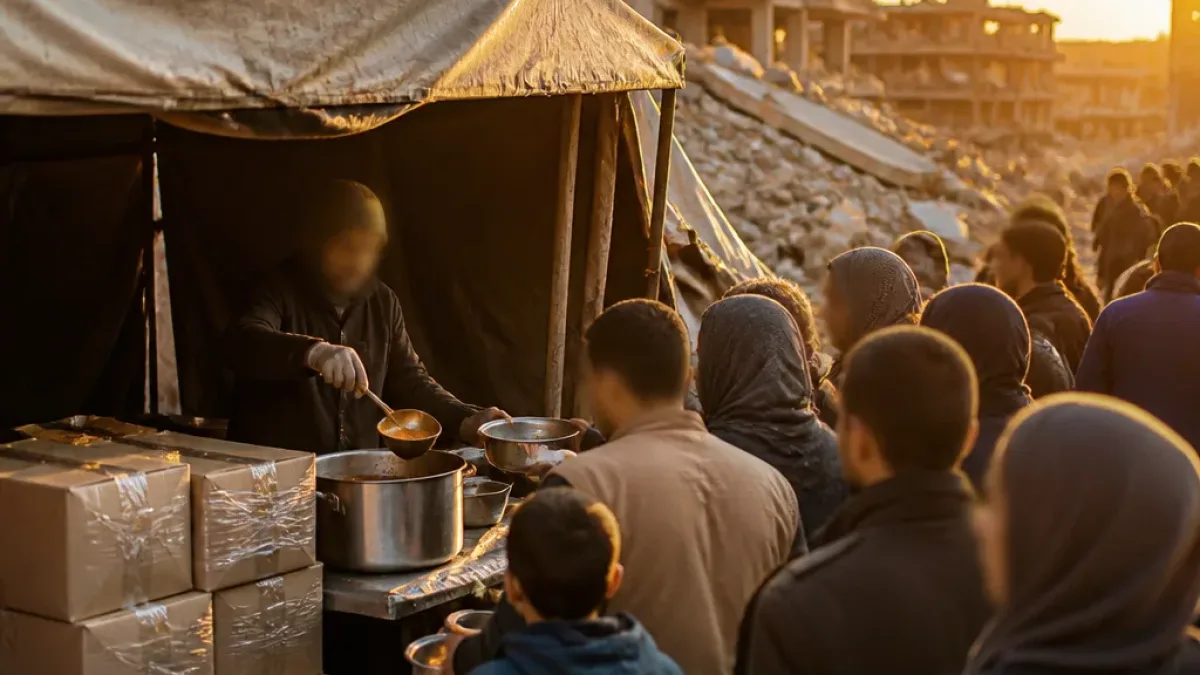
The WFP said the cuts will take effect as winter approaches and at a time when many households are already struggling to feed themselves. One of the more visible changes will be a reduction in hot meals provided by community kitchens — from 250,000 a day to 150,000 — and families in hard-to-reach areas will move from daily to alternate-day distribution.
| Assistance type | Before | After |
|---|---|---|
| People assisted by WFP | 1.6 million | 1.1 million |
| Hot meals from community kitchens (daily) | 250,000 | 150,000 |
Human cost and local testimony
Nearly all of Gaza's population of 2.1 million remains displaced and the WFP says around two-thirds depend on food aid. Displaced parents and carers reacted with alarm to the announcement, saying the cuts will leave already strained households at risk.
"It's a disaster! What will we do with these reduced rations? How will we provide for the little ones?"
The remark came from Mervat al-Satari, a mother-of-five living in a camp in the al-Mawasi area of Khan Younis after learning of the WFP reductions. Other camp residents said portions from community kitchens — typically pasta or lentils with occasional potatoes and aubergines — were already insufficient.
WFP explanation and operational constraints
The Palestine director for the WFP, Shaun Hughes, was explicit that the cuts are driven by financial shortfalls rather than a reduction in need or access problems. He stressed that the agency continues to have operational access but lacks the funds to maintain current assistance levels.
The agency also noted that since July there have already been reductions in cash transfers to vulnerable families — a move that, alongside the latest cuts, may increase food insecurity as colder months approach and living conditions worsen for displaced populations.
Broader implications and uncertainty
These reductions raise immediate questions about coping mechanisms for families reliant on the WFP and other UN agencies. With community kitchens cutting the number of daily meals by 40% and routine distributions becoming less frequent in the most vulnerable areas, households may resort to negative coping strategies such as reducing meal frequency or portion sizes, selling assets, or accruing debt.
- Wider humanitarian consequences: Reduced food assistance risks exacerbating malnutrition, particularly among children, pregnant women and the elderly.
- Operational pressure on other agencies: Organisations providing medical, shelter or water services may face increased demand as food insecurity leads to secondary health and protection needs.
- Donor engagement and geopolitical factors: The funding gap reflects donor priorities and could prompt diplomatic pressure for renewed contributions; the WFP has appealed repeatedly for urgent funds.
While the WFP's statement links the cuts directly to funding shortages, the long-term pattern of donations and political developments in the region will determine whether assistance can be scaled back up. For now, the changes are a stark signal of how humanitarian operations hinge on continuous financial support and how quickly those lifelines can be reduced when funding falters.
Officials and aid workers face an immediate task: to prioritise the most vulnerable, adapt delivery mechanisms where possible, and press donors for emergency funding. Absent prompt replenishment, communities already pushed to the brink will face a harsher winter with fewer guaranteed meals each day.