
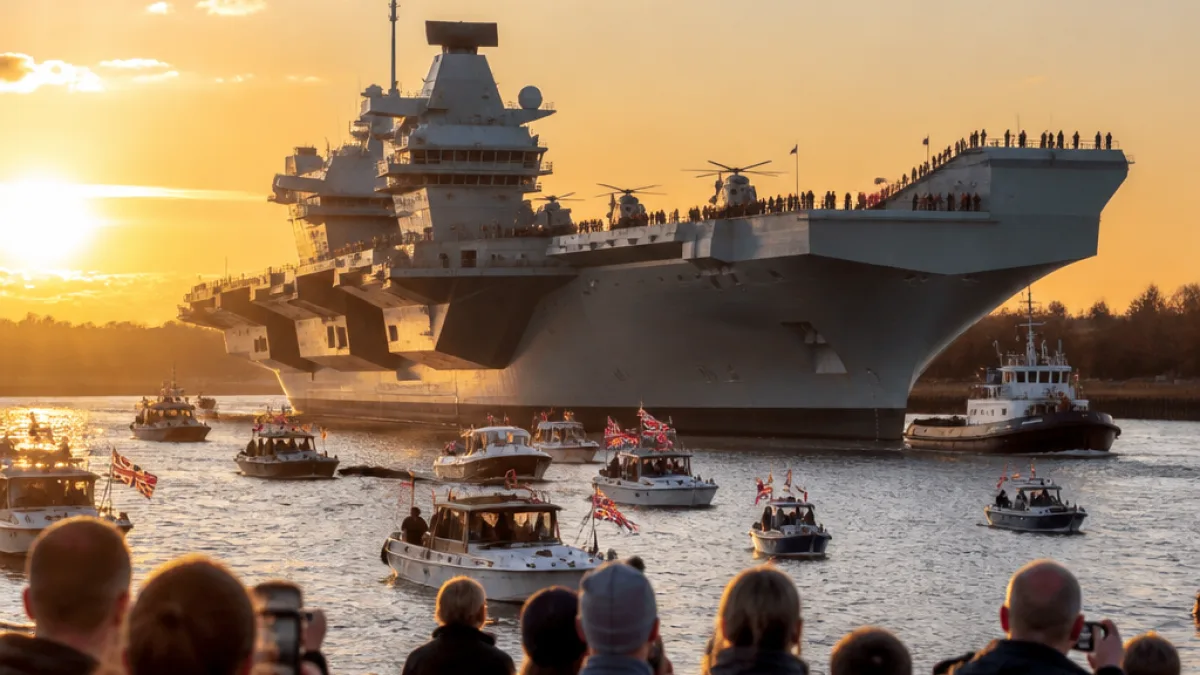
Lincoln carrier to end extended deployment amid concerns over crew welfare
The US aircraft carrier USS Abraham Lincoln is set to return to the United States after a deployment lasting more than 250 days, US military officials said, following reports of low morale and mental health concerns among sailors aboard the ship.
Commander of US Central Command (CENTCOM), Admiral Brad Cooper, met sailors and Marines on board the carrier on 15 August during a visit that concluded a 10-day trip to West Asia. Cooper praised the crew for their performance, describing the strike group as a high-achieving team.
"The Lincoln Carrier Strike Group is a strong team of high-achieving Americans standing tall with immense, justified pride in everything they accomplished. History will record this deployment as one of the most operationally intense and consequential of the modern era," Admiral Cooper said.
The admiral’s remarks came as acting US Navy Secretary Hung Cao announced that the carrier would return home as part of a planned rotation. In a statement, Cao said the ship had "crushed their deployment" and confirmed the Navy would provide details of the return, stressing that "the safety and security of our Sailors and Marines always comes first. Mission accomplishment. Troop Welfare. This is how we lead."
Media reports about the extended deployment have raised questions about sailors’ morale and mental health. While CENTCOM and Navy leaders publicly commended the crew’s dedication and performance, the reports sparked broader attention and debate in the US over the length and conditions of the deployment. Former US president Donald Trump, responding to the situation, expressed the view that the deployment was "not long enough," dismissing the concerns that had been reported.
Context and local interest
Although the ship is named for President Abraham Lincoln and is a US naval asset, the story resonates in Lincoln because of the name recognition and because the issue touches on service personnel welfare — a matter of widespread public interest. The public statements from senior US military and civilian leaders underline that the Navy is preparing to relieve the crew after what officials described as an operationally intense period.
- Deployment length: more than 250 days at sea
- Senior visits: Admiral Brad Cooper met the crew on 15 August; he had previously visited the carrier in February
- Official position: Acting Navy Secretary Hung Cao said the carrier had "crushed their deployment" and would return as part of a planned rotation
| Item | Detail |
|---|---|
| Deployment duration | More than 250 days |
| Admiral Cooper visit | 15 August (during a 10-day trip to West Asia) |
| Earlier visit | February (Cooper previously visited alongside US envoys) |
The limited official detail released so far points to a planned rotation rather than an emergency withdrawal. Pentagon and Navy officials have framed the move as a routine homecoming following a demanding deployment, emphasising that mission accomplishment and troop welfare are priorities.
Local readers may wish to note how international naval operations and questions about service personnel welfare attract public scrutiny and political comment beyond the United States. The Lincoln namesake of the carrier makes this an item of civic interest for the city’s readers, while the underlying issues of operational tempo, staff wellbeing and command oversight remain matters of international relevance.
Further updates are expected when the Navy releases exact dates and logistical details for the carrier’s return to the United States.