
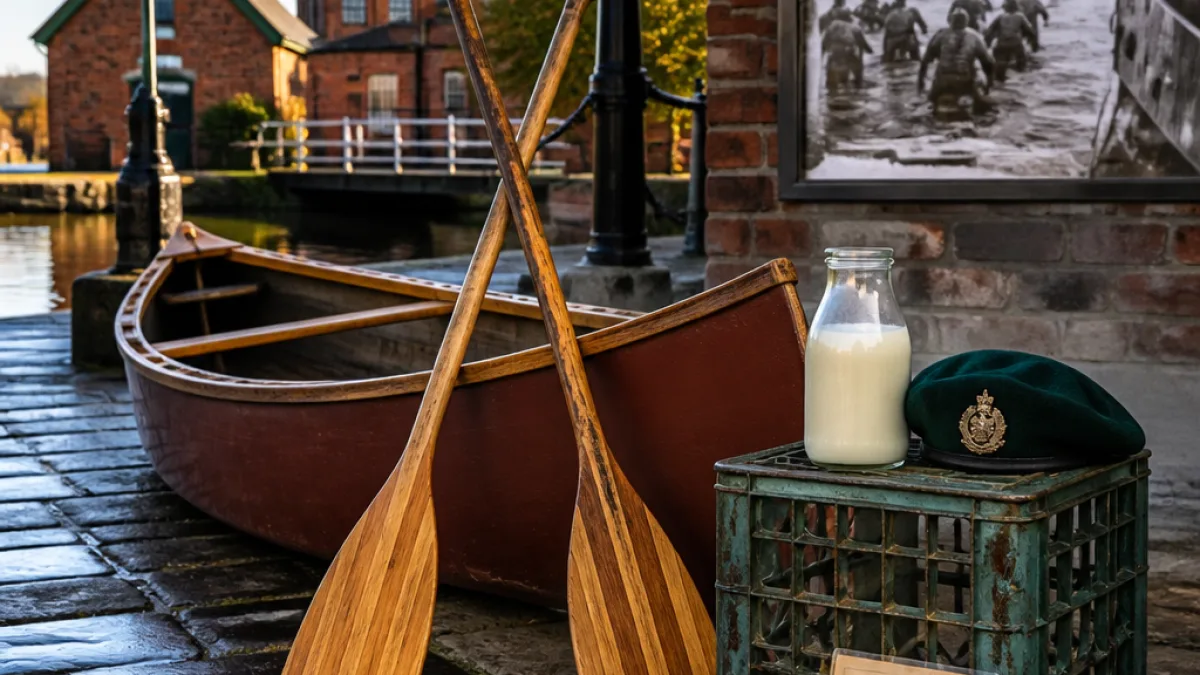
Local teenager turned marine joined audacious 1942 raid
James Conway, a 16‑year‑old milkman from Edgeley, Stockport, has been brought back into the region's public memory after his wartime service featured on BBC Radio Manchester's Hidden Manchester series. Conway left home at the outbreak of the Second World War to join the Royal Marines and trained for a classified operation that became known as Operation Frankton, the raid that would later earn its participants the nickname the "Cockleshell Heroes".
The mission, launched in March 1942, was aimed at disrupting German shipping in the port of Bordeaux by sending small teams upriver in two‑person canoes to attach explosives to blockade runners supplying the Nazi war effort. The plan emerged because commanders believed conventional aerial bombing could not reliably hit the tightly defended targets.
"It was too risky to do aerial bombing. There was no accurate way to guide munitions from the air on to a certain target, so they came up with an ingenious plan of how can we attack it from the water?"
The quotation above comes from Stephen Martindale, a former marine from Bolton who works with the CS22 veteran expeditions group and spoke to the BBC programme. Conway was one of 12 men selected for the operation, ten of whom were launched near the mouth of the Gironde in five Cockle Mark II canoes.
- Conway began the war as a milkman in Edgeley and joined the Royal Marines after 1939.
- Operation Frankton was carried out in March 1942 against ships moored at Bordeaux.
- Of the teams launched, several men were lost during the crossing; Conway and his partner were captured and later executed.
The raiders made strong progress under extremely dangerous conditions, but the mission was not without its immediate cost. The teams encountered powerful tidal overfalls—areas where opposing tides clash over shallows—and four men were lost during the transit. Conway and his canoe partner, John McKinnon, were separated from the other raiders after their canoe was damaged. Despite surviving freezing waters and making landfall, they attempted to escape through occupied France but were betrayed, arrested by the Gestapo, and held for three months.
According to the BBC account, Conway and McKinnon refused to reveal key information during their captivity. They were executed under Hitler's notorious Commando Order. Conway was only 20 years old when he was killed in 1943; the exact date and place of his death are not recorded in the programme.
Why the story still matters in Stockport
For Stockport residents, Conway's story is a local strand of a wider wartime tapestry. The Hidden Manchester series aims to surface forgotten or lesser‑known stories from the region — and in doing so it restores to public view the part played by ordinary northerners in extraordinary events. A milkman from Edgeley became part of one of the war's most daring small‑boat raids; that journey from local pavement to clandestine operations overseas is the kind of history that resonates in communities where family memory and civic identity are tightly linked.
Operation Frankton has long been regarded as audacious in its conception and brutal in its aftermath. The raid highlighted the willingness of small teams to take extreme risks to strike vital enemy supply lines, and it revealed the harsh realities facing captured commandos under German policy. For families in Stockport with wartime links, the programme offers a chance to reflect on sacrifice and to ensure names like Conway's are not lost.
| Fact | Detail |
|---|---|
| Date of mission | March 1942 |
| Target | Bordeaux blockade runners |
| Men selected | 12 (10 launched in canoes) |
| Outcome for Conway | Captured, held three months, executed in 1943 aged 20 |
As the region marks and re‑examines local wartime stories, broadcasts such as the BBC's provide fresh access to testimony and research. For Stockport, the tale of a teenager who swapped a milk round for a canoe and paid the ultimate price is a stark reminder of the ordinary lives entangled in extraordinary history.
Local historical groups and veteran organisations often use such features to prompt further research, commemorate those lost and encourage public recognition. The story of James Conway now sits alongside other Northern names in the story of Operation Frankton — a daring but costly episode in Britain's fight against Nazi Germany.















