
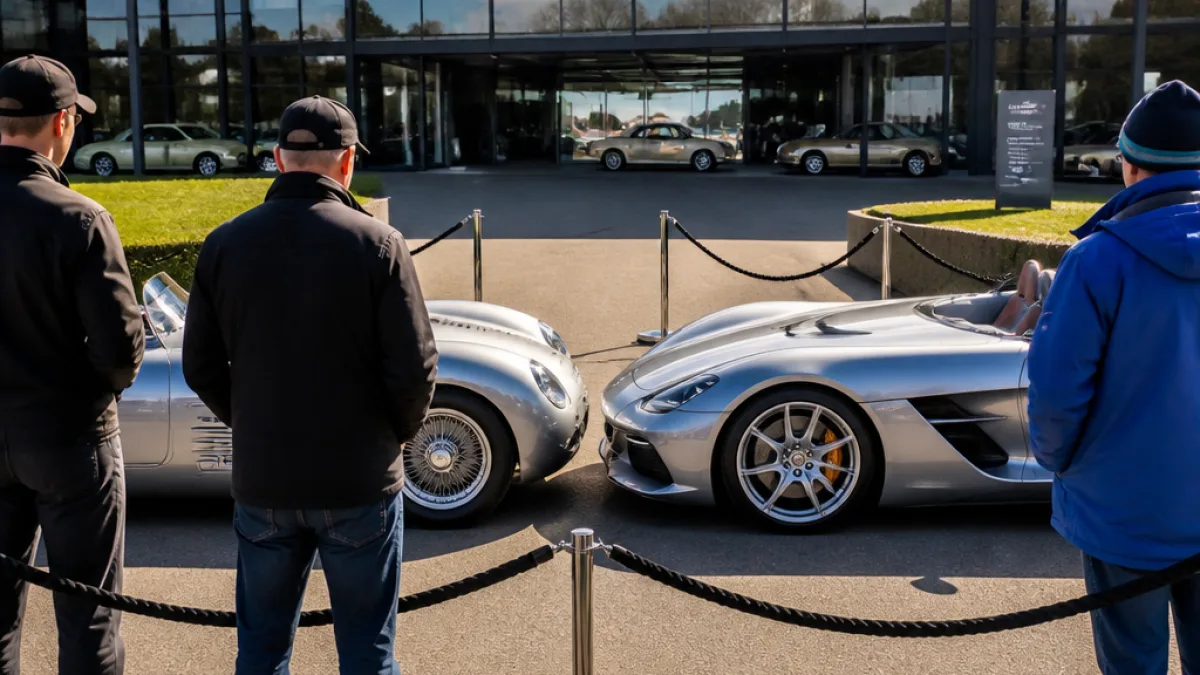
Parked side by side at the Mercedes‑Benz Classic Centre are two machines that embody half a century of racing and engineering ambition: the 1957 300 SLS and the modern SLR McLaren Stirling Moss. For anyone with an interest in classic cars in Stirling, the sight of these uncompromising open‑top sports cars together is a reminder of how automotive history is preserved and celebrated.
Two eras, one purpose: race‑bred open‑top speed
The two cars are separated by more than 50 years yet share a common narrative: both were conceived as open‑top, high‑performance machines built with competition and uncompromising performance in mind. The older of the pair, the 300 SLS, is particularly rare. Mercedes built just two examples of this open racing sports car in 1957. It was created when engineers adapted the 300 SL Roadster for a race class that would not accept the production roadster.
To meet the rules and to pare weight, the 300 SLS shed bumpers and other sundry fittings. A small racing screen replaced the conventional windscreen and weight was reduced wherever possible: the finished car tipped the scales around 794 pounds lighter than the roadster on which it was based. The changes were not cosmetic only; they helped deliver on the track. The car was campaigned with success, notably by Paul O’Shea, who used it to secure the American sports car championship in D class.
"These cars are far more than sheetmetal and engineering. They tell motorsports history."
That line, observed of the pair, speaks to why such cars attract attention well beyond their immediate owners. Some components are irreplaceable and original examples are seldom accessible to the general public or to typical collectors. For Stirling residents who follow classic motoring, the preservation work at specialist centres such as Mercedes‑Benz Classic is what keeps these stories alive.
Rarity, restoration and responsibility
Because only two of the original 300 SLS examples were produced, Mercedes‑Benz Classic has in recent years built at least one car based on the original to provide a usable, authentic example without exposing the originals to everyday risk. Even when restored or rebuilt, the feelings that come with handling these cars are distinct from contemporary sports cars: there is reverence, a sense of stewardship and an awareness of their historical value.
For Stirling enthusiasts, that has practical implications. Classic car ownership and use involves specialised maintenance, careful insurance and sometimes limited access to the genuine articles. The account of a motoring journalist permitted to drive both the SLS and the SLR underscores the precautions that accompany such access: full insurance and meticulous handover processes are typical when originals or faithful reconstructions leave a specialist collection.
- Historical significance: the 300 SLS played a competitive role in 1950s American sports car racing.
- Rarity: only two original 300 SLS cars were built in 1957, making any example exceptionally scarce.
- Preservation approach: modern specialist centres may construct faithful cars to allow driving without exposing original examples to damage.
The modern SLR McLaren Stirling Moss, finished and presented decades later, continues that lineage of extreme open‑top sports cars from Mercedes. The pairing at the Classic Centre illustrates continuity in design thinking: lightness, exposure and driver engagement remain constant priorities for those who build such machines.
What it means locally
Stirling has an active motoring interest among residents and visitors. Stories like this matter locally because they illuminate how automotive heritage is sustained, giving context to local car shows, club meets and private collections. The work done by marque specialists and classic centres ensures that, even when originals are too fragile to be used, their engineering ideas and racing pedigrees can still be experienced by the next generation.
For those in Stirling curious about classic Mercedes or open‑top sports cars generally, the broader lesson is clear: preservation is a collaborative effort between manufacturers, specialist restorers and enthusiasts. It is what keeps machines such as the 300 SLS and the SLR Stirling Moss from being mere photographs in a book and allows their stories to be told on the road and on the page.
| Car | Year | Notes |
|---|---|---|
| 300 SLS | 1957 | Two originals built; race‑prepared variant of 300 SL Roadster; ~794 lb lighter than roadster; used to win US D class championship |
| SLR McLaren Stirling Moss | Modern | Contemporary extreme open‑top sports car continuing Mercedes tradition |














