
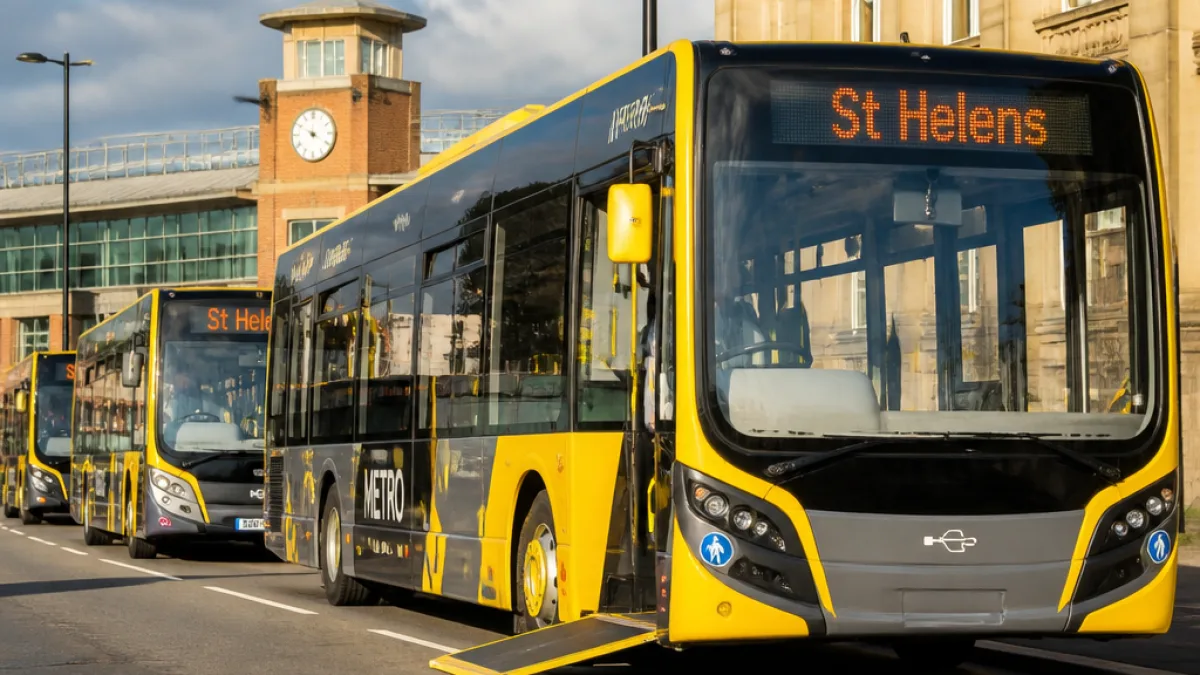
Major fleet arrives as St Helens becomes first borough to take over services
St Helens will be at the front of a sweeping change to local buses this autumn as the Liverpool City Region brings services back under public control. The first of a more than 560-vehicle fleet, representing an investment of over £150 million, is due to begin appearing on routes serving the borough and the wider region.
The new buses are finished in the region's yellow, black and grey Metro branding and will join the 108 publicly owned electric buses already operating across the city region. They include modern passenger features such as air conditioning, USB charging points, improved seating and enhanced accessibility, with extra space for wheelchairs and prams and audio-visual announcement technology.
“the first time in more than 40 years that local leaders will have the power to design and manage routes directly”
What the new vehicles bring
The vehicles, built in the UK by Alexander Dennis Limited (ADL) and Wrightbus, meet the latest Euro 6 environmental standards. The Liverpool City Region Combined Authority says the new buses will reduce carbon emissions by around 20% and cut nitrogen oxide emissions by more than 80% compared with many older vehicles on the network. They have also been designed so they can be converted to battery-electric operation in future as charging infrastructure and grid capacity expand.
- Fleet size: more than 560 new buses
- Investment: in excess of £150 million
- Existing electric buses: 108 publicly owned vehicles
- Emission cuts: ~20% carbon, >80% NOx compared with older buses
- Future-proofing: convertible to battery-electric
Local control, regional ambition
St Helens will be the first part of the Liverpool City Region to make the switch back to public control, a move that has not happened in more than four decades. That change means local leaders will have direct responsibility for designing routes, timetables and fares — decisions that affect people's day-to-day travel for work, school and leisure.
The fleet upgrade is part of a broader programme to modernise transport across the Liverpool City Region. It runs alongside a separate £500 million programme for new Merseyrail trains and plans for the first new Mersey ferry in more than 60 years. Dozens of additional fully electric single-decker buses are expected to join the fleet from 2027.
| Item | Figure |
|---|---|
| New buses arriving | 560+ |
| Investment | £150m+ |
| Existing electric buses | 108 |
| Carbon reduction (approx.) | 20% |
| NOx reduction (approx.) | >80% |
What this means for St Helens residents
For commuters and regular bus users in St Helens, the arrival of the new fleet should bring more comfortable, reliable and accessible journeys straight away. The refreshed vehicles advertise practical features commuters want — USB charging and better seating — while accessibility improvements aim to make public transport easier to use for those with pushchairs or mobility needs.
Crucially, the shift to public control gives the council and regional leaders the tools to reshape routes and schedules to respond to local demand rather than commercial operator priorities. That could improve connections between suburbs, town centres and employment hubs, but the scale and timing of route changes will be determined as the new network is planned and implemented.
From an environmental point of view, the new Euro 6 buses are a step forward in cutting emissions, and their convertibility to battery-electric operation is a practical move while the supporting charging infrastructure is developed. Full electrification of the fleet is expected to grow from 2027 onwards as more electric vehicles arrive.
Implementation will be watched closely by residents and campaigners alike. The technical and logistical challenge of swapping bus operation models, rolling out hundreds of new vehicles and coordinating future electrification is significant. For now, St Helens is the launchpad for the region's plan: more modern buses on local streets and the promise of services designed with communities in mind.
Further details on timetables, routes and the phased introduction of the new vehicles are expected from the Liverpool City Region Combined Authority as the handover progresses.















