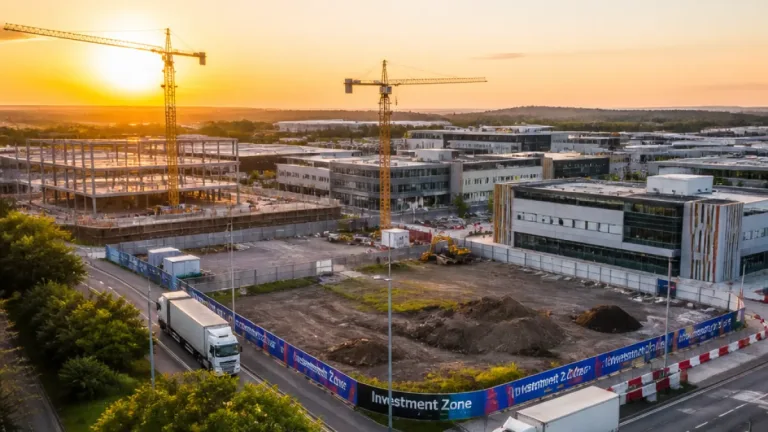
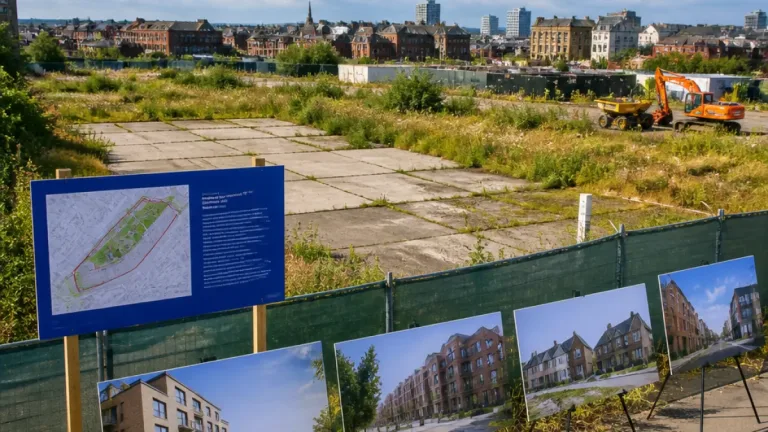
MediaCity has reshaped part of Salford during the past 15 years, turning what were once muddy car parks on the old Manchester Docks into an internationally recognised centre for media, technology and creativity. The site now supports a significant local economy and, according to its chief executive, has only just begun.
From docklands to creative cluster
Alice Webb, who played a part in the BBC’s original move to the site and has since returned as chief executive, said MediaCity’s rise has been dramatic. She told reporters that:
“MediaCity hasn’t finished. It’s only just getting started.”
Her assessment comes as Salford marks its centenary as a city, a milestone that has prompted reflection on the transformation of parts of the borough. What was largely derelict dockland and surface-level car parking 15 years ago now hosts production space, offices and academic facilities.
Scale and local impact
The figures given by MediaCity underline its scale. Around 8,000 people are now based at the development and a further 30,000 jobs are supported across the wider supply chain. The site also produces almost 50,000 hours of content every day, a statistic used to highlight the volume of creative output now anchored in Salford.
- 8,000 people based at MediaCity
- 30,000 jobs supported in the wider supply chain
- ~50,000 hours of content produced daily
The development has not only acted as an employment hub but has contributed to a broader identity change for Salford. Webb argues that the site helped establish Greater Manchester as the largest creative hub outside London and has offered pathways for career development locally.
Careers and the local ecosystem
Webb emphasised the importance of an ecosystem that allows people to build whole careers without leaving the city. She pointed to institutions and businesses on site — notably the University of Salford and the BBC — alongside a growing number of independent production and technology firms as examples of an integrated career ladder.
“You can start at the University of Salford, come here, work on a podcast, join the BBC, set up your own production company and build an entire career without ever leaving the city,” she said.
That narrative is important for local residents. If true, it suggests opportunities not just for highly skilled newcomers but for students and people retraining locally. It also underlines how physical clustering of education, production and commercial activity can generate momentum beyond the site’s immediate footprint.
What’s next for MediaCity and Salford?
Webb’s description of the last 15 years as being like “launching a rocket ship” speaks to rapid change. But her claim that MediaCity is “only just getting started” raises questions that will matter to Salford households and businesses:
- How will growth be managed to benefit local residents, particularly on jobs, training and housing?
- Can the supply-chain jobs cited be turned into long-term, well-paid local careers?
- What infrastructure and planning will be needed as the site expands further?
These are matters for local and regional policymakers, employers and educational institutions to answer together. The site’s existing figures are substantial, but turning output into city-wide prosperity requires co-ordination.
Salford’s place in the North West creative map
For residents, the MediaCity story is both familiar and evolving. The development has already given Salford a newer identity beside its industrial and cultural past. As the city celebrates 100 years, the conversation about what comes next will focus on ensuring that growth brings tangible benefits across the borough.
| Metric | Figure |
|---|---|
| People based at MediaCity | 8,000 |
| Jobs supported in supply chain | 30,000 |
| Hours of content produced daily | ~50,000 |
MediaCity’s next moves will be watched closely in Salford. If the last 15 years were the rocket launch, residents will want to know who benefits from the trajectory and how firmly the city can lock in the wider rewards of a growing creative economy.