
A Mumbai-headquartered pharmaceutical contract manufacturer has confirmed plans to add a substantial solar installation at its Morpeth manufacturing complex as part of a wider drive to reduce greenhouse gas emissions.
Project details and expected output
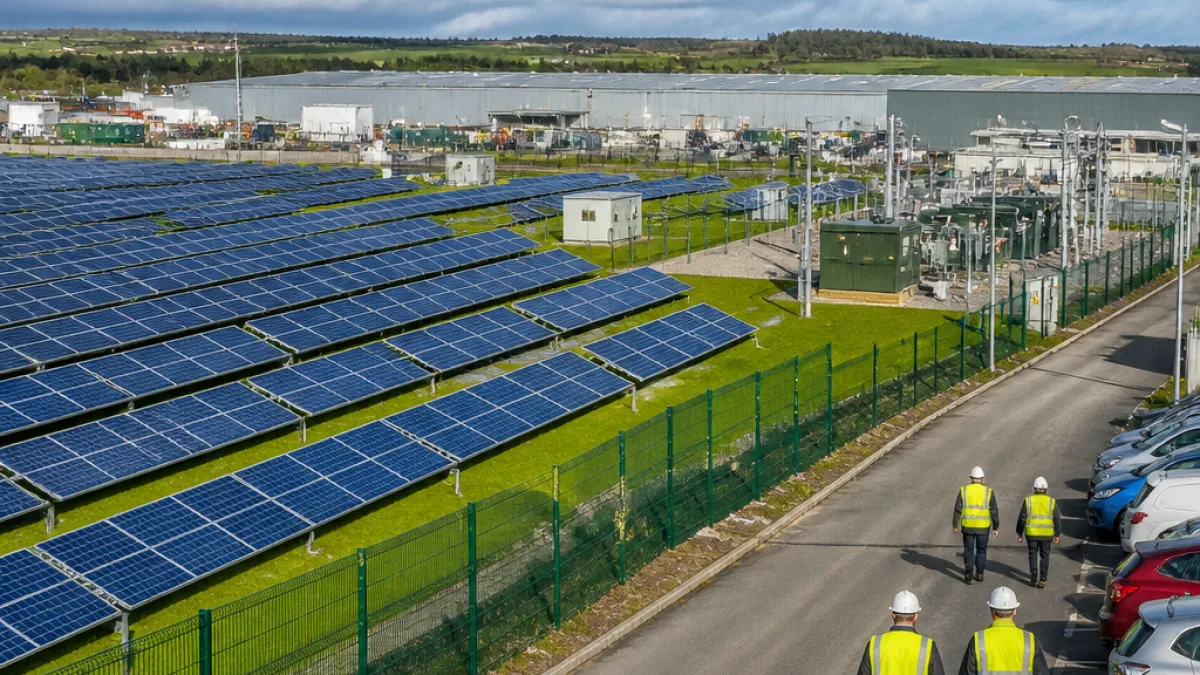
Piramal Pharma Solutions said it will fit a 4.3MWp ground-mounted solar array at its combined drug substance and drug product facility in Morpeth. The array will be installed in a behind-the‑meter configuration so that the electricity generated feeds directly into the site’s power supply.
Once operational the plant is expected to produce roughly 3,950 MWh of renewable electricity annually, equivalent to meeting about 22% of the site's yearly electricity demand. The installation will comprise approximately 6,200 solar panels spread across around 16 acres, and the developer says the projected generation is enough to serve about 1,460 UK homes each year.
"feeding renewable electricity directly to the Morpeth site."
Partnership and climate targets
The project will be carried out under a power purchase agreement (PPA) with Alight UK BTM1 Limited, described by the company as a solar developer and independent power producer. Piramal has framed the installation as supporting its commitment to cut Scope 1 and Scope 2 greenhouse gas emissions by 42% by the end of financial year 2030.
For the Morpeth site — which undertakes both drug substance and drug product work — the solar array represents a direct investment in on‑site renewable generation rather than purchasing off-site green energy certificates. That local generation will reduce the amount of grid-supplied electricity the factory needs and should lower the site’s overall operational emissions profile.
Local context and implications
The Morpeth facility is a significant local employer and part of a network of industrial operations in Northumberland and the wider North East. For residents and local stakeholders the scheme will be notable for several reasons:
- It adds visible renewable infrastructure to land around an existing industrial site.
- It reduces the facility’s reliance on grid electricity, helping Piramal progress corporate decarbonisation targets.
- It demonstrates the use of PPAs with specialist solar developers to deliver behind‑the‑meter projects on operational industrial sites.
While the company has not published a timetable for construction and commissioning in the material released to date, such installations commonly involve planning, groundworks and grid‑interface works before panels are energised. Local residents and authorities will therefore want clear information about any planning applications, construction traffic and decommissioning plans for the site once the array reaches the end of its life.
Data snapshot
| Item | Figure |
|---|---|
| Installed capacity | 4.3 MWp |
| Estimated annual generation | 3,950 MWh |
| Site electricity covered | ~22% |
| Number of panels | ~6,200 |
| Land area | ~16 acres |
| Homes equivalent | ~1,460 |
From a regional perspective, the scheme adds to a growing pipeline of industrial and commercial solar projects in the North East, where businesses are increasingly seeking on‑site generation to manage energy costs and emissions. For the community in Morpeth, it is a reminder that the town's industrial base is adapting to meet corporate sustainability targets and national expectations on decarbonisation.
Piramal Pharma Ltd. is a listed company in India; the Morpeth installation is being presented by the firm as one element of its international strategy to lower operational emissions across its sites.
Local councils and resident groups will likely follow progress of the project closely, seeking detail on planning, landscape impact and any community benefits arising from the investment.