Festival culture documented in Newry museum collection
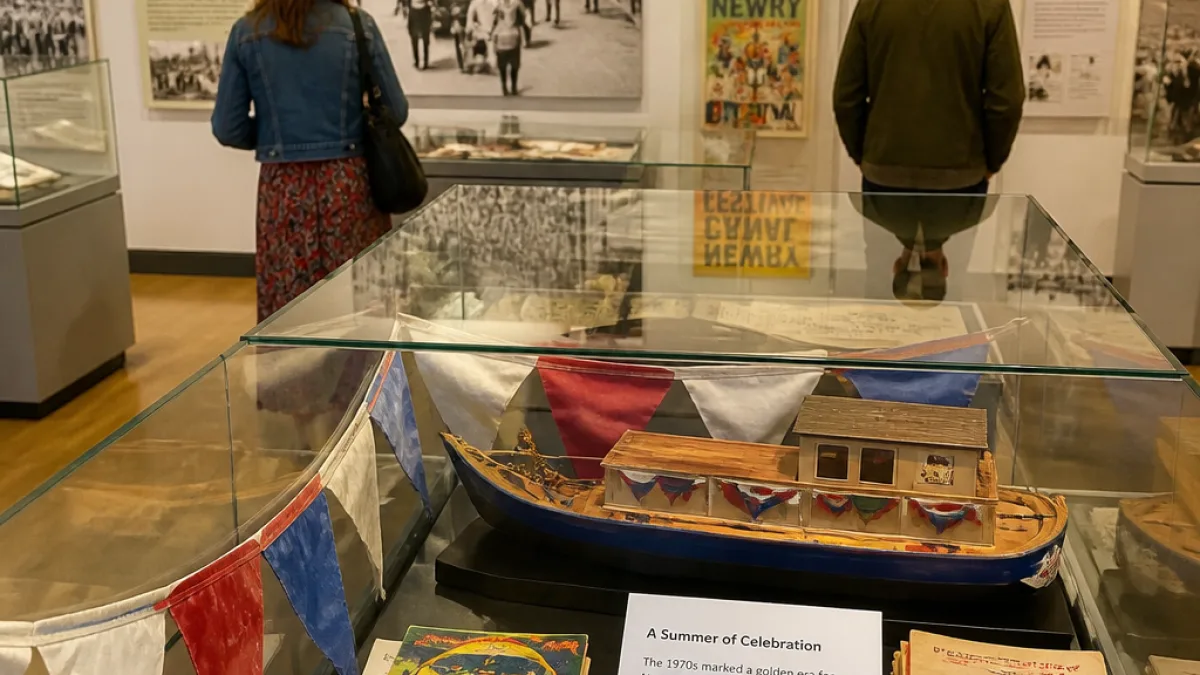
The Newry and Mourne Museum has unearthed a photographic and artefact-rich record of the district’s festival tradition, tracing the rise of summer events that began in the mid-1970s. The material recalls how parades, sporting contests, arts events and fundraising activities combined to lift community spirits and attract large crowds.
Among the earliest festivals were the Newry Canal Festival and the South Armagh Festival. The museum’s collection shows how those events developed into multi‑day programmes of family entertainment and civic engagement, staged at a time when many parts of the region were living under the shadow of the Troubles.
“Festival fever began in the mid-1970s, with the launch of Newry Canal Festival and the South Armagh Festival,”
The Newry Canal Festival in particular was organised by council staff, local businesses and voluntary groups. It aimed to present a more positive atmosphere in the town and opened with a large festival parade led by the mayor. The displays on show at the museum include images of celebrities who helped draw public attention to the events: Pat Jennings (1984), George Best (1987) and Jackie Fullerton (1989) are all recorded as having taken part in festival openings.
The scale of the events is illustrated by official figures from the late 1980s. In 1988 the Newry Canal Festival comprised 106 events, involved 4,518 participants and drew an estimated 11,700 spectators, raising in excess of £10,000 for charity. The festival continued to run annually until 1994.
Local customs, charity and identity
The South Armagh Festival, first staged in 1975, focused on towns and villages across the area and incorporated elements such as a festival queen — an office that sometimes acted as a stepping stone to wider pageants such as Miss Northern Ireland. The museum notes that many festivals placed charity and community at their hearts, with events structured to involve young and old alike.
- Parades and fancy-dress competitions were central attractions.
- Sports, arts and musical events rounded out festival programmes.
- Fundraising for local charities was a recurring aim.
The display also preserves material from later, locally distinctive events. For example, the Earwig Festival — taking its name from a local character known as ‘The Earwig’ — first ran in July 1987, centred on High Street and Church Street, and added a more playful, locally focused dimension to the calendar.
| Festival | First year | Notes |
|---|---|---|
| Newry Canal Festival | mid-1970s | Large parade, mayor-led openings; ran until 1994 |
| South Armagh Festival | 1975 | Events across towns and villages; featured festival queen |
| Earwig Festival | 1987 | Centred on High Street and Church Street, local character theme |
What it means for Newry today
For many residents the photographs and programmes will be reminders of communal life organised around streets and canals, with volunteer labour and civic institutions working together. The museum’s material highlights how festivals were used deliberately to promote a positive town image and to bring people from different backgrounds together.
While some of the festivals no longer operate, the archive offers both a record and a resource. It provides starting points for conversations about how public events can support local charities, foster civic pride and encourage participation across generations. For historians and community groups, the collection is a prompt to examine how cultural activity in Newry evolved during a fraught political era and how that legacy shapes present approaches to civic programming.
The Newry and Mourne Museum display is therefore not simply a look back at summer entertainments; it is a reminder of the civic effort behind those events and an invitation to consider how festival traditions might be reworked for contemporary community life.