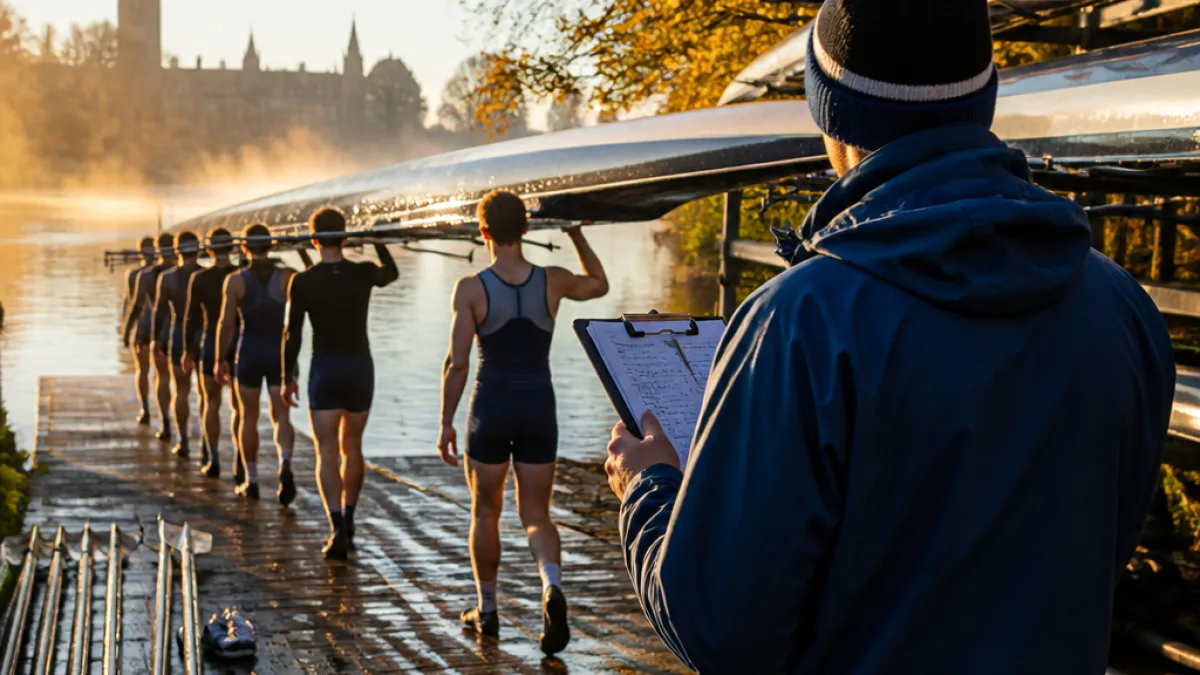
Each year in Cambridge, long before the riverside crowds gather to watch crews in university blue, a different scene plays out across college boathouses: cold mornings, inexperienced crews and the slow, patient work of learning to row. The students who supervise those beginnings — known as Lower Boats Captains (LBCs) — carry responsibilities that reach well beyond organising outings, and their role is central to how many undergraduates first discover the sport.
The boathouse as an entry point
Many Cambridge rowers remember their first outings not at Henley or on the Tideway but in a novice boat squeezed with other beginners. College programmes run through boathouses such as the JCBC facility offer the first exposure to the water for hundreds of students each year. For some, the experience is accidental: one first‑year at Jesus College described turning up to a boat club barbecue “just for the Cambridge experience” and then finding themselves unable to leave the boat.
That progression can be rapid. The Jesus rower noted she went from that initial curiosity to joining CUBC’s Development Squad and entering the national pathway programme within eight months — an arc she said highlighted the people who make such journeys possible.
What LBCs actually do
Lower Boats Captains are often former novices themselves and are responsible for the practical and pastoral framework that allows beginners to persist through a steep learning curve. The source material sets out their duties succinctly.
- Organise outings and training sessions
- Coordinate coaches
- Recruit substitutes and manage crews
- Create an environment in which novices can learn and continue despite setbacks
| Responsibility | Why it matters |
|---|---|
| Outing organisation | Enables regular practice and safety for beginners |
| Coach coordination | Provides technical instruction and consistent learning |
| Recruitment of substitutes | Keeps crews complete and sessions running |
For many novices, the LBCs’ contribution is not merely logistical. The Jesus College rower emphasised the supportive nature of the role, explaining that there were times she felt she might quit but that the approachability of LBCs made a difference.
“The LBCs are the foundation of the lower boats programme,” the Jesus rower explained. “I fully believe that neither this programme nor the college boat clubs as a whole could function without them.”
Beyond the novice boat
College rowing in Cambridge functions as one of the university’s largest gateways into organised sport. Hundreds of students participate in learn‑to‑row schemes and college teams each year, and for some those initial efforts lead to higher‑level squads and even national pathways. The development pathway cited by the Jesus rower illustrates how college programmes can feed into wider talent systems.
At the same time, the LBC role combines administration with mentorship. Maintaining retention among beginners requires not only scheduling and coaching but also creating an atmosphere where those who feel overwhelmed can ask for help and continue learning. That blend of practical and pastoral work is why the position is often held by students who themselves came through the same college programmes.
Implications for Cambridge rowing
Understanding the LBC role casts the broader Cambridge rowing scene in a different light. The public image of elite crews and regatta success is supported by a less‑visible network of volunteers and student officers who sustain the sport at the grassroots. If college clubs are to remain productive talent pipelines, the work of LBCs — and the resources and recognition they receive — will matter.
For Cambridge residents and students watching the river in April, the crews in blue are the most visible symbol of university rowing. But those crews are, in many cases, the end of a process that begins on cold mornings at college boathouses, guided by LBCs who manage the messy, crucial transition from curious novice to committed rower.