
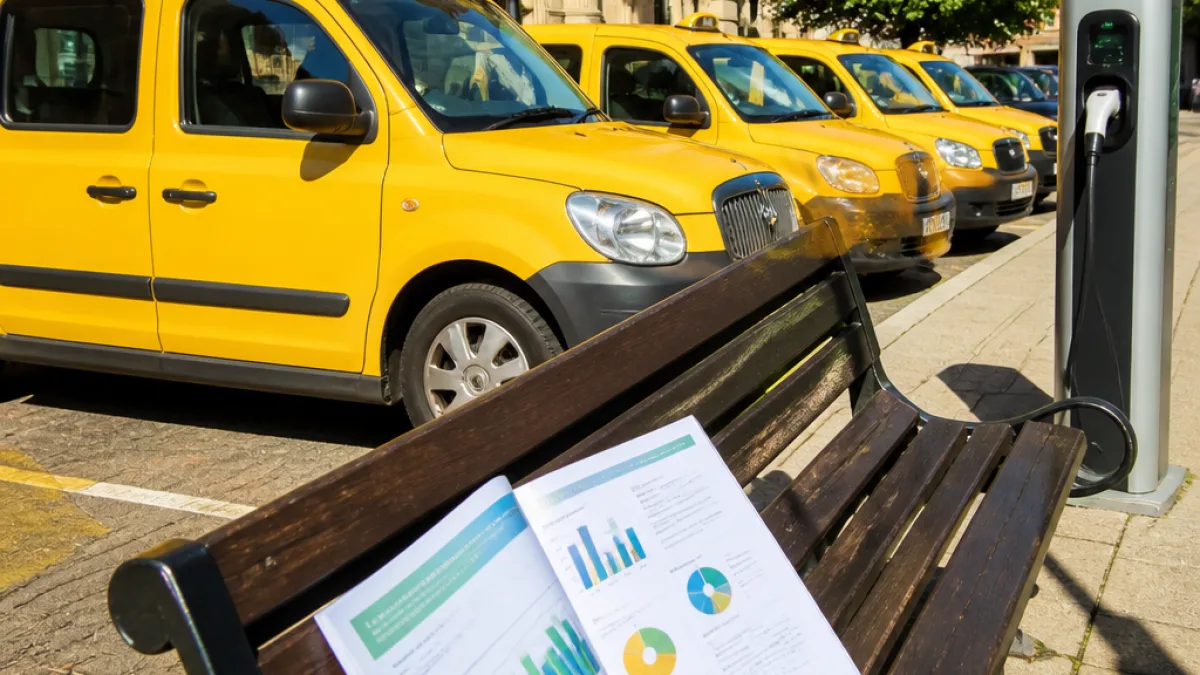
Council preserves town’s distinctive yellow taxis amid debate over costs and electric transition
Hartlepool Borough Council’s Licensing Committee has voted to retain the requirement that hackney carriages display a fully yellow livery, rejecting a proposal from a regional operator that argued the rule would hinder a shift towards electric vehicles.
The decision was taken following a public consultation earlier this summer in which 418 of 491 respondents (around 85%) indicated support for keeping taxis fully yellow. Members of the committee said the results demonstrated clear local backing for the colour that has become synonymous with licensed taxis in the town.
- Operator concern: Blueline Group argued that the cost of respraying vehicles in full yellow could be “prohibitive” for newer vehicles and warned it could affect investment in an electric fleet.
- Council findings: Licensing research put the likely cost of a respray at closer to £350, a figure councillors contrasted with the operator’s estimate.
- Operator estimate: Blueline suggested the expense could be as high as £2,000, a figure councillors questioned during the meeting.
| Item | Figure cited |
|---|---|
| Consultation respondents supporting yellow | 418 of 491 |
| Council estimate for respray | £350 |
| Operator's claimed respray cost | Up to £2,000 |
Blueline, which operates across the North East, had asked the council to permit partially marked vehicles in approved designs or colours to ease the transition to fully electric taxis. The company’s submission said the full-colour requirement could dissuade investment in new electric vehicles because of the additional expense.
“It feels very much like something they don’t want to do,”
Cllr Matthew Dodds challenged Blueline’s position at the Licensing Committee meeting, saying the respray cost was small relative to the overall expense of introducing an electric fleet. The councillor framed the yellow livery as part of Hartlepool’s visual heritage, drawing comparison with other cities’ iconic taxi colours.
Other committee members echoed the sentiment that a recognisable colour is an important public-protection measure. Cllr Carole Thompson underlined that both drivers and the public want taxis to remain yellow, and that the council had conducted proper consultation before reaching its conclusion. Cllr Sue Little described the yellow cabs as a matter of local pride.
“Our taxi drivers want them yellow, the public wants them yellow. We’ve done our due diligence, we have done our consultation. I think we just say ‘no we’re staying as we are’,”
The committee’s decision places emphasis on maintaining a clear and consistent signifier of authorised taxis in Hartlepool. Councillors stated that public protection was the primary concern behind licensing conditions, and that a well-known colour helps passengers identify legitimate hackney carriages.
Operators who wish to invest in electric vehicles now face the continuing requirement to adopt a fully yellow livery unless the council chooses to revisit the policy. Blueline had argued that the consultation did not specifically ask about partial liveries or electric vehicles and described the survey as flawed; councillors, however, stood by the consultation process and its outcome.
The ruling highlights a wider local policy tension: how to balance long-standing town character and passenger safety against the practical and financial challenges of transitioning vehicle fleets to low-emission technology. For Hartlepool residents, the immediate result is continuity — the familiar line of yellow taxis remains a visible part of the townscape — while operators and climate-minded policymakers may press for further discussion on practical measures to support electrification without sacrificing regulatory clarity.
Any future proposals from operators or further council reviews would need to address the cost estimates discrepancy and provide solutions that maintain clear identification of licensed vehicles while enabling technological change.













