
Bedford Street: a quiet lane that keeps its character
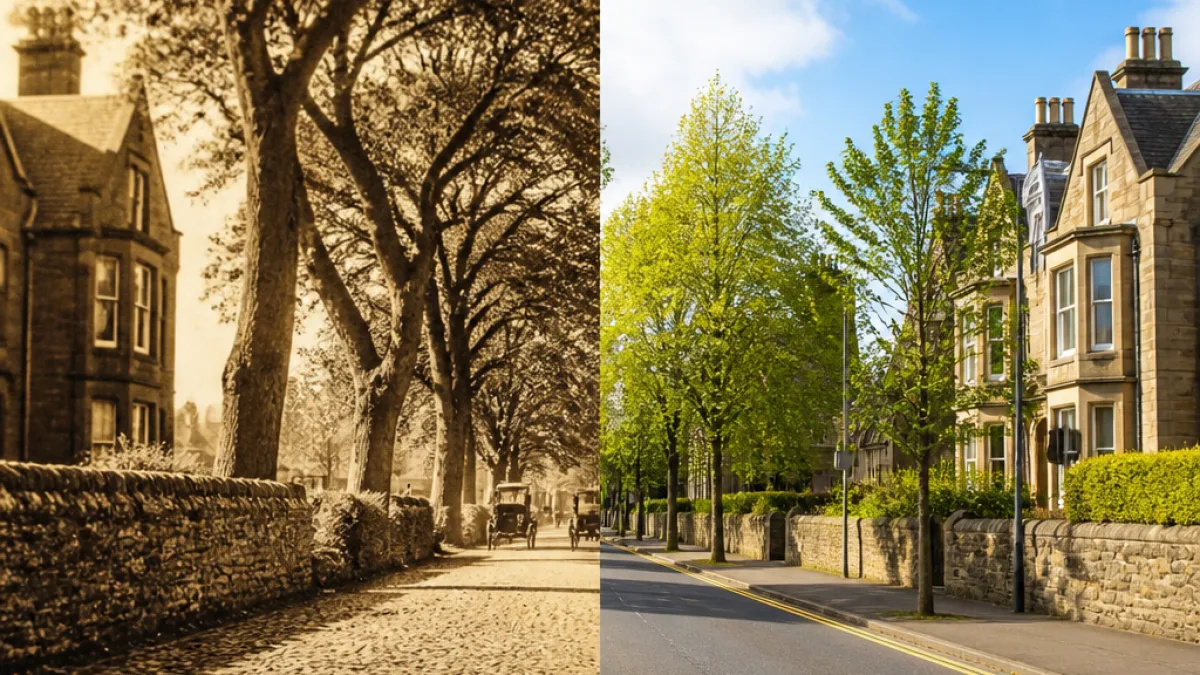
Then-and-now images of Bedford Street in Greenock underline how aspects of the town’s west end have remained recognisably the same even as small, practical changes have been made. The pair of photos — one historic and one contemporary — show a tree-lined residential road where greenery still frames the lane, although the larger veteran trees of the older picture now appear to have been replaced by younger specimens.
Readers familiar with the area will spot more than just the change in the canopy. The modern photograph shows a smooth, tarred carriageway where the older image reveals the bumps and grooves of a former surface. That practical improvement will be welcomed by drivers and residents alike, while the persistence of verdant verges helps explain why Bedford Street remains a much-loved element of the west end streetscape.
Names and local associations
The street takes its name from Francis Russell, the fifth Duke of Bedford (1765–1802). As the photographs and accompanying note remind readers, streets across Greenock were often christened after political figures who had no direct connection with the town — a common pattern in 19th-century urban development.
Glenfield House and a long-running local charity
Bedford Street’s story is not just about trees and tarmac. It also touches on social history: for many years the street housed Glenfield House, which became the base for the Greenock Medical Aid Society. The society, founded in 1876, moved to Glenfield House in the 1920s and served the community for decades.
Last year the society’s operators made the “extremely difficult decision” to close the organisation. That closure marked the end of a local institution with a lifespan stretching back to the Victorian era, and links an otherwise domestic street to a wider narrative of changing provision of local healthcare and charity services.
What the pictures tell us
- Continuity of character: The lane retains its tree-lined appearance despite replacement of older trees.
- Modernisation: The road surface has been tarred since the earlier photograph was taken.
- Historical ties: Bedford Street was associated with Glenfield House and the Greenock Medical Aid Society, founded in 1876 and moved there in the 1920s.
“The house has retained this natural charm… despite the larger old trees having been replaced by younger ones, greenery continues to frame the lane.”
Small streets, broader stories
Bedford Street’s modest transformation is a reminder that change in Greenock often arrives slowly. Replacement saplings will, in time, mature and restore some of the original canopy lost as older trees came to the end of their lives. Meanwhile, the resurfaced road addresses everyday concerns of motorists and pedestrians. Together, these elements show how conservation of character and small-scale improvements coexist on the streets of the town.
| Fact | Detail |
|---|---|
| Street name origin | Named after Francis Russell, 5th Duke of Bedford (1765–1802) |
| Local charity | Greenock Medical Aid Society, founded 1876; moved to Glenfield House in 1920s; closed last year |
| Visible change | Larger trees replaced by younger trees; road surface tarred |
The then-and-now feature was published as part of an image-led look back at Inverclyde’s pictorial past. The piece, carried in partnership with a sister title, places Bedford Street in a local context that will strike a chord with residents who remember the lane from different decades. For those who walk or drive it today, the photographs are a small but telling record that Greenock’s streets retain much of their familiar character even as they adapt to the demands of the present.














