Empty shop on Millet Street to host indoor padel facility
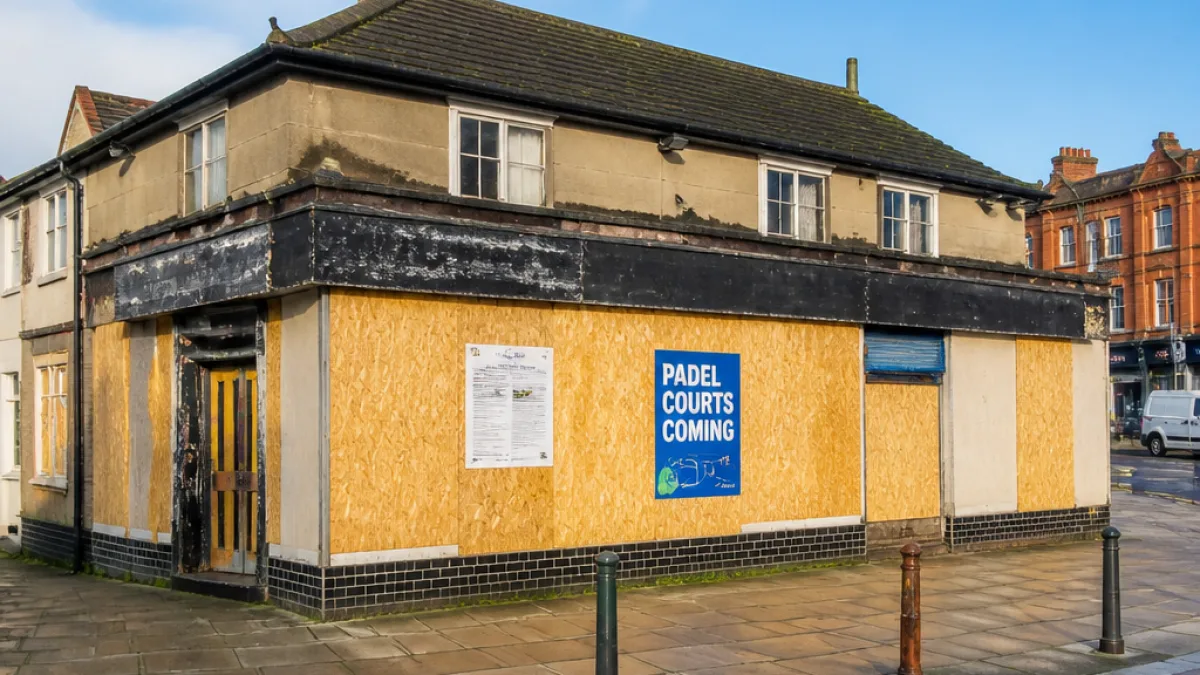
A boarded-up premises in Bury town centre that formerly traded as a flooring outlet has been cleared for conversion into an indoor padel court after Bury Council issued a lawful development certificate this month.
The building at the corner of Millet Street and Bolton Street has stood vacant and in what the council describes as a "poor condition". The applicant proposes to convert the simple rectangular structure with a dual-pitched roof into an indoor facility for the rapidly growing racket sport, keeping the site within the same commercial planning category.
The scheme was submitted to the council as a Lawful Development Certificate (LDC) application on the basis that both the existing and proposed uses fall within the Class E use class of the Use Classes Order — the broad commercial heading that covers retail, offices, health and fitness and other service uses.
- Location: corner of Millet Street and Bolton Street, Bury town centre
- Current status: previously Floors To Go (flooring retail), building now boarded and weathered
- Proposed use: indoor padel court (Class E)
The council officer’s delegated report supporting the certificate notes the building’s immediate surroundings: an access road and neighbouring commercial premises including a plumbing and heating business to the south; a car dealership and parking to the east; residential properties beyond that; and the River Irwell to the west at a lower elevation.
Planning history for the site shows a previously approved application to change the use from retail to a boxing gym in 2019, which was not implemented. That earlier approval, along with the building’s historic retail use, forms part of the applicant’s case that the new sporting use sits within the same Class E designation.
"The application seeks a Lawful Development Certificate for a proposed indoor padel court at an existing commercial premises," the council report said, adding that the applicant's evidence confirmed the building was previously used as a retail carpet and flooring outlet.
Converting town-centre vacant units into leisure uses is an increasingly common route for owners and operators looking to revitalise tired properties while avoiding more complex change-of-use hurdles. Because Class E now encompasses a wide range of commercial activities, proposals that remain within that category can proceed through the LDC process without needing a full planning application in many cases.
For Bury, the move will be watched by local businesses and residents for a few reasons. First, it is a practical reuse of a visible empty unit on a central junction, which supporters say helps reduce blight and can increase footfall. Second, introducing a facility for an emerging sport could draw visitors and provide a new leisure offer for local people.
However, there are also local considerations to balance. Neighbouring uses include small businesses and homes, and changes in activity patterns — including hours of operation and parking demand — will be matters for operators and the council to manage. The council’s report sets out the immediate physical constraints of the site, including its relationship with nearby properties and the adjacent riverbank.
| Feature | Detail |
|---|---|
| Former use | Retail (Floors To Go - carpets and flooring) |
| Proposed use | Indoor padel court (Class E) |
| Planning route | Lawful Development Certificate (LDC) — certificate granted |
Bury Council’s delegation of the decision means the certificate was issued without a full committee hearing. That reflects the council officer’s view that the proposed use falls squarely within the permitted commercial class and that the evidence supplied — including the building’s retail history and the previous gym-related permission — supports the LDC claim.
For the town centre, the practical result is straightforward: an empty, weathered building has a clear route to reuse without the delay of a fresh planning application. For residents curious about how this will operate day-to-day — opening hours, booking arrangements and any parking provision — those details are likely to be finalised by the operator as the conversion works progress.
The decision also underlines how recent changes to use classes continue to shape what can happen in Bury’s commercial core, allowing a wider range of community, leisure and retail activity to occupy existing premises.
Any further changes that fall outside Class E or that raise amenity issues would, of course, require separate planning permission and public consultation.