
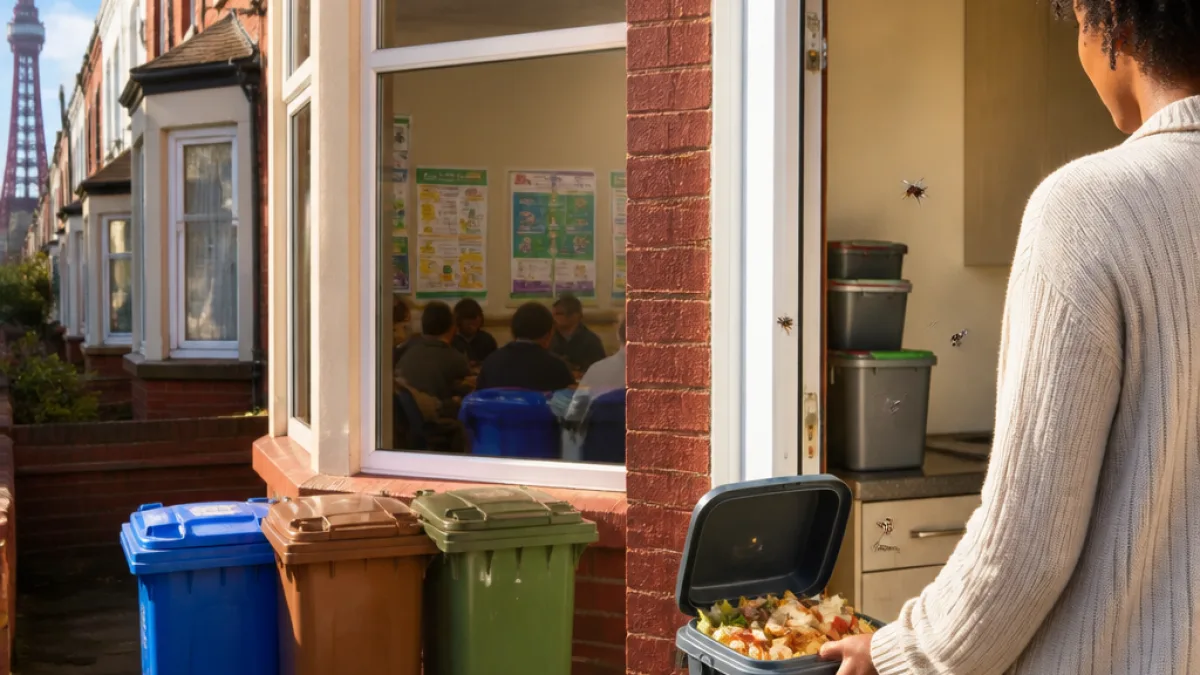
Residents report odour and insects since new collection regime began
Blackpool households have told local meetings they are struggling with the new three‑weekly bin collection schedule and revised food waste service, saying the changes are leading to increased flies, bad smells and practical problems for some families.
The system, introduced in April 2026 under the government’s Simpler Recycling programme, altered domestic waste rounds so that residual waste, glass, plastic, paper and card are collected once every three weeks rather than every two. In addition, brown sacks were replaced by brown wheeled bins and homes with wheeled bins were provided with a 7‑litre indoor kitchen caddy and a 23‑litre outdoor food waste bin, with food waste picked up weekly.
Concerns voiced at community meeting
At a recent PACT meeting in central Blackpool, residents described the practical impact of the changes. Brian Roberts, chairman of the Brunswick PACT, made homemade fly traps available to fellow attendees after reports of heavy infestations of fruit flies and bluebottles.
"This is one of the main issues being brought to our meetings at the moment," said Mr Roberts, who added one family with a disabled daughter had found waiting three weeks between collections “a nightmare”.
Mr Roberts and others said the problems are exacerbated by recent hot weather, which they say has worsened odour and insect activity. Some households told the meeting they had stopped using the indoor food caddies because of hygiene worries.
Complaints from campaigners and the public
Community activist William Banks has said the scheme discriminates against certain groups, including families with children and disabled people, and has lodged a formal complaint with Blackpool Council. Objectors argue the new timetable and container sizes do not suit larger households, people with particular care needs, or dog owners, who may produce more frequent waste.
The changes form part of a national target to increase recycling, aiming for councils to work towards a 65% recycling rate by 2035. While the environmental intent has supporters, the local backlash shows practical issues remain unresolved for some households.
What has changed: a quick summary
| Item | Previous | Now |
|---|---|---|
| Residual waste | Collected every two weeks | Collected every three weeks |
| Food waste | Brown sacks, different arrangements | 7‑litre indoor caddy; 23‑litre outdoor bin; weekly collection |
Practical consequences and next steps
Residents at the PACT meeting described tangible day‑to‑day consequences: more frequent insect problems, worries about hygiene indoors and scheduling challenges for households producing larger volumes of waste. The heatwave conditions have added pressure, according to attendees.
- Smaller indoor caddies have been described as unhygienic by some users.
- Households producing more waste, including those with young children or caring responsibilities, say the three‑week gap is insufficient.
- Community members have sought remedies such as home‑made fly traps and formal complaints to the council.
Blackpool Council has not been quoted in the material summarised at the meeting. The council will face continued pressure from residents and community groups to address the practical difficulties they say have followed the change. With recycling targets driving nationwide shifts in collections, the dispute in Blackpool highlights the challenge of balancing environmental goals with the everyday needs of households.
Local campaigners and councillors now await a formal response from the authority about whether adjustments or exemptions will be considered for those who say they are disproportionately affected.















