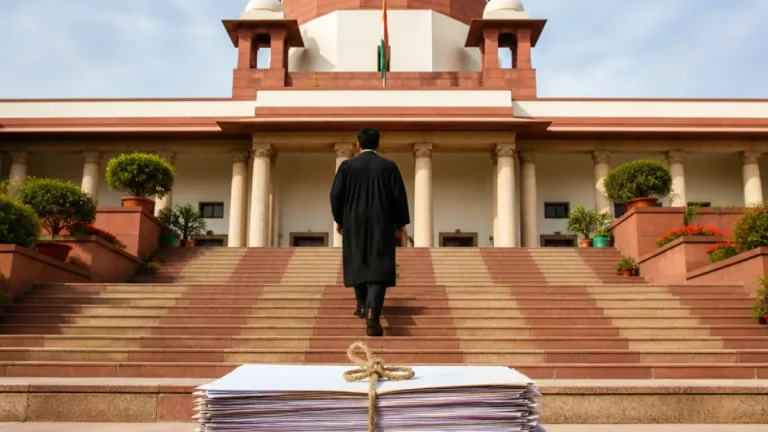
New Delhi/Leh: The Union Cabinet on Thursday approved the establishment of a bench of the High Court of Jammu and Kashmir and Ladakh in the Union Territory of Ladakh, Union Home Minister Amit Shah said, a move the Centre described as intended to reduce travel time for litigants and improve access to judicial services in the high-altitude region.
Centre frames decision as improving access to justice
In a post on X, Mr Shah said the Cabinet decision under Prime Minister Narendra Modi's leadership reflected the government’s commitment to the development of Ladakh and to “ensuring constitutional safeguards” for the Union Territory. He added that the new bench would cut the time required for residents of remote areas to avail themselves of legal services.
"The Union Cabinet, under the leadership of the PM Shri @narendramodi Ji, has decided to set up a bench of the High Court of Jammu and Kashmir in Ladakh," Mr Shah wrote on X.
The High Court currently has its principal seats at Srinagar and Jammu. The proposed bench will provide litigants, lawyers and other stakeholders in Ladakh with a closer judicial forum, potentially lessening the need for arduous journeys to the Valley or Jammu for High Court hearings.
Judicial backlog and infrastructure gaps
The decision comes amid longstanding concerns about judicial infrastructure and access to courts in Ladakh. According to figures cited by The Tribune, 44,557 cases were pending before the High Court as of July 30, 2026, of which 6,106 had been pending for more than 10 years. These numbers have been used to highlight the strain on the existing judicial system.
| Data point | Figure |
|---|---|
| Cases pending before High Court (as of July 30, 2026) | 44,557 |
| Cases pending for more than 10 years | 6,106 |
Observers and legal practitioners have frequently pointed out that Ladakh’s geography — vast distances, high mountain passes and seasonal accessibility constraints — complicates routine engagement with judicial institutions located in Jammu or Srinagar. Establishing a local bench is framed by the Centre as a remedy to those practical barriers.
Practical implications for litigants and lawyers
- Reduced travel time and costs for parties in civil and constitutional matters requiring High Court intervention.
- Improved ability for local lawyers to attend hearings without prolonged absences from home.
- Potential for faster disposal of matters originating within Ladakh due to hearings being held nearer to the locus of disputes.
Officials in Ladakh have for years sought stronger judicial presence and infrastructure, including permanent court facilities and availability of judicial officers. The Cabinet decision signals the Centre’s responsiveness to those long-standing demands, though specifics such as the bench’s composition, the number of judges, the location of facilities in Leh or Kargil, and the implementation timeline were not provided in the announcement.
Legal experts say establishment of a bench is only the first step; adequate staffing, administrative support, courtrooms and connectivity are essential to make it effective. The move will require coordination between the Union government, the High Court and local administration to operationalise the bench and ensure continuity of judicial processes.
Background — Ladakh since reorganisation
Ladakh became a separate Union Territory in 2019 after the reorganisation of the erstwhile state of Jammu and Kashmir. Since then, demands for enhanced administrative and judicial facilities have been prominent in local discourse. The new bench is presented by the government as part of broader efforts to strengthen constitutional guarantees and improve public services in the region.
How quickly the bench will be established, where it will sit, and when it will begin functioning were not detailed in the Cabinet release. Further announcements from the Home Ministry, the High Court registry or the Ladakh administration are expected to clarify procedural and logistical aspects.
Local litigants and lawyers will be watching for notifications on roster arrangements, case transfer procedures and the mechanism for filing matters at the new seat once finer details become available.
Reporting from Leh and New Delhi.