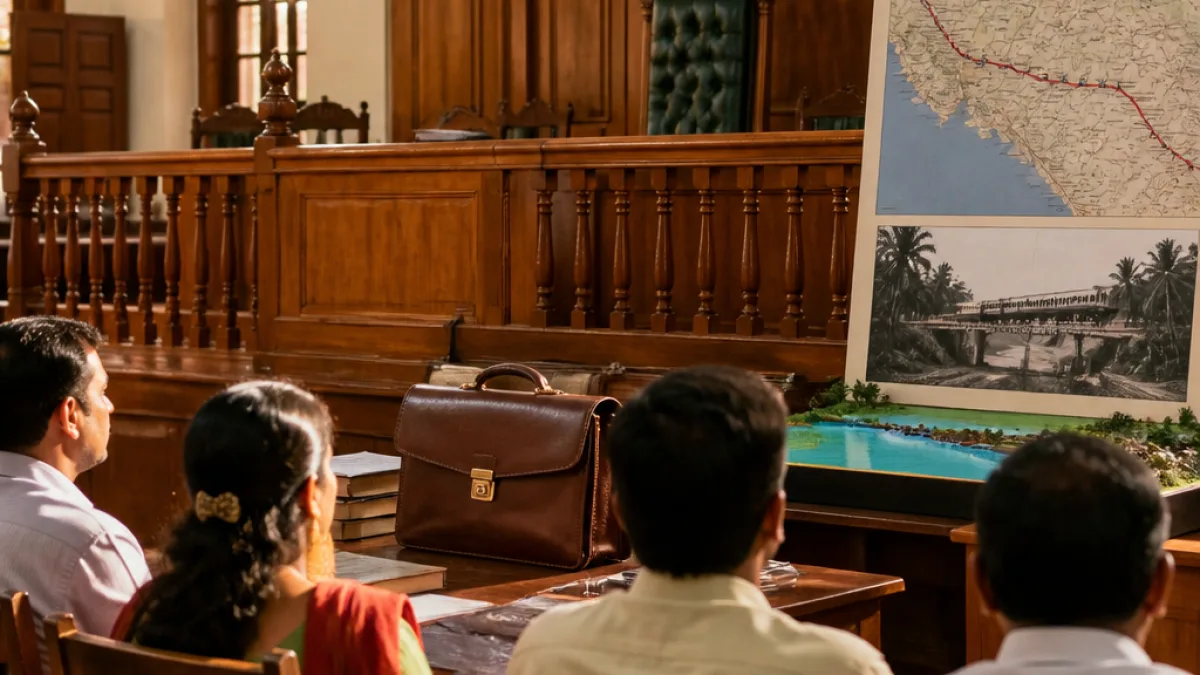
The trial relating to the 2011 death of research scholar K Indu, who was travelling to Kozhikode at the time of the incident, opened on Tuesday before the Ernakulam Principal Sessions Court, with four prosecution witnesses examined on the first day, court records show.
Family members give evidence
The witnesses who testified were Indu’s father, Krishnan Nair; her mother, Omana Kunjamma; her maternal aunt, Baby Kuttiyamma; and the aunt’s husband, Gopinathan Nair, according to the court record. M A Jose Manavalan, appearing as Special Public Prosecutor, conducted the examination on behalf of the state. The matter is being heard by Judge K K Balakrishnan.
The prosecution case, as set out in the chargesheet and outlined in court documents, alleges that Indu, then 25 and a native of Kumarapuram in Thiruvananthapuram, was pushed from a moving train into the Aluva river on the night of April 24–25, 2011.
- Accused: K Subhash, formerly an assistant professor at the National Institute of Technology, Kozhikode.
- Victim: K Indu, research scholar, aged 25, travelling from Thiruvananthapuram to Kozhikode.
- Location of alleged offence: Periyar bridge at Aluva, during the Mangaluru Express journey.
Prosecution narrative
According to the chargesheet as presented in court, Subhash is accused of travelling with Indu from Thiruvananthapuram and persuading her to go to Kozhikode to register a marriage before leaving for Sikkim. The prosecution alleges that Indu rejected Subhash’s proposal because her marriage had been arranged with a man named Abhishek. When Indu remained firm in her decision, the chargesheet contends, Subhash decided to kill her.
"Subhash allegedly called Indu on the pretext of a conversation and pushed her through an open door of the train into the Aluva river," the chargesheet states.
Indu boarded the Mangaluru Express from Thiruvananthapuram on April 24, 2011, and was reported missing during the journey. Her body was subsequently recovered from the Aluva River. The death was initially treated as a suspected suicide; a later Crime Branch inquiry led to the arrest of Subhash and the framing of murder charges.
Case status and local implications
The present trial in Ernakulam is a long-delayed judicial process in a case that attracted attention across Kerala because of the alleged involvement of an academic and the trans-jurisdictional nature of the crime, which began in the state capital and had the victim heading to Kozhikode. Examination of family members on the opening day establishes the factual background and timeline the prosecution will rely on for subsequent witnesses and evidence.
| Key dates | Event |
|---|---|
| 24 April 2011 | Indu boards Mangaluru Express from Thiruvananthapuram for Kozhikode |
| 25 April 2011 (early hours) | Indu goes missing; body later recovered from Aluva River |
| 22 September 2026 | Trial begins at Ernakulam Principal Sessions Court; four witnesses examined |
No sentence or verdict has been recorded; the hearing will proceed with further witness examination and presentation of documentary and investigative material. The Crime Branch investigation, which led to the arrest of Subhash, forms the factual basis of the chargesheet now under judicial scrutiny.
The case continues to resonate in Kozhikode because of the victim’s travel to the city and the alleged connection to a faculty member at a national institute located here. Proceedings will remain of interest to residents concerned about campus safety and the pace of criminal justice in matters involving alleged offences by persons in positions of authority.